How to Stay Consistent and Build a Tech Career
TL;DR
Replace unreliable passion with responsibility, persistence, and a commitment to finish meaningful work. Choose one technology stack, build one serious project, use AI to support understanding rather than replace it, and keep iterating for 12 months. Progress comes from tolerating boredom, confusion, failed attempts, and unglamorous engineering tasks until consistent practice produces competence, confidence, and proof of ability.
Transcript
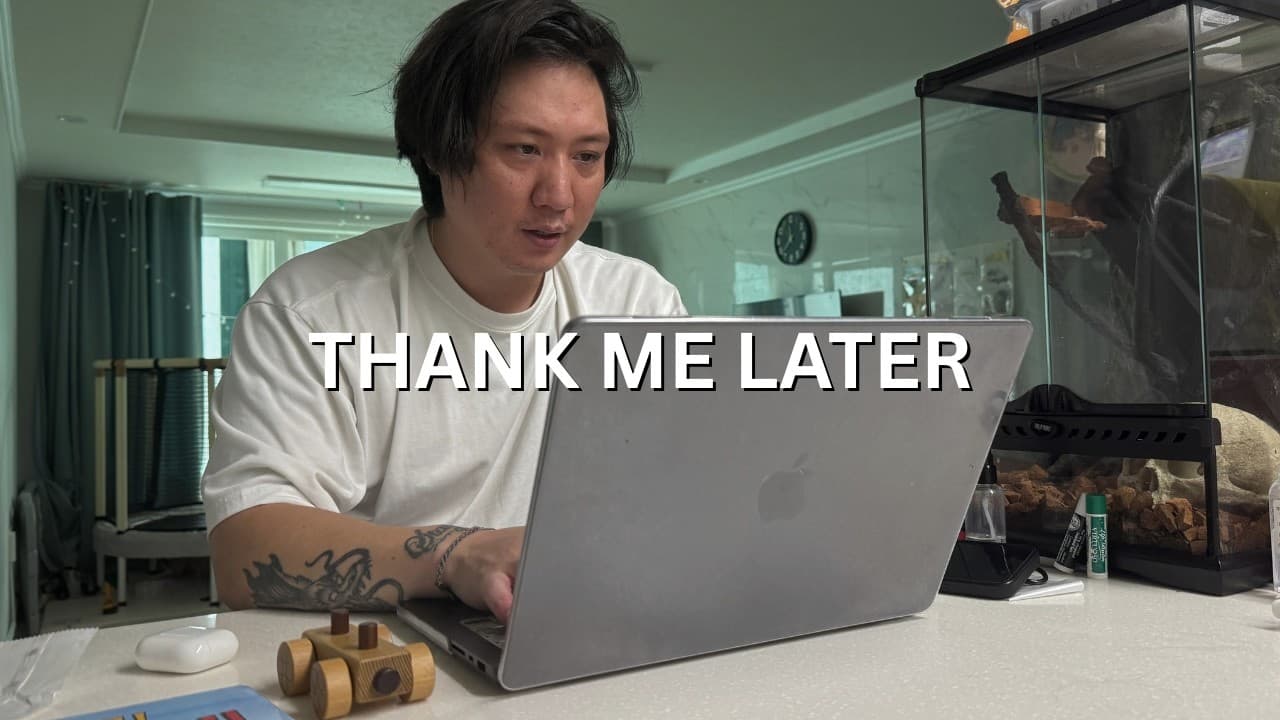
This is a video for two people. The first is the 20some year old who I recently had the pleasure of talking to recently after one of my Q&A sessions. He had told me that he just graduated with the CS degree. He had told me at first he had started coding because he wanted to build cool things and eventually help his mom's local street food business ... Read More
Key Insights
- Passion is an unstable decision filter because it depends on emotion and often disappears when coding becomes boring, confusing, or difficult. Responsibility creates a steadier foundation by turning an intention into a commitment that remains active even when inspiration, novelty, and immediate results are absent.
- Software engineering is built on unglamorous work such as debugging stale problems, reading documentation, fixing edge cases, refactoring messy code, handling authentication, performing database migrations, addressing security concerns, and responding to production failures. Mastery requires continuing through these tasks after the initial excitement fades.
- AI is most useful as a multiplier for developers who preserve their own understanding. It can explain errors, generate test cases, summarize documentation, suggest refactors, and help explore approaches, but code produced by AI is not truly owned by a developer who cannot explain it.
- Frustration tolerance is a more important long-term skill than familiarity with a particular language, framework, or interview exercise. Developers must withstand repeated failures, imperfect releases, public mistakes, recurring bugs, and long periods of confusion while continuing to investigate, learn, and improve.
- Boredom is a major cause of stalled progress because aspiring developers often switch stacks, restart courses, abandon projects, and chase novelty instead of developing depth. Real mastery is described as staying with one stack for 6–12 months and completing hundreds of iterations and many small fixes.
- Responsibility creates meaning through usefulness, reliability, and service to real people. Solving concrete problems, supporting teammates, and maintaining dependable systems provide stronger sources of confidence, pride, and income than syntax, fashionable frameworks, dopamine, hype, or enjoyable side projects alone.
- Failure is not defined by bad interviews, weak projects, or poor early code. Those experiences are part of becoming competent, while quitting ends the opportunity to improve. Feeling behind, starting later, or entering a heavy phase does not mean a person has missed the possibility of progressing.
- The practical path is to choose one stack, build one serious project for a genuine need, use AI without skipping comprehension, finish and ship the work, and repeat the process for 12 months. Persistence turns boring repetitions and imperfect results into visible proof of capability.
Install to Summarize YouTube Videos and Get Transcripts
Explore YouTube Video Summarizer or Get YouTube Transcript Extractor
Questions & Answers
Q: How can an inconsistent developer become more disciplined?
An inconsistent developer can replace passion with responsibility by treating planned work as a commitment rather than something to do only when inspired. The practical approach is to choose one stack, stop switching for novelty, build one serious project, finish imperfect features, and continue through boring debugging and documentation. Consistent shipping and problem-solving provide reinforcement through visible progress.
Q: Why is passion unreliable for building a tech career?
Passion is unreliable because it is emotional, vague, and likely to fade when work becomes repetitive, confusing, or uncomfortable. Real software development includes documentation, edge cases, refactoring, security issues, database migrations, performance problems, and production failures. A career cannot depend on enjoying every task, so responsibility, usefulness, and reliability provide a more stable basis for continued effort.
Q: How should developers use AI without becoming dependent on it?
Developers should use AI to explain errors, generate test cases, summarize documentation, suggest refactors, and explore possible approaches. They should not allow it to replace their reasoning or skip comprehension. If a developer cannot explain code produced by AI, the developer has not truly built or understood it. AI should reinforce learning and accelerate investigation while the developer retains ownership.
Q: What is the most important skill for progressing in programming?
Frustration tolerance is presented as the central skill for progressing in programming. It means remaining engaged after repeated failures, shipping imperfect work, asking questions, appearing inexperienced, fixing recurring bugs, and continuing when the work feels boring. Languages and frameworks matter, but sustained competence develops from enduring confusion and discomfort long enough to understand problems and complete solutions.
Q: Why do aspiring developers abandon coding projects?
Aspiring developers often abandon projects because boredom and missing results weaken their motivation. They may switch stacks, restart courses, chase novelty, or leave projects unfinished when the work stops feeling exciting. AI can intensify this pattern by making projects easier to start and equally easy to abandon. Progress instead requires depth, repeated iteration, small fixes, and completed releases.
Q: What project should a developer build to demonstrate ability?
A developer should build one serious project that solves a real problem for the developer or people they know. It should not merely repeat a tutorial or clone an existing product. The project should provide a clear story about the need, implementation, obstacles, and result. Finishing and shipping it creates stronger proof of ability than collecting unfinished experiments or frequently changing stacks.
Q: How long should a developer stay with one technology stack?
The recommended playbook is to commit to one stack and repeat the development process for 12 months, while the discussion of mastery describes staying with one stack for 6–12 months. During that period, the developer should avoid stack hopping, build a substantial project, complete many iterations, fix numerous small bugs, and develop depth through sustained practical work.
Q: Is it too late to start or restart a software career?
Starting later or losing momentum does not mean the opportunity is over. The transcript addresses both a recent computer science graduate who feels inadequate in the AI era and a mentee in his 40s who worries about being behind. Its conclusion is that heaviness is part of the repetitions required for growth, and a person is only out when they stop.
Summary & Key Takeaways
-
Passion is an unreliable guide because it fades when coding becomes repetitive, difficult, or unrewarding. Sustainable progress comes from responsibility: keeping commitments, solving useful problems, supporting others, and becoming reliable. Confidence and pride develop through completed work and demonstrated usefulness, rather than inspiration, novelty, frameworks, or temporary excitement.
-
Software engineering includes debugging, documentation, edge cases, migrations, security, performance, legacy code, and production failures. AI can generate straightforward code, but engineers still need to understand requirements, resolve unusual bugs, manage trade-offs, and own systems. The decisive ability is frustration tolerance, especially during boring, confusing, and uncomfortable work.
-
The practical playbook is to select one stack, avoid frequent switching, and build a serious project that addresses a real need. AI should explain errors, propose tests, summarize documentation, and suggest refactors without replacing understanding. Finish and ship the project, continue iterating, and repeat the process consistently for 12 months.
Read in Other Languages (beta)
Share This Summary 📚
Summarize YouTube Videos and Get Video Transcripts with 1-Click
Try YouTube Summary with ChatGPT & Claude or YouTube Transcript Generator
Explore More Summaries from Phillip Choi 📚

Summarize YouTube Videos and Get Video Transcripts with 1-Click
Try YouTube Summary with ChatGPT & Claude or YouTube Transcript Generator