How to Get More Dev Interviews Without Applying More
TL;DR
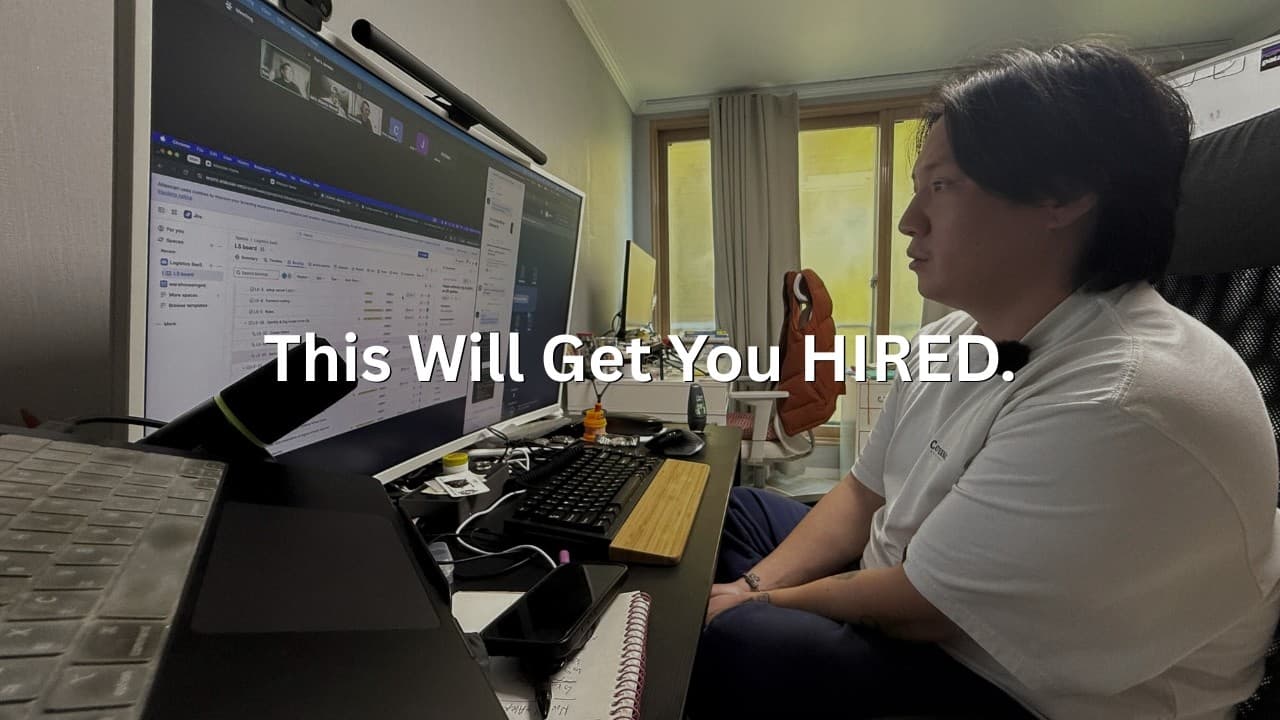
Stop applying and start proving. Instead of sending resumes that die in the algorithm, build small 'proof projects' that show a recruiter you can already solve their problem. This 'proof before permission' approach turns you from invisible to undeniable and reportedly generates 10+ interviews a month without switching stacks or grinding leetcode.
Transcript
Most people don't have a getting interviews problem. They have a being noticed problem. And yeah, I get it. The market's brutal right now. AI is moving fast. Everyone saying junior roles are dead. But here's the truth. There are people who started coding in 2024 and even this year who've already landed developer jobs. I've met them in my community.... Read More
Key Insights
- The core problem for most job seekers is visibility, not qualification. Phil argues 'it's not that you're underqualified, it's that you're invisible,' meaning candidates fail to get noticed rather than failing to meet the bar.
- Applying is a broken volume game. A single junior developer posting can attract over 400 applications, roughly 75% of resumes never reach a human, and recruiters spend an average of just 7 seconds scanning each one.
- AI has worsened resume noise. Thousands of AI-optimized resumes flood the market daily using identical buzzwords like 'fast learner' and 'team player,' so louder applicants get buried rather than heard.
- 'Proof before permission' is the alternative system. Rather than asking to be hired, you demonstrate you already know how to help, which shifts you from everyone applying to you getting invited to interviews.
- Proof beats credentials because it is specific and measurable. Instead of saying 'I know React,' say 'I built a feature that cut load time by 40%'; instead of 'I understand databases,' say 'I reduced server costs by $120 a month.'
- Micro offers work like Costco samples. Giving people a small, undeniable taste of your work hooks them into wanting more, so a demo or built feature generates interest that hundreds of applications cannot.
- AI cannot fake real proof. It can write resumes, generate portfolios, and even fake experience, but it cannot replicate the human fingerprints of effort, creativity, and persistence visible in something you actually built.
- Structure a project to mirror your target job. Phil built a board game cafe app but designed it like a real estate directory with search filters, dashboards, maps, and live listings, then used it to win a real estate startup's attention.
Install to Summarize YouTube Videos and Get Transcripts
Explore YouTube Video Summarizer or Get YouTube Transcript Extractor
Questions & Answers
Q: Why am I not getting developer interviews even though I can code?
According to Phil, the issue is usually visibility, not ability. He says 'no one was rejecting me, they just weren't seeing me,' meaning your resume dies in the algorithm before a human reads it. A single junior posting gets over 400 applications, roughly 75% of resumes never reach a person, and recruiters spend about 7 seconds each. The fix is to create interest by showing proof of your work rather than applying harder.
Q: What is the 'proof before permission' strategy for landing dev jobs?
Proof before permission means you stop asking to be hired and instead show you already know how to help. Rather than waiting for approval, you build something that demonstrates your value first, so recruiters invite you instead of ignoring you. Phil compares it to Costco free samples: you give a small, undeniable taste of what working with you is like, and people want more. Proof beats credentials every time because it shows solved problems instead of claimed skills.
Q: Why doesn't applying to more jobs work anymore?
Phil says the application system is completely broken and built for volume, not visibility. A single junior developer posting can get over 400 applications within seconds, and about 75% of resumes never reach a human because they die in the algorithm. For those that do get through, recruiters spend an average of 7 seconds reviewing each one. He compares the odds to a slot machine, arguing that sending hundreds of resumes only buries you deeper rather than helping you stand out.
Q: What is a micro offer or proof project and how do I build one?
A micro offer is a small proof project that grabs a recruiter's attention instantly and makes them want to reply. Phil built a free app for a local board game cafe but structured it like a real estate directory, with search filters, a dashboard, maps, and realtime listings, because that matched a startup he wanted to work for. The logic and features mattered more than the topic. You build something real that mirrors the problem your target employer needs solved, then send it as a demo.
Q: How did Phil get noticed by the real estate startup he wanted to work for?
Phil had no experience or impressive projects, so instead of waiting to be noticed he built proof indirectly. He created a free app for a local board game cafe centered on Magic the Gathering cards, but designed it like a real estate directory with search filters, a dashboard, maps, and realtime listings. Two months later he applied to the startup and sent a demo instead of just a resume. The hiring manager replied within two days asking to hop on a call, more traction than 100 prior applications combined.
Q: Can proof-based job hunting still work now that AI writes code?
Phil argues AI actually makes this approach stronger. AI can write resumes, generate portfolios, and even fake experience, but it cannot show real proof or replicate the human fingerprints of effort, creativity, and persistence. When a recruiter sees something you genuinely built that solves a problem they understand, you cut through the noise and go from invisible to undeniable. In a market where AI has leveled the playing field and everyone sounds the same, demonstrated real work becomes your edge.
Q: What results did Phil's mentees get using this system?
Phil shares several examples. His mentee Booty was rejected nine times with no callbacks, then contributed a feature to an open-source RPG project, helped build a mobile app, and made a budget tracking app for college students; within a month he had interviews with major banks. One student built a free API for a restaurant's delivery schedule and was asked to be their developer. Another built free websites for restaurants in France and landed a dozen interviews in one month, and one built a wedding event planner reaching a third-round six-figure interview in New York.
Q: How do I show proof instead of listing skills on a resume?
Phil says to replace vague claims with specific, measurable results. Do not say 'I know React'; say 'I built a feature that cut load time by 40%.' Do not say 'I understand databases'; say 'I reduced server costs by $120 a month.' Do not say 'I'm passionate about problem solving'; show the actual problem you solved. Buzzwords like 'fast learner,' 'team player,' and 'passionate about technology' are noise. Proof beats credentials because it demonstrates real impact rather than asserting potential, making you visible before a recruiter even scrolls.
Summary & Key Takeaways
-
Phil, who started coding at 30 with no degree or experience, landed a junior dev job in under a year and reached six figures two years later. He argues the market feels impossible because candidates are invisible, not unqualified, and that applying more is the wrong fix.
-
The traditional job hunt is broken: postings draw over 400 applicants, about 75% of resumes never reach a human, and recruiters scan for 7 seconds. AI-generated resumes flood the market with the same buzzwords, so a resume is a receipt of existence, not proof of delivery.
-
The fix is 'proof before permission': build small proof projects or micro offers that demonstrate value first. Examples include a mentee who contributed to open source and built a student budget app landing bank interviews, and students who built free tools winning developer roles and six-figure offers.
Read in Other Languages (beta)
Share This Summary 📚
Summarize YouTube Videos and Get Video Transcripts with 1-Click
Try YouTube Summary with ChatGPT & Claude or YouTube Transcript Generator
Explore More Summaries from Phillip Choi 📚
Summarize YouTube Videos and Get Video Transcripts with 1-Click
Try YouTube Summary with ChatGPT & Claude or YouTube Transcript Generator