How Can You Progress Faster in a Tech Career?
TL;DR
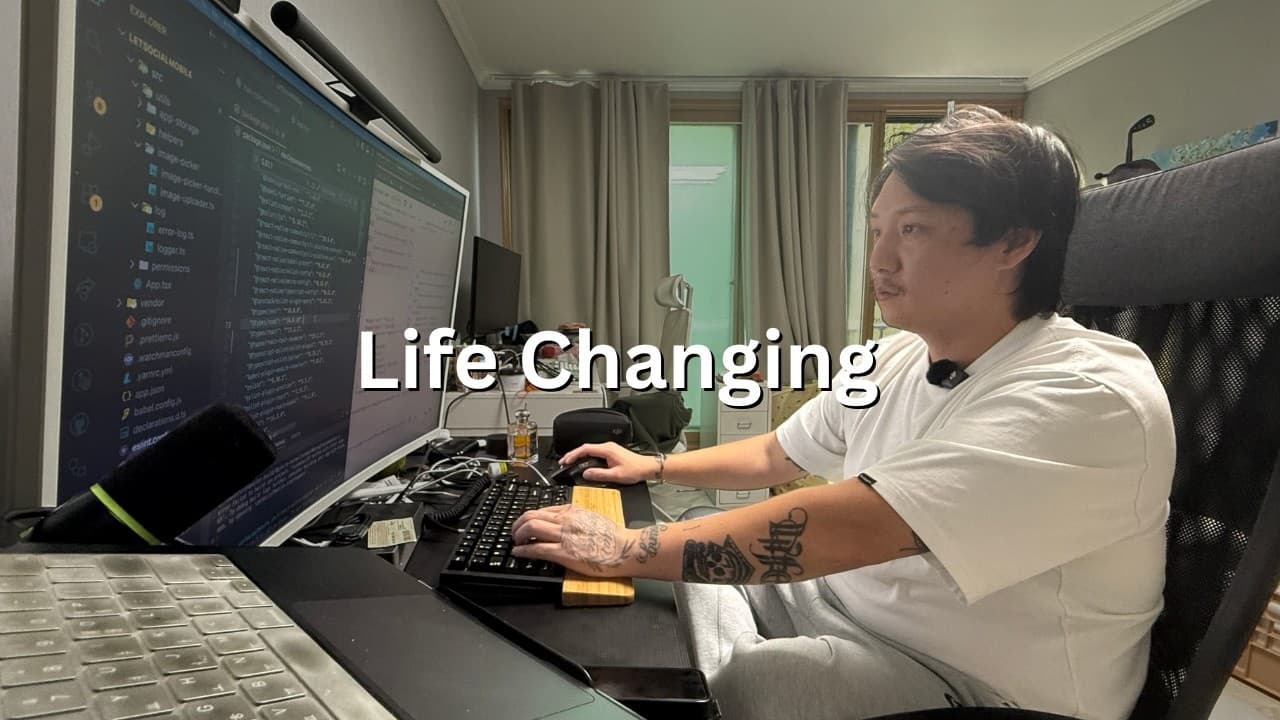
To progress faster in tech, stop switching paths and commit to one programming stack and one full-scale application from start to finish. Phil says focusing on Vue.js and a single project helped him secure his first developer job, while the skills gained later supported his promotion to senior developer. Read on for practical guidance on choosing a path, building job-ready skills, and staying focused.
Transcript
If you feel stuck in tech, the problem isn't your tech stack. It's your habit of switching paths. Early on in my career, when I first started coding, I read every book there is about clean code. I chased after every senior developer I could meet about what I needed to do next to land my first developer job. Even after I landed my first job, then se... Read More
Key Insights
- Progress in tech is hampered by frequently changing focus and not sticking to one path.
- Focusing on one programming stack and a single project can lead to faster career advancement.
- Programming skills remain crucial, especially with the rise of AI, as they enable high-paying job opportunities.
- There is no perfect path to success in tech; commitment and execution of a chosen path are key.
- Developing a fully functional project can provide more learning than multiple courses combined.
- Effective learning involves breaking down complex features into smaller, manageable components.
- Self-reliance in problem-solving is crucial; use resources like documentation and mentors wisely.
- Accountability through daily and weekly goals helps maintain focus and track progress.
Install to Summarize YouTube Videos and Get Transcripts
Explore YouTube Video Summarizer or Get YouTube Transcript Extractor
Questions & Answers
Q: How can you progress faster in a tech career?
Choose one path, learn one programming stack, and build one full-scale application from start to finish. Progress depends on executing the plan, remaining resilient, and resisting the urge to jump among books, courses, languages, and advice.
Q: Why can switching tech stacks slow your progress?
Constant switching leaves your skills scattered instead of developing the depth needed to create complete software. Phil tried JavaScript, PHP, Python, Java, a boot camp, and about 19 Udemy courses, but he made real progress only after committing to Vue.js.
Q: What kind of coding project can help you become employable?
Build one fully functioning application that solves a problem in your own life. Phil says the full-scale application he completed from start to finish helped him land his first developer job and develop skills that later supported his promotion to senior developer.
Q: How long should you commit to one coding path?
Phil recommends committing to one thing for a year, using one fully functioning project as his example. He contrasts that sustained focus with spending months switching among courses, books, advice, languages, and small projects copied from YouTube.
Q: What skills do you need to become a software developer?
You need to know the syntax of a preferred programming language, create an application from start to finish, and become a good problem solver. To land a tech job, you also need to perform well in both behavioral and technical interviews.
Q: Is there a perfect path for building a career in tech?
No path guarantees success, and available programs may follow very different routes. Phil argues that executing your chosen plan, continuing through difficulty, and staying on that path are what carry you toward your career goal.
Q: Does your age or background prevent you from entering tech?
Phil says background does not change the basic goal of progressing toward the next career milestone. He wrote his first line of code at age 30 and, five years later, had become a senior developer and tech lead with a six-figure salary.
Q: Why does programming still matter in the age of AI?
Phil presents programming as a requirement for surviving in tech because programmers know how to create software. He argues that high-paying jobs created by leveraging an AI-native stack will go to people who can build software.
Summary & Key Takeaways
-
Committing to one technology stack and a single project is essential for rapid progress in tech. This focused approach allows for deep learning and skill development, leading to career advancements. Avoid the temptation to switch between multiple technologies and courses, which can hinder progress.
-
Programming remains a vital skill even in the age of AI, as it provides the foundation for creating software and leveraging AI technologies. To succeed, one must focus on practical application, developing projects that solve real-world problems, and mastering both technical and behavioral interview skills.
-
The key to success in tech is not finding the perfect path but committing to a chosen one and executing it with conviction. By setting clear goals, seeking mentorship, and maintaining accountability through structured routines, individuals can achieve significant progress and stand out in a competitive job market.
Read in Other Languages (beta)
Share This Summary 📚
Summarize YouTube Videos and Get Video Transcripts with 1-Click
Try YouTube Summary with ChatGPT & Claude or YouTube Transcript Generator
Explore More Summaries from Phillip Choi 📚





Summarize YouTube Videos and Get Video Transcripts with 1-Click
Try YouTube Summary with ChatGPT & Claude or YouTube Transcript Generator