What Are Biological Molecules and Why Are They Important?
TL;DR
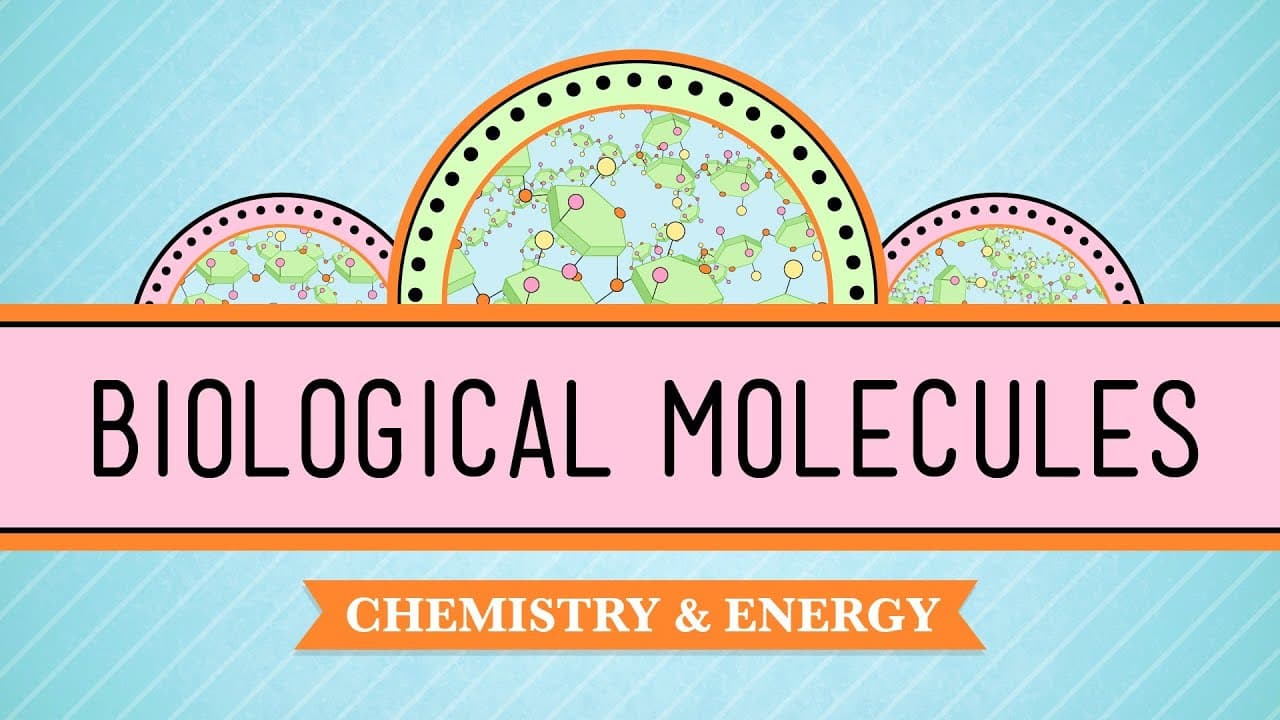
Biological molecules, including carbohydrates, lipids, and proteins, are essential for life as they provide energy, store it, and serve as building blocks for organisms. Carbohydrates, like glucose, are the primary energy source, while lipids form cell membranes and store energy. Proteins, composed of amino acids, perform various functions in the body, including enzyme activity and immune response.
Transcript
Hello, and welcome to the kitchen. I wanted to invite you here today because last week we started off in my bathroom and kinda feel bad about that. And also because as I'm making lunch today I wanted to sort of use it as a lab. During this time in my kitchen I'm going to talk to you about three different things: 1) the three most important molecule... Read More
Key Insights
- Biological molecules are essential for life, providing energy, storing it, and passing on genetic instructions. These include carbohydrates, lipids, proteins, and nucleic acids.
- William Prout, a little-known English physician, classified food into three categories: carbohydrates, fats, and proteins, which are essential for health.
- Carbohydrates, made of sugars, are the primary energy source. Monosaccharides like glucose are fundamental, while polysaccharides serve as energy stores or structural compounds.
- Lipids, including fats, are crucial for energy storage and cell membrane formation. They are characterized by their inability to dissolve in water due to nonpolar chemical bonds.
- Proteins, made of amino acids, are complex and perform various roles in the body, from enzymes to antibodies. They require nitrogen, which is obtained from protein-rich foods.
- Phospholipids and steroids are important lipid classes. Phospholipids form cell membranes, while steroids like cholesterol play roles in cell structure and hormone formation.
- Triglycerides, composed of glycerol and fatty acids, can be saturated or unsaturated, affecting their state at room temperature and health implications.
- Nine essential amino acids cannot be synthesized by the body and must be consumed through diet, highlighting the importance of a balanced intake of protein-rich foods.
Install to Summarize YouTube Videos and Get Transcripts
Explore YouTube Video Summarizer or Get YouTube Transcript Extractor
Questions & Answers
Q: What are the primary functions of carbohydrates?
Carbohydrates serve as the primary energy source for living organisms. They are composed of sugars, with glucose being the most fundamental. Carbohydrates can exist as monosaccharides, disaccharides, or polysaccharides, the latter of which serve as energy stores or structural compounds in plants and other organisms.
Q: Who was William Prout and what was his contribution to biology?
William Prout was an English physician in the early 1800s who classified food into three categories: carbohydrates, fats, and proteins. He emphasized the importance of consuming all three for health. Prout's work laid the foundation for understanding the role of these biological molecules in human nutrition and digestion.
Q: How do lipids function in biological systems?
Lipids, including fats, are crucial for storing energy and forming cell membranes. They are characterized by their inability to dissolve in water due to nonpolar bonds. Lipids include triglycerides, phospholipids, and steroids, with each playing a distinct role in energy storage, structural integrity, and hormone formation.
Q: What is the significance of proteins in the body?
Proteins are complex molecules made of amino acids that perform various essential functions, such as acting as enzymes, antibodies, and hormones. They are involved in almost every biological process and require nitrogen, which is obtained from protein-rich foods. Proteins are vital for growth, repair, and maintaining body functions.
Q: What are triglycerides and how are they classified?
Triglycerides are lipids composed of glycerol and three fatty acid molecules. They can be classified as saturated or unsaturated based on the presence of double bonds between carbon atoms. Saturated fats have no double bonds and are solid at room temperature, while unsaturated fats have one or more double bonds, making them liquid.
Q: Why are omega-3 fatty acids important?
Omega-3 fatty acids are essential fatty acids that the body cannot synthesize. They play a critical role in brain function, inflammation regulation, and cardiovascular health. Since the body cannot produce them, omega-3s must be obtained through diet, making them an important component of a healthy nutritional regimen.
Q: What role do phospholipids play in cells?
Phospholipids are a type of lipid that form the structural basis of cell membranes. They consist of a hydrophilic phosphate group and hydrophobic fatty acid tails, allowing them to create a bilayer that separates the cell interior from the external environment, thus maintaining cellular integrity and regulating the movement of substances.
Q: How do proteins achieve their diverse functions?
Proteins achieve their diverse functions through their complex structures, which are determined by the sequence and arrangement of amino acids. These structures allow proteins to fold into specific shapes, enabling them to interact with other molecules and perform tasks such as catalyzing reactions, transporting substances, and providing structural support.
Summary & Key Takeaways
-
Hank Green discusses biological molecules essential for life, focusing on carbohydrates, lipids, and proteins. He explains their roles in energy provision and storage, as well as their structural functions in organisms.
-
The video highlights William Prout's contributions to understanding food classifications and the importance of carbohydrates, lipids, and proteins in human health, emphasizing the need for a balanced diet.
-
Hank provides insights into the chemical structures and functions of these molecules, including the significance of glucose, the role of lipids in cell membranes, and the necessity of amino acids for protein synthesis.
Read in Other Languages (beta)
Share This Summary 📚
Summarize YouTube Videos and Get Video Transcripts with 1-Click
Try YouTube Summary with ChatGPT & Claude or YouTube Transcript Generator
Explore More Summaries from CrashCourse 📚

Summarize YouTube Videos and Get Video Transcripts with 1-Click
Try YouTube Summary with ChatGPT & Claude or YouTube Transcript Generator