How Can the US Control Prescription Drug Costs?
TL;DR
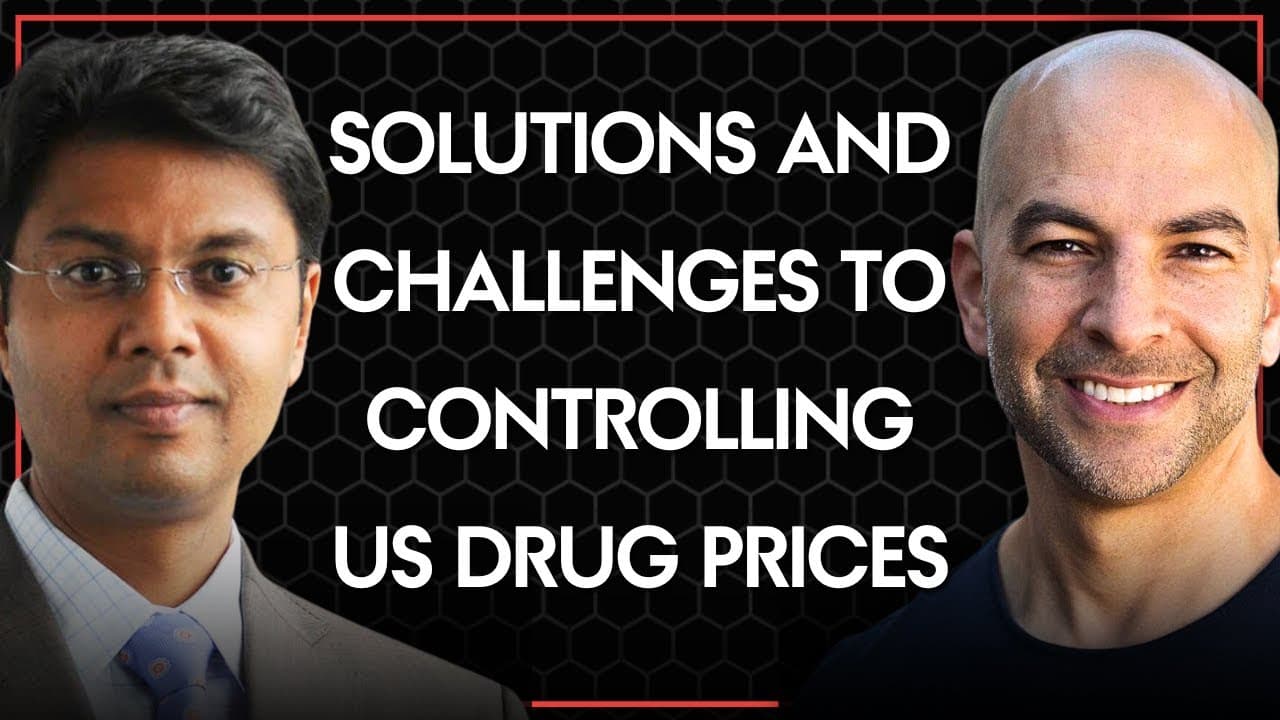
Medicare can use its purchasing scale to negotiate better drug prices, but reforms should be introduced gradually to avoid shocking an industry that generates most of its profits in the United States. Sustainable cost control requires balancing lower prices with quality, access, patient choice, employment, talent, and continued innovation across pharmaceutical companies, biotechnology firms, insurers, and pharmacy benefit managers.
Transcript
what I really thought was interesting is you know I talk about it in terms of medicine 2.0 and Medicine 3.0 and I've talked about how our system is really good medicine 2.0 right it's really good at treating chronic problems and grinding out incremental years of life when you're chronically ill um and that shines so much when you become a senior ci... Read More
Key Insights
- US healthcare excels at treating chronic illness and extending life later in life, but it serves fewer people well earlier. Combining that treatment capacity with earlier Medicine 3.0 access could help more people reach their sixth and seventh decades in better condition.
- Healthcare policy involves four competing variables: quality, cost, access, and choice. The United States prioritizes high quality, rapid access, and extensive choice, leaving cost as the variable most able to expand when the other three remain protected.
- Choice is broader than selecting a doctor or hospital. It includes access to thousands of pharmaceuticals and numerous procedures, including meniscus surgery, hip resurfacing, hip replacement, and PRP, making American healthcare resemble an unusually large treatment buffet.
- Managed care demonstrated that restricting choice could temporarily lower healthcare inflation, but the public backlash was severe. The healthcare system has since evolved toward more options, making a broad return to restrictive supply-side controls difficult both politically and structurally.
- Medicare can negotiate pharmaceutical prices through purchasing scale without inherently rejecting market principles. Large purchasers such as Walmart and automobile manufacturers also use procurement scale to obtain better supplier pricing and encourage efficiency throughout their respective value chains.
- Immediate alignment with European and Canadian drug prices could shock the pharmaceutical industry because the starting prices differ substantially. The proposed alternative is gradual reform that curbs price inflation and uses group purchasing while preserving employment, talent, supply chains, and innovation.
- Pharmaceutical innovation occurs across a complex ecosystem rather than solely inside large drug manufacturers. Biotechnology firms, basic-research companies, pharmaceutical companies, insurers, and PBMs all participate, while insurer ownership of major PBMs creates an important form of vertical integration.
- Price pressure does not necessarily stop innovation because markets can produce more efficient development, distribution, sales, and marketing models. Existing shareholders or companies may suffer during business cycles, while innovators and new entrants can emerge stronger from the resulting changes.
Install to Summarize YouTube Videos and Get Transcripts
Explore YouTube Video Summarizer or Get YouTube Transcript Extractor
Questions & Answers
Q: How can the United States reduce pharmaceutical drug costs?
The United States can reduce pharmaceutical costs by allowing Medicare to behave more like a large-scale purchaser and negotiate better prices for selected drugs. Reform could initially focus on slowing price inflation and rationalizing group purchasing rather than forcing an immediate transition to European or Canadian price levels. Policymakers must also examine PBMs, rebates, insurers, manufacturers, and incentives across the entire pharmaceutical supply chain.
Q: Why are prescription drug costs difficult to control in the United States?
Drug costs are difficult to control because the United States simultaneously prioritizes high quality, rapid access, extensive treatment options, and patient choice. When those goals remain protected, cost becomes the relatively unconstrained variable. The pharmaceutical market also contains manufacturers, biotechnology companies, insurers, PBMs, rebates, and vertically integrated relationships, creating a complex and opaque system in which incentives can contribute to rising prices.
Q: Can Medicare negotiate lower pharmaceutical prices without abandoning free markets?
Medicare can use its purchasing scale to seek lower prices in a market-based way, provided implementation does not become anti-competitive. Large private purchasers already use procurement scale to obtain favorable supplier pricing. Because Medicare represents a large source of expenditure within a private healthcare marketplace, acting more like a primary buyer can create pricing pressure and encourage efficiency across pharmaceutical development, distribution, sales, and marketing.
Q: Why should US drug prices not immediately match prices in Europe and Canada?
An immediate move to European and Canadian purchasing prices could create a major shock because the US market starts from a substantially different price level. The pharmaceutical industry generates about 80% of its profits in the United States and also supports employment, university talent, supply chains, and innovation. A gradual approach that curbs inflation and negotiates selected prices could balance savings with industry stability.
Q: Would lower pharmaceutical prices stop medical innovation?
Lower prices would not necessarily stop innovation. Financial pressure could prompt more efficient drug development, distribution, sales, and marketing models, while biotechnology firms and new market entrants continue producing ideas. Some incumbent companies or shareholders could suffer during the transition, but that is part of normal company life cycles. The broader concern is designing reforms that preserve incentives across the entire pharmaceutical ecosystem.
Q: What role do patient access and choice play in US healthcare spending?
Access and choice increase spending because Americans expect timely care and a broad ability to select doctors, facilities, drugs, and procedures. Choice includes thousands of available pharmaceuticals and multiple interventions for similar conditions. Other healthcare systems constrain costs partly by limiting supply, access, or choice, but earlier US managed-care restrictions produced a strong backlash, making similarly broad limitations difficult to restore.
Q: What did the Inflation Reduction Act change about Medicare drug pricing?
The Inflation Reduction Act opened the door for Medicare to address pricing for certain drugs. The transcript characterizes this change as an initial step rather than a complete solution, with future results likely shaped by politics and lobbying. Its importance is that it begins revisiting the previous approach and tests whether Medicare can use its purchasing scale to secure more rational pharmaceutical prices.
Q: Why must drug pricing reform consider PBMs and insurers?
Drug pricing reform must consider PBMs and insurers because pharmaceutical spending emerges from an ecosystem larger than drug manufacturers alone. The system includes basic-research companies, biotechnology firms, pharmaceutical companies, PBMs, insurers, rebates, and other supply-chain participants. Insurers also own the largest PBMs, creating vertical integration that affects incentives. Focusing only on manufacturers would therefore overlook important relationships influencing pricing and distribution.
Summary & Key Takeaways
-
The US healthcare system provides extensive quality, access, treatment options, and patient choice, but cost remains comparatively unconstrained. Other countries cap spending partly by limiting supply, access, or choice. Any American reform must therefore confront the tradeoffs among these four variables rather than treating drug prices as an isolated problem.
-
Medicare already determines prices paid to physicians and hospitals, and its large purchasing scale could also secure better pharmaceutical pricing. The Inflation Reduction Act opened the door to negotiations for certain drugs. The discussion favors curbing price inflation and rationalizing group purchasing rather than immediately matching substantially lower prices in Europe and Canada.
-
Lower drug prices could pressure shareholders and existing pharmaceutical business models without necessarily ending innovation. The response could include more efficient research, development, distribution, sales, and marketing. Reform must consider the entire pharmaceutical ecosystem, including biotechnology companies, manufacturers, insurers, PBMs, rebates, vertical integration, rare-disease treatments, and widely used expensive drugs.
Read in Other Languages (beta)
Share This Summary 📚
Summarize YouTube Videos and Get Video Transcripts with 1-Click
Try YouTube Summary with ChatGPT & Claude or YouTube Transcript Generator
Explore More Summaries from Peter Attia MD 📚






Summarize YouTube Videos and Get Video Transcripts with 1-Click
Try YouTube Summary with ChatGPT & Claude or YouTube Transcript Generator