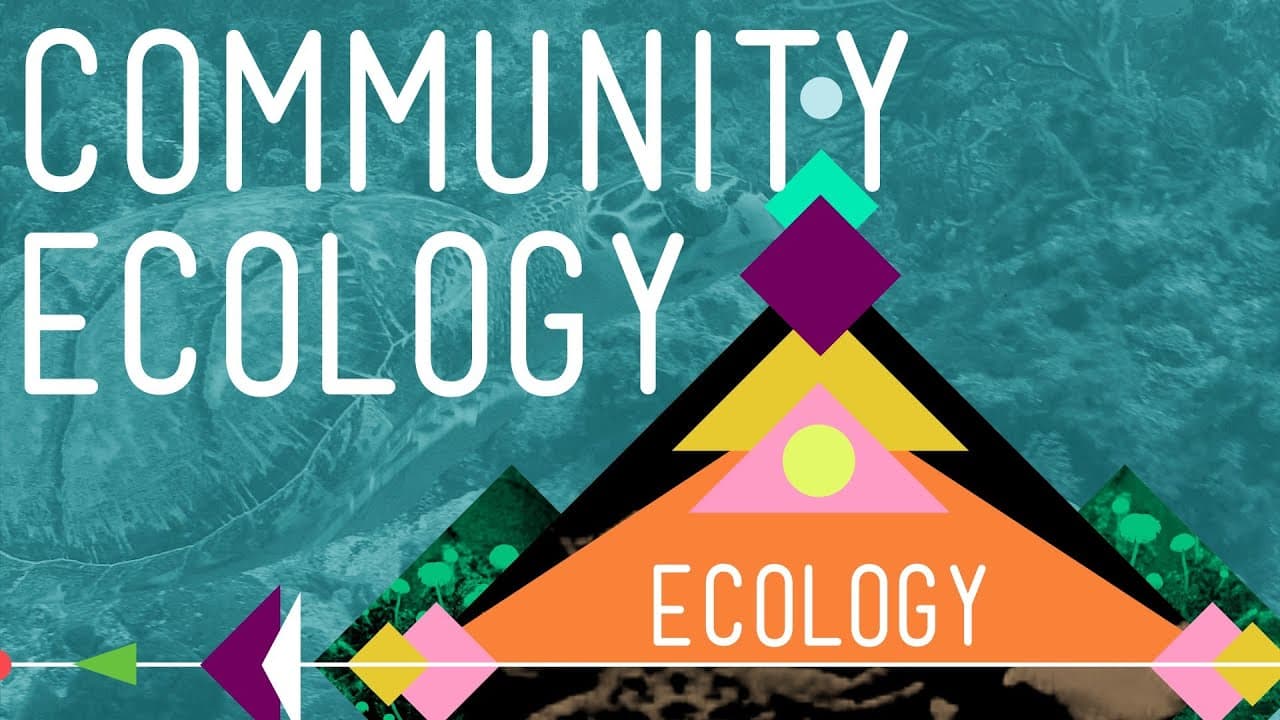
Community Ecology: Feel the Love - Crash Course Ecology #4
TL;DR
Community ecology explores species interactions and resource partitioning.
Transcript
I wouldn't be much of a teacher if I didn't tell you that life is tough and that everyone's looking out for themselves in this world. That's just the way it is, people. You know how I always say that biology is ultimately about sex and not dying? Well both of those things are more difficult than we'd like them to be, because of competition. There's... Read More
Key Insights
- Competition is a fundamental aspect of community ecology, driving species to compete for limited resources, which can lead to competitive exclusion.
- The Competitive Exclusion Principle states that two species competing for the same resources cannot coexist indefinitely, as one will outcompete the other.
- Species often avoid direct competition by occupying different ecological niches, which involve specific roles and resource usage in their environment.
- Robert MacArthur's research on warblers demonstrated resource partitioning, where similar species coexist by utilizing different parts of the same habitat.
- Character displacement occurs when species evolve distinct traits to minimize competition, as observed by Peter and Rosemary Grant in Galapagos finches.
- Mutualism is a form of interspecies interaction where both species benefit, such as the relationship between flowering plants and pollinators.
- Commensalism occurs when one species benefits from an interaction while the other is neither helped nor harmed, exemplified by barnacles on whales.
- Community ecology also explores how species interactions can lead to evolutionary changes, increasing diversity and stability in ecosystems.
Install to Summarize YouTube Videos and Get Transcripts
Explore YouTube Video Summarizer or Get YouTube Transcript Extractor
Questions & Answers
Q: What is the Competitive Exclusion Principle?
The Competitive Exclusion Principle, identified by G. F. Gause, states that two species competing for the same limited resources cannot coexist indefinitely. One species will outcompete the other, leading to the elimination of the less successful competitor. This principle is fundamental in understanding how species interactions shape ecological communities.
Q: How do species avoid direct competition?
Species avoid direct competition by occupying different ecological niches, which are specific roles and resource usage patterns in their environment. This allows them to coexist by utilizing different resources or areas within the same habitat, reducing direct competition and promoting community stability.
Q: What is resource partitioning?
Resource partitioning occurs when similar species divide resources or habitats to minimize competition and coexist. Robert MacArthur's study on warblers showed that different species used distinct parts of the same trees, demonstrating how resource partitioning allows species to find unique niches and avoid competitive exclusion.
Q: What is character displacement?
Character displacement is an evolutionary process where species develop distinct traits to reduce competition for resources. This was observed by Peter and Rosemary Grant in Galapagos finches, where smaller finches evolved to specialize in consuming smaller seeds after larger finches began dominating the larger seed resources.
Q: What is mutualism in ecology?
Mutualism is a type of interspecies interaction where both species benefit from the relationship. Examples include mycorrhizae, where fungi and plant roots exchange nutrients, and pollination, where plants provide nectar to attract pollinators, benefiting both the plants and the pollinators.
Q: What is commensalism?
Commensalism is a type of interspecies interaction where one species benefits while the other is neither helped nor harmed. An example is barnacles hitchhiking on whales, gaining access to plankton-rich waters without significantly affecting the whale, though there may be subtle impacts that are difficult to measure.
Q: How does community ecology contribute to understanding ecosystems?
Community ecology provides insights into how species interactions shape ecosystems, influence biodiversity, and contribute to ecological stability. By studying competition, niches, and symbiotic relationships, ecologists can better understand the complex dynamics that sustain ecosystems and the evolutionary processes that drive diversity.
Q: What role does natural selection play in community ecology?
Natural selection plays a crucial role in community ecology by favoring traits that enhance species' abilities to coexist and adapt to their environments. Traits that minimize competition and promote resource partitioning are selected for, leading to character displacement and the evolution of diverse ecological niches within communities.
Summary & Key Takeaways
-
Community ecology examines interactions between species, focusing on competition and resource partitioning to understand ecological dynamics and stability.
-
The Competitive Exclusion Principle and concepts like niches and resource partitioning explain how species coexist and avoid direct competition in ecosystems.
-
Mutualism and commensalism highlight how species interactions can be beneficial or neutral, contributing to the complexity and diversity of ecological communities.
Read in Other Languages (beta)
Share This Summary 📚
Summarize YouTube Videos and Get Video Transcripts with 1-Click
Try YouTube Summary with ChatGPT & Claude or YouTube Transcript Generator
Explore More Summaries from CrashCourse 📚


Summarize YouTube Videos and Get Video Transcripts with 1-Click
Try YouTube Summary with ChatGPT & Claude or YouTube Transcript Generator