How can AI agencies survive the AI automation shift?
TL;DR
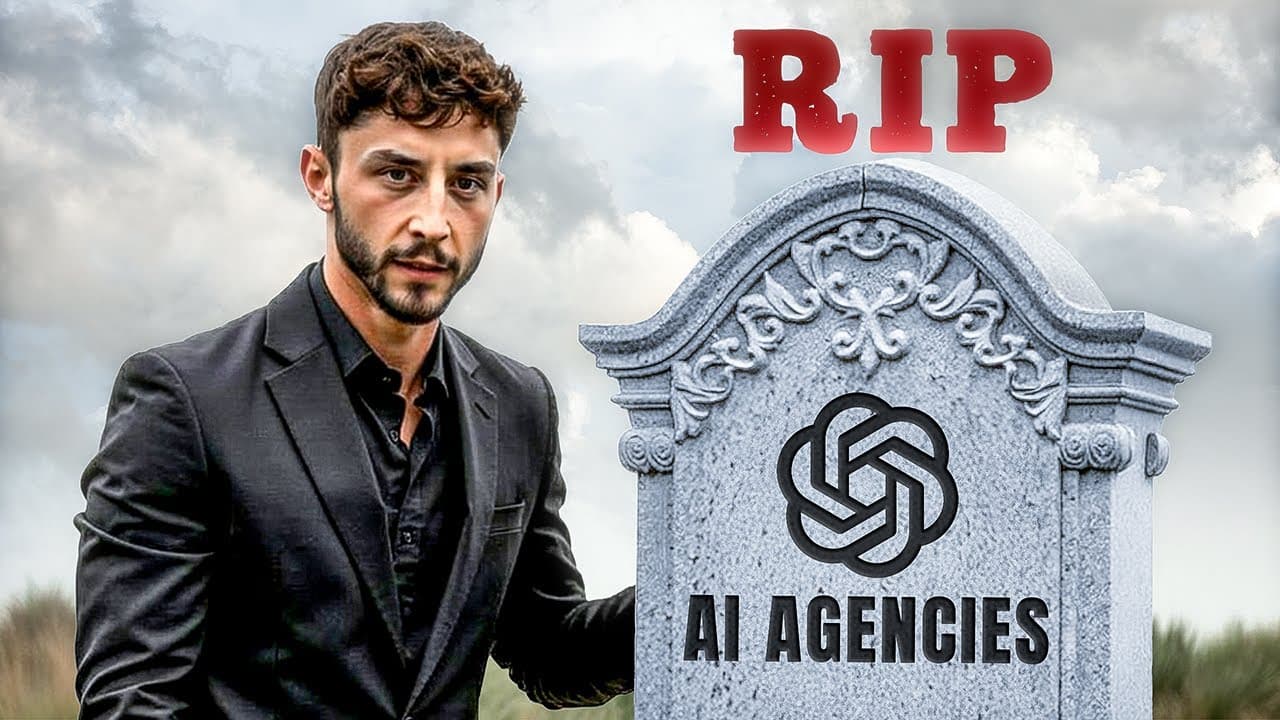
AI agencies face growing DIY automation and agent tools that threaten traditional development work. The solution is to shift from pure development to strategic transformation partnerships, audits, and value-based delivery. By adapting the service stack and focusing on high-value outcomes, agencies can stay competitive as automation becomes more accessible.
Transcript
all AI agencies will be out of business very soon i just figured out how to use Cloud 3.7 to generate pretty much any kind of automation let me show you how you can have an almost production ready NN workflow let's see what we got and you can click on little drop down here you'll see we've put together all of these different agents with one sing... Read More
Key Insights
- AI DIY tools are reducing the need for traditional development by enabling quick automation drafts from prompts and context.
- DIY automation growth threatens the traditional done-for-you model and will escalate as platforms become more capable and user-friendly.
- The market is shifting toward done-with-you and strategic transformation services, not just pure code or builds.
- The author and team have moved from technical implementation to strategic AI transformation partnerships, including high-value audits.
- A notable opportunity exists in a $73 billion blind spot that agencies can exploit with new delivery models and offerings.
- Cloud-based agents and browser automation are enabling scalable automation at lower costs, increasing competition for agencies.
- Historical patterns and data help forecast the shift and guide adaptive service design.
- A future-proof value stack should combine strategic consulting, audits, and scalable automation enablement to sustain revenue.
- More videos from this channel:
- More from this channel: Liam Ottley
Install to Summarize YouTube Videos and Get Transcripts
Explore YouTube Video Summarizer or Get YouTube Transcript Extractor
Questions & Answers
Q: What is driving the threat to traditional AI agencies according to the video?
The threat arises from AI and automation tools that can generate automation drafts, JSON schemas, and workflows with minimal human input. Tools like Claude, Copilot, and browser-based automation platforms enable users to build, test, and deploy automations quickly, reducing the need for specialized development work and challenging the value of traditional AI agencies.
Q: What change in service delivery does the video advocate for AI agencies?
The video advocates transforming from pure technical implementers to strategic AI Transformation Partners. This includes selling high-ticket audits, offering transformation guidance, and delivering systems and processes that align with business goals rather than just building automation solutions. The shift aims to add strategic value and sustainable revenue.
Q: What is the $73 billion blind spot mentioned, and why is it important?
The video mentions a $73 billion blind spot as an opportunity for agencies to pivot into new value areas. While the exact details are not fully enumerated, the implication is that there are sizable, underexploited opportunities in transformation, advisory, and scalable automation enablement that agencies can capture by expanding their offerings beyond pure development.
Q: How has the presenter’s agency responded to the shift toward DIY automation?
The presenter explains that his team at Morningside has rebranded and repositioned to focus on transformation partnerships rather than solely on development. They now provide high-value engagements like audits and strategic services that help businesses adopt AI at a strategic level, thereby preserving relevance and profitability in a commoditized market.
Q: What role do “AI agents” and automation builders play in the shift?
AI agents and automation builders are enabling rapid creation and deployment of automations, lowering barriers for non-developers to implement solutions. This accelerates competition for traditional AI agencies by commoditizing the development work and pushing agencies to differentiate through strategy, integration, and business-focused outcomes.
Q: Why is the DIY revolution considered both a threat and an opportunity?
It is a threat because DIY tools can replace many traditional development tasks, reducing the demand for consultants who only implement. It is an opportunity because agencies can pivot to offer high-value, strategic services such as transformation audits and value-based engagements, leveraging their expertise to guide clients through AI adoption and scale.
Q: What does the video suggest as a core pivot for resilience?
The core pivot is moving from purely technical execution to strategic AI transformation partnerships, where agencies provide guidance, roadmap design, and audits that ensure AI initiatives deliver business value. This reframing helps sustain revenue and leverage expertise in governance, strategy, and implementation within a changing landscape.
Q: How is the market expected to evolve according to the video?
The market is expected to become more accessible for DIY and DIY-with-you approaches, with platforms enabling more people to build automations themselves. As a result, agencies should evolve by offering higher-level strategic services, value-based pricing, and scalable delivery stacks to remain competitive and protect margins.
Summary & Key Takeaways
-
The video argues that DIY automation tools threaten traditional AI agency services by enabling non-experts to build automations, which lowers the value of purely technical work. It also notes that agents and low-code builders are making automation creation more accessible and faster.
-
A recommended path is for agencies to evolve into strategic partners offering transformation services, audits, and high-value deliverables rather than just iterable development work. This pivot aims to protect margins and relevance in a commoditizing market.
-
The creator cites a $73 billion blind spot and emphasizes moving toward a robust value stack and scalable, future-proof offerings as a core strategy for survival in the AI agency space.
Read in Other Languages (beta)
Share This Summary 📚
Summarize YouTube Videos and Get Video Transcripts with 1-Click
Try YouTube Summary with ChatGPT & Claude or YouTube Transcript Generator
Explore More Summaries from Liam Ottley 📚


Summarize YouTube Videos and Get Video Transcripts with 1-Click
Try YouTube Summary with ChatGPT & Claude or YouTube Transcript Generator