What are computer operating AI agents and how to use them

TL;DR
Computer operating AI agents represent a general purpose software model that can use a computer like a human. They sit above specialized automations and human operated tools, enabling on demand labor in digital tasks. Businesses may shift toward mixed human, automated, and computer operating agents to scale operations.
Transcript
So not too long ago, we had OpenAI release their chat GPT agent feature. Now, while this may seem like a handy consumerf facing feature within ChatGpt, it actually has significant ramifications for the AI automation agency model long-term because we're not just seeing a new consumer feature. We're not seeing a manis competitor come out from OpenAI.... Read More
Key Insights
- AI agents enable software to act as digital workers that operate a computer like humans do.
- A three tier AI landscape exists: automations, AI tools, and AI agents, with computer operating agents as the general form.
- Specialized agents outperform for narrow tasks such as research or lead generation.
- General computer operating agents fill gaps where flexibility and broad capability are needed.
- Dishwasher style agents are highly engineered for specific roles, unlike general agents which adapt to varied tasks.
- On demand labor concepts emerge as agents scale up and down with task demand, affecting data center utilization.
- The shift toward computer operating agents implies a new way to think about headcount and workflow orchestration in organizations.
- Choosing between specialized and general agents depends on task type and required adaptability.
- More videos from this channel:
- More from this channel: Liam Ottley
Install to Summarize YouTube Videos and Get Transcripts
Explore YouTube Video Summarizer or Get YouTube Transcript Extractor
Questions & Answers
Q: How do computer operating agents differ from traditional AI agents?
Computer operating agents are designed to operate a computer and navigate digital environments like a human, offering a general purpose capability beyond task specific automation. Traditional AI agents tend to be specialized or rely on managed workflows, whereas computer operating agents aim to perform a broad range of tasks with autonomous execution across digital spaces.
Q: What are the three categories of AI agents described in the talk?
The talk describes automations, AI tools, and AI agents as the three categories. Automations run on triggers or schedules and may not be AI driven. AI tools are human operated and perform operations in the background. AI agents can be human operated, automated, or computer operating and form is the core of the new landscape.
Q: Why is the headcount graph used in explaining AI agents?
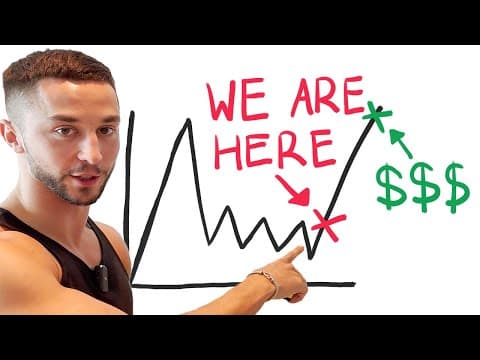
The headcount graph illustrates how AI agents could replace or augment human labor. As computer operating agents and automated agents scale up and down with task demand, human equivalents appear as spikes and resets. This helps visualize the shift toward on demand labor and its impact on resource planning.
Q: In what scenarios does a specialized agent win over a general agent?
Specialized agents excel in tasks that require deep focus and structured outputs, such as competitive research or targeted lead generation. They can leverage dedicated tools and sources to deliver faster, higher quality results specific to that domain, whereas general agents may be slower or less precise for narrow tasks.
Q: What role do data centers and GPUs play in the AI agent landscape?
Data centers and GPUs are central to enabling the power and scalability of AI agents. As agents operate at scale, the demand for computational resources increases, impacting capex and energy needs. The shift toward on demand labor through agents ties directly to infrastructure requirements.
Q: How do you decide between using a dishwasher style agent and a computer operating agent?
Dishwasher style agents are best when you need a specialized tool tailored to a role, delivering high efficiency for predictable tasks. Computer operating agents are preferred for flexible, cross functional work where the agent must navigate diverse digital tasks and adapt to changing requirements without re engineering.
Q: What impact could AI agents have on the labor market according to the talk?
AI agents could alter the labor market by creating on demand digital labor that scales with task needs. This could reduce traditional headcount for routine work while increasing demand for capability to design and manage agent workflows, as well as for infrastructure and governance to support large scale agent deployments.
Q: What is the practical takeaway for AI agencies from this shift?
AI agencies should prepare by embracing a mix of automation, AI tools, and computer operating agents. They should experiment with when to deploy specialized vs general agents, focus on scalable workflows, and plan for the infrastructure and governance needed to support autonomous digital workers in client projects.
Summary & Key Takeaways
-
The video explains a new category called computer operating agents that can use a computer like a human, expanding beyond traditional APIs. It contrasts this with specialized dishwasher agents and human operated tools to map how tasks can be performed. The discussion links these agents to on demand labor and data center capacity.
-
It outlines a three tier landscape: automations, AI tools, and AI agents, with computer operating agents as the general form. The speaker argues this shift will change labor markets and organizational workflows, including how leadership teams coordinate actions across agents.
-
The presenter provides a framework for choosing between specialized vs general agents for common tasks, highlighting that specialized agents excel at specific tasks like competitive research while general agents handle broader, cross functional work.
Read in Other Languages (beta)
Share This Summary 📚
Summarize YouTube Videos and Get Video Transcripts with 1-Click
Try YouTube Summary with ChatGPT & Claude or YouTube Transcript Generator
Explore More Summaries from Liam Ottley 📚

Summarize YouTube Videos and Get Video Transcripts with 1-Click
Try YouTube Summary with ChatGPT & Claude or YouTube Transcript Generator