How Could a Second American Civil War Start?
TL;DR
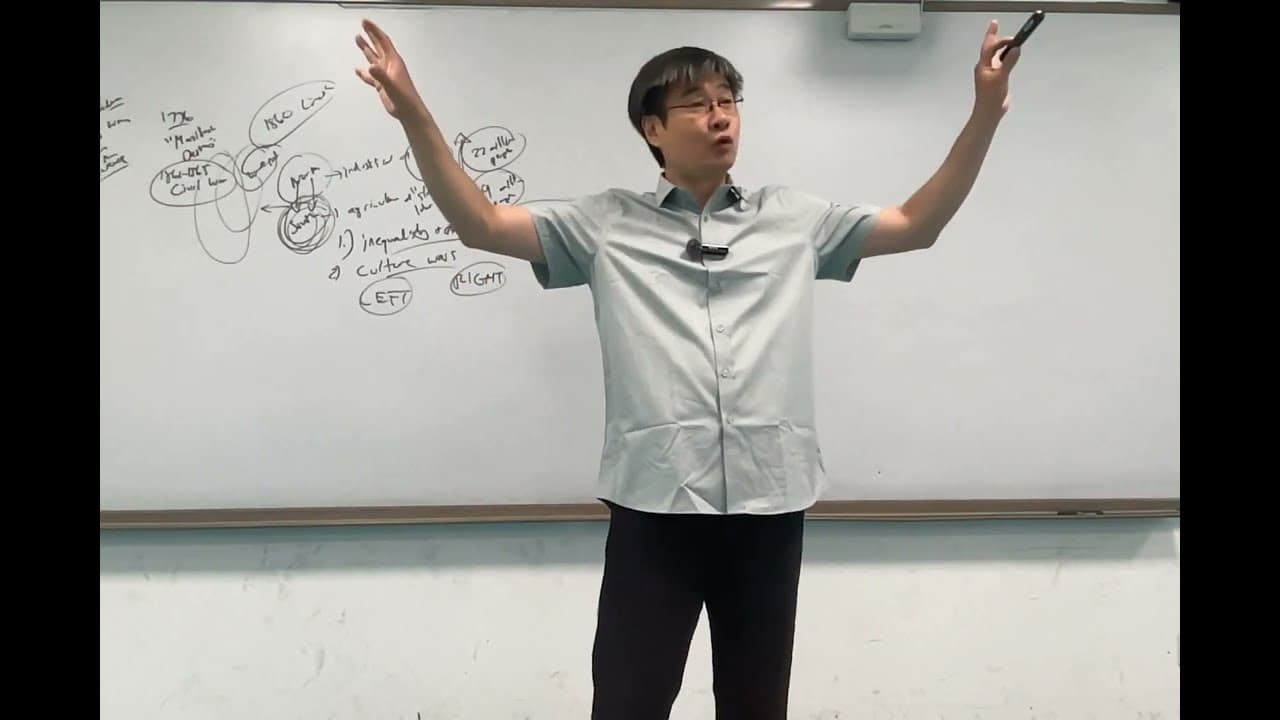
The video argues that a Second American Civil War is likely due to rising political polarization, culture wars, and inequality, which erode trust in institutions and shared narratives. It notes that a Trump victory could trigger riots and unrest, while a Trump refusal to step down in 2028 could spark a broader conflict, making civil war more plausible.
Transcript
today uh we will be discussing the second um American Civil War so I want to make the you the argument that um a conflict is very likely and so we'll be discussing why it's likely how this war will menit benefits itself and what will happen after this war okay so the first thing to know about America is that it is a country that enjoys violence oka... Read More
Key Insights
- A country with a long history of violence correlates with higher risk of future internal conflict.
- The central drivers are polarization, culture wars, and inequality that exhaust common ground.
- Distrust in government, media, science, and institutions fuels belief in alternate narratives.
- Narratives like the American Dream and liberalism are seen as breaking down, increasing fragility of social bonds.
- Empire versus democracy tensions create friction between foreign policy ambitions and domestic well being.
- Wealth concentration and the rentier economy intensify social resentment and political volatility.
- The video links potential violent outcomes to specific political events such as elections and leadership transitions.
- Historical patterns of conflict resolution through violence rather than diplomacy shape future risk assessment.
- More videos from this channel:
- More from this channel: Predictive History
Install to Summarize YouTube Videos and Get Transcripts
Explore YouTube Video Summarizer or Get YouTube Transcript Extractor
Questions & Answers
Q: What are the three trends that the video says make civil war more likely in America?
The video identifies three trends that raise the likelihood of civil war: polarization driven by culture wars and inequality, breakdown of binding narratives like the American Dream and liberalism, and growing distrust of national institutions including the government, media, science, military, universities, and the justice system. These factors interact to increase social fragmentation and reduce the perceived legitimacy of peaceful political processes.
Q: Why does the speaker believe a Trump victory could lead to riots and civil unrest?
The speaker argues that a Trump victory could ignite riots and civil unrest because it would be interpreted as a legitimacy crisis by opponents, which would escalate existing tensions. The context frames political victories as triggers for broader conflict when institutions and public faith in them are already eroded, leading to more volatile responses from competing factions.
Q: What does the description say about what could happen if Trump refuses to step down in 2028?
If Trump refuses to step down in 2028, the description suggests that the refusal could escalate into a civil war, reflecting a breakdown in constitutional norms and institutional processes. This scenario is presented as a potential tipping point where political deadlock and factional conflict could become open violence rather than peaceful transfer of power.
Q: How does the video describe America’s historical approach to conflict resolution?
The video describes America as a country that historically resolves conflicts through force rather than diplomacy. It argues that warfare has been a more common pattern than negotiated settlements, influencing contemporary expectations and responses during times of political crisis. This lens implies that future crises may similarly favor confrontation.
Q: What role does inequality play in the risk of civil conflict according to the video?
Inequality is portrayed as a driver of civil conflict by concentrating wealth and control over the means of production among a small elite, while the broader population faces debt and economic insecurity. This imbalance fuels resentment, undermines social cohesion, and makes collective action more likely to take the form of violent upheaval when combined with polarization.
Q: What are the culture war dynamics described in the video as contributing to division?
Culture war dynamics contribute to division by aligning political identities with religious and ideological visions, creating a split between groups that see themselves as part of a traditionalist Christian right and those who advocate secular, liberal, or eclectic values. This divide is intensified by urban, coastal, and highly educated demographics who generally hold different policy preferences and life experiences.
Q: Why does the video emphasize distrust in institutions as a danger signal?
Distrust in institutions signals a dangerous erosion of shared standards and accountability. When people doubt the legitimacy or competence of government, media, science, and other institutions, they are less likely to accept peaceful, institutional channels for dispute resolution. This gap can push factions toward alternative, sometimes violent, means to pursue their goals.
Q: What historical patterns does the video draw on to explain current risk levels?
The video notes that America has fought wars for long periods since its founding and has historically resolved conflicts through force. It emphasizes that industrial and geographic divides created sectional tensions there were momentous, like the Civil War, and posits that such patterns of violent resolution inform current risk assessments, especially under rising polarization and distrust in institutions.
Q: What warning does the description give about leadership decisions in a crisis?
The description warns that leadership decisions during a crisis could determine whether tensions remain contained or escalate into broader conflict. Specifically, it argues that the way political leaders handle elections and transitions could either stabilize the system or trigger violent upheaval if norms are breached and civil institutions are tested under extreme strain.
Summary & Key Takeaways
-
The video outlines three accelerating trends that heighten civil conflict risk: polarization driven by culture wars and inequality, breakdown of core national narratives, and growing distrust in national institutions. These factors compound over time, increasing the probability of violent escalation. The analysis emphasizes how historical patterns shape present danger.
-
It frames America as a country with a long history of violence and centralized power, where conflicts are often resolved through confrontation rather than diplomacy. This lens is used to project potential future civil strife under deep political and social fracture.
-
A warning is given about the potential for civil unrest sparked by political change, particularly around the 2028 election scenario, suggesting that leadership decisions could determine whether tensions stay contained or escalate into broader conflict.
Read in Other Languages (beta)
Share This Summary 📚
Summarize YouTube Videos and Get Video Transcripts with 1-Click
Try YouTube Summary with ChatGPT & Claude or YouTube Transcript Generator
Explore More Summaries from Predictive History 📚





Summarize YouTube Videos and Get Video Transcripts with 1-Click
Try YouTube Summary with ChatGPT & Claude or YouTube Transcript Generator