What Happened to Iran President Raisi? How Did He Die?
TL;DR
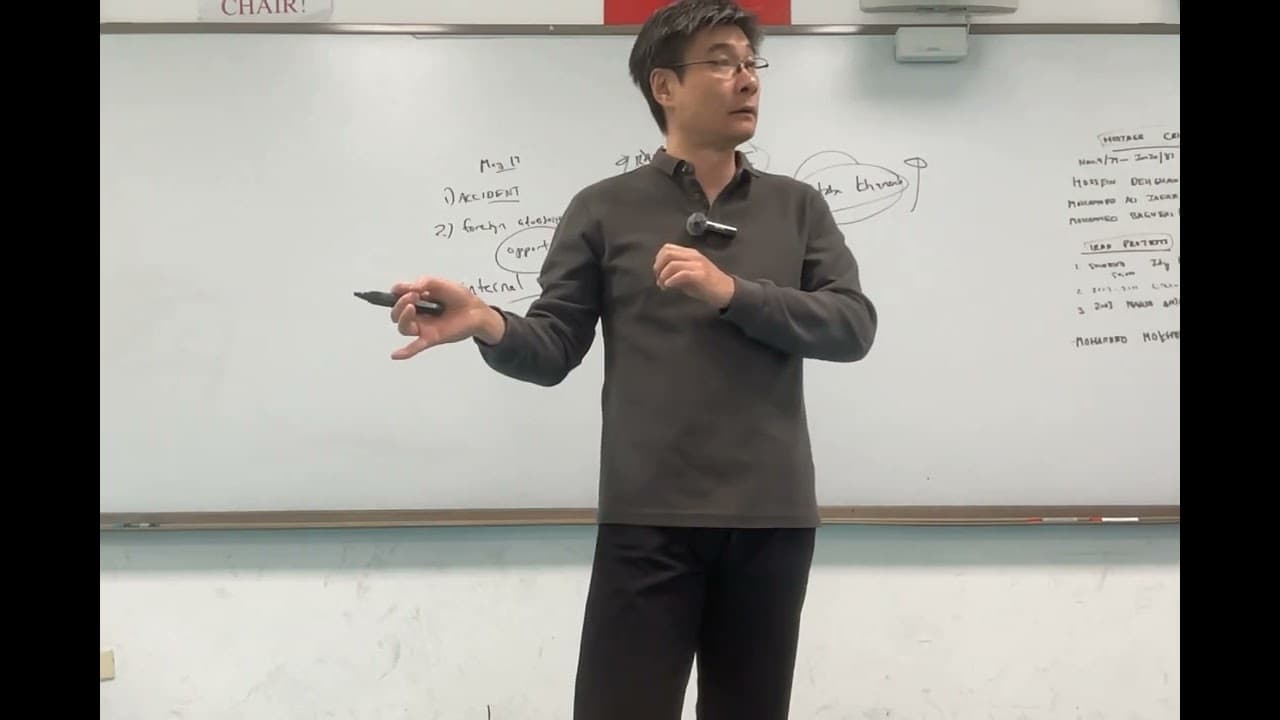
Most evidence points to an accident due to weather and an old helicopter, not assassination. The video explores three competing explanations—accident, foreign adversary, and internal enemies—and explains why limited information makes confident judgments difficult, while noting how power dynamics with the IRGC could shape Iran’s future leadership.
Transcript
okay so let's start class and start to think about the question how and why did the Iranian president uh Ibraham Ry died okay so um when you do history or you when you do analysis about current events you're always going to have you're always going to encounter three major problems okay um the first major problem is that there's very little informa... Read More
Key Insights
- Raising three problems is essential when analyzing events with limited information: truth, misinformation, and official narratives.
- The accident theory is supported by weather conditions and the aging helicopter, suggesting a plausible, non-coordinated crash scenario.
- Foreign adversaries face issues of opportunity and motive, making a successful assassination complex in Iran and Iraq surroundings.
- Internal enemies are another possibility, since overlapping authorities could complicate protection and assassination dynamics.
- The Ayatollah wields ultimate authority while the president acts as a CEO, making succession a critical political question.
- Mojtaba Khamenei is identified as a potential favorite to become the next Ayatollah, which would challenge hereditary legitimacy in Iran.
- The IRGC is portrayed as a private army with power over a large portion of Iran's economy, potentially shaping both domestic policy and foreign actions.
- If Raisi had become Ayatollah, the IRGC might have used more influence to pursue broader foreign policy goals, affecting U.S.-Iran tensions.
- More videos from this channel:
- More from this channel: Predictive History
Install to Summarize YouTube Videos and Get Transcripts
Explore YouTube Video Summarizer or Get YouTube Transcript Extractor
Questions & Answers
Q: How could weather and helicopter conditions influence Raisi's death analysis
Weather and equipment conditions provide a plausible explanation for the helicopter crash and are a focal point in early analysis of Raisi's death. The existence of an old helicopter and limited disclosure from authorities contribute to the likelihood of a non hostile explanation. This view emphasizes accident risks and systemic maintenance challenges within Iran's aviation context, avoiding premature conclusions about intent.
Q: What role does the IRGC play in Iran according to the video
The IRGC is described as a powerful force that dominates a large portion of the economy and has influence over Iran's foreign policy. It functions as a private army that protects the revolution and exports it abroad, and its power is framed as a factor that would influence any scenario involving leadership changes such as Raisi's potential succession as Ayatollah. This context helps explain why opponents might fear shifts in control.
Q: Why is there uncertainty about Raisi's death in the video
Uncertainty arises from limited information disclosed by the Iranian government, the possibility of misinformation, and reliance on official narratives that viewers may question. The discussion emphasizes the difficulty of drawing firm conclusions when multiple plausible scenarios exist, including accident, foreign involvement, and internal factional action, each with different implications for Iran’s power structure.
Q: Who are the potential successors mentioned in the video
The video mentions Mojtaba Khamenei as a leading contender and also notes Musta Kami as a second contender. The discussion frames these possibilities within the context of Iran's political system and the potential legitimacy concerns of hereditary leadership, suggesting that the succession could affect the balance of power among Iranian elites and security structures.
Q: What is the main reason the video discusses foreign adversaries as a possibility
The possibility of foreign involvement is considered because there are historical precedents where external actors have targeted Iranian figures, and because Raisi’s death could affect regional influence. However, the video notes that motive and opportunity are hard to establish, particularly given the complexities of Iran’s security environment and the risk of misattributing blame.
Q: How does the video describe the Ayatollah’s role in Iran
The Ayatollah is described as the ultimate authority who represents God and the Quran, with the president acting like a CEO. This structure means that changes in leadership could shift policy directions, especially if the next Ayatollah relies on or contests the influence of powerful groups like the IRGC. The dynamic shapes the political landscape.
Q: What historical context does the video provide about the IRGC
The video explains that the IRGC was founded after the 1979 revolution to protect the revolution and export it, becoming deeply involved in Iran's economy and governance. This legacy helps explain why the IRGC could become a dominant force in future leadership scenarios and why its interests would matter in any consideration of Raisi’s death.
Q: What does the video imply about the next steps after Raisi’s death
The video implies that analysts would examine whether Raisi’s death accelerates a shift in leadership toward a figure who can secure support from powerful groups like the IRGC, potentially altering Iran’s internal dynamics and foreign policy. It highlights the risk that the IRGC could leverage the situation to pursue broader goals in the Middle East and with the United States.
Summary & Key Takeaways
-
The summary explains that the incident occurred during a presidential helicopter flight with nine people on board and that the official narrative emphasizes an accident due to weather and equipment, while alternatives consider foreign or internal actors and motives. It highlights the role of limited information and official narratives.
-
The summary notes that the IRGC is described as a powerful force in Iran that could influence the selection of the next Ayatollah and the country’s policies, potentially affecting regional dynamics and U.S. Iran relations if Raisi's death had different outcomes.
-
The summary discusses how the IRGC's power and the succession process to the next Ayatollah would shape legitimacy and policy, with implications for how Iran would balance internal control and foreign policy across the Middle East.
Read in Other Languages (beta)
Share This Summary 📚
Summarize YouTube Videos and Get Video Transcripts with 1-Click
Try YouTube Summary with ChatGPT & Claude or YouTube Transcript Generator
Explore More Summaries from Predictive History 📚





Summarize YouTube Videos and Get Video Transcripts with 1-Click
Try YouTube Summary with ChatGPT & Claude or YouTube Transcript Generator