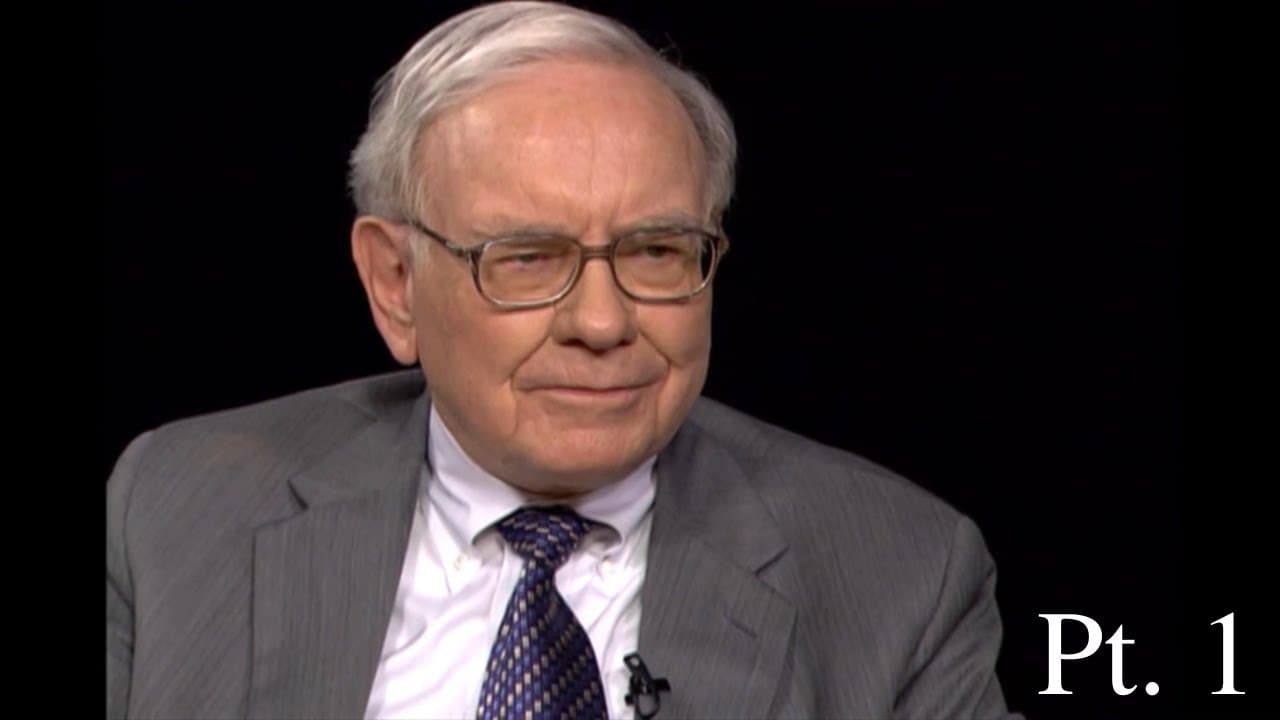
Warren Buffett | Charlie Rose | Pt. 1 | July 10, 2006
TL;DR
Warren Buffett says his success rests on focused capital allocation and talented managers who remain passionate about their businesses. At Berkshire Hathaway, he independently decides how to invest between 100 million and 150 million dollars arriving each week after operating needs are met. He also discusses his modest Omaha life, childhood entrepreneurship, formative influences, and decision to give 31 billion dollars to the Bill and Melinda Gates Foundation. Read on for his principles in detail.
Transcript
warren buffett is the second richest man in the world worth about 44 billion dollars he is chairman of the berkshire hathaway corporation he made headlines around the world on monday june 26 2006 when he announced he was giving 31 billion dollars of his wealth to the bill and melinda gates foundation together they have created a foundation which wi... Read More
Key Insights
- Buffett’s principal responsibility at Berkshire Hathaway is capital allocation. He says the company receives between 100 million and 150 million dollars each week after operating-business needs are met, and he independently decides whether to deploy it into securities, bonds, equities, whole businesses, cash, or other sensible opportunities.
- Berkshire Hathaway’s management model is built around talented, high-grade managers who are happy running their businesses. Buffett generally acquires a manager along with a company because he does not claim to know how to operate every business Berkshire owns.
- A seller’s continuing passion for the business is a central acquisition consideration for Buffett. He looks managers in the eye and tries to determine whether they primarily love the money or also love the enterprise, because enduring enthusiasm matters after ownership changes.
- Managerial autonomy is a major reason executives remain at Berkshire Hathaway. Buffett says managers want to paint their own picture, receive fair treatment, avoid being taken advantage of, and earn praise from someone whose understanding makes that recognition meaningful.
- Focus is the ability to concentrate on what is important within a game a person understands. Buffett identifies focus as a defining strength, while also acknowledging that he was fortunate to be born with suitable wiring, in America, during a period of large capital markets.
- Buffett’s modest Omaha life reflects his preference for continuity and community. He remained in the house he bought in 1958, worked from the same office for decades, and valued the fact that several generations of his family attended the same public high school.
- Buffett’s entrepreneurial behavior began in childhood. At about six years old, he bought six-packs of Coca-Cola from his grandfather’s grocery store for a quarter and sold the bottles for a nickel each, demonstrating an early interest in commerce and simple resale economics.
- Buffett’s major personal and intellectual influences included his father and Ben Graham. He regarded his father as the best human being he had known, despite political disagreements, while Graham gave him the investment framework that became foundational to his work.
Install to Summarize YouTube Videos and Get Transcripts
Explore YouTube Video Summarizer or Get YouTube Transcript Extractor
Questions & Answers
Q: What are Warren Buffett’s main responsibilities at Berkshire Hathaway?
Buffett identifies two principal responsibilities: allocating Berkshire Hathaway’s available capital and keeping talented, high-grade managers happy while they run its businesses. He leaves operating decisions such as building plants to those managers, then decides where the remaining money should go.
Q: How does Warren Buffett allocate Berkshire Hathaway’s capital?
Buffett says Berkshire receives between 100 million and 150 million dollars each week after its operating businesses meet their needs. He may allocate that money to marketable securities, bonds, equities, whole businesses, or temporary cash holdings, and he makes those decisions without a committee or advisers.
Q: What does Warren Buffett look for when buying a business?
Because Buffett does not claim to know how to run every company Berkshire buys, he usually expects the existing manager to come with the business. He looks for managers who care about money but also genuinely love the enterprise and remain passionate about operating it.
Q: Why do managers stay at Berkshire Hathaway?
Buffett says Berkshire managers receive autonomy to run their companies and “paint” their own pictures without constant interference. They also want fair treatment and informed recognition, and Buffett credits these conditions with Berkshire’s remarkable success in retaining managers.
Q: What does focus mean to Warren Buffett?
For Buffett, focus means knowing your game and concentrating on what is important while reducing distractions. He also acknowledges that he was fortunate to be born with suitable wiring, in America, at a time when large capital markets offered exceptional opportunities.
Q: Why did Warren Buffett give 31 billion dollars to the Bill and Melinda Gates Foundation?
The interview introduces Buffett’s announcement on June 26, 2006, that he would give 31 billion dollars of his wealth to the Bill and Melinda Gates Foundation. It describes the gift as arising from friendship, shared values, and mutual admiration, and says the resulting foundation would have more than 60 billion dollars to give away.
Q: How modest was Warren Buffett’s life in Omaha?
Buffett says Omaha felt like home because his friends, family history, and community were there. He lived in the house he bought in 1958 and had worked from the same office for 42 years, while several generations of his family attended the same public high school.
Q: How did Warren Buffett begin doing business as a child?
Buffett’s entrepreneurial activity began at about six years old. He bought six-packs of Coca-Cola from his grandfather’s grocery store for a quarter and sold each bottle for a nickel.
Summary
Warren Buffett, the second richest man in the world, is known for his extraordinary generosity and remarkable intelligence. He owns 31% of Berkshire Hathaway, a company with a stock market value of $140 billion. Despite his wealth and fame, Buffett leads a modest lifestyle in his hometown of Omaha, Nebraska. He prioritizes asset allocation and relies on talented managers to run his businesses. Buffett believes in focusing on what's important, investing in businesses he understands, and maintaining a strong ethical compass.
Questions & Answers
Q: Who is Warren Buffett and what made him famous?
Warren Buffett is the second richest man in the world with a net worth of $44 billion. He is the chairman of Berkshire Hathaway, a company valued at $140 billion. His extraordinary generosity made headlines in 2006 when he donated $31 billion to the Bill and Melinda Gates Foundation.
Q: What are some of the famous brand names owned by Berkshire Hathaway?
Berkshire Hathaway owns part of some of America's most famous brand names, including Coca-Cola, The Washington Post Company, American Express, Procter & Gamble, Fruit of the Loom, See's Candy, and the Nebraska Furniture Mart.
Q: How would you describe Buffett's lifestyle?
Despite his fame and wealth, Buffett leads a remarkably modest lifestyle. He still lives in the same house he bought in 1958 and has been in the same office for 42 years. He values his hometown of Omaha, where his family has lived for generations, and feels a strong sense of community.
Q: What is Buffett's approach to asset allocation?
Buffett's job is to allocate the remaining funds coming into Berkshire Hathaway after the needs of the operating businesses are taken care of. He has the flexibility to invest in marketable securities, bonds, equities, whole businesses, or temporarily hold cash. His goal is to find investments that make sense to him.
Q: How does Buffett choose which businesses to invest in?
When Buffett buys a business, he is also buying the manager. He looks for managers who have a passion for their business and love what they do. He wants to ensure that they are not just in it for the money, but also for the love of the business. Buffett wants to work with talented managers who are happy running their businesses.
Q: What influenced Buffett's investing philosophy?
Buffett's investing philosophy was greatly influenced by his mentor, Ben Graham. Graham taught him to look at stocks as pieces of a business and to figure out what the business is worth. This approach helped Buffett focus on the economics of a business and not just on stock charts or price movements.
Q: How does Buffett instill ethical leadership within his organization?
Buffett values reputation and ethical decision-making within Berkshire Hathaway. He asks his managers to judge every action they take not only by legal standards but also by the "newspaper test." He wants them to consider how they would feel if their actions were written up in the local newspaper and read by their family, friends, and neighbors. Buffett strives to create a culture of fairness and reputation within his company.
Q: Why does Buffett enjoy speaking to students?
Buffett enjoys speaking to students because he believes he can make a positive impact on their lives. He wants to share his experiences and advice, particularly with business students who are looking for guidance in their careers. Buffett believes that if he can change the life of even one student, it is worth the effort.
Q: What advice did Buffett's father give him that had a significant impact on his life?
Buffett's father taught him the importance of focusing on his inner scorecard rather than his outer scorecard. He encouraged Buffett to prioritize his own values and beliefs rather than seeking validation from others. This advice taught Buffett to be true to himself and not to worry about external judgments.
Q: How does Buffett measure success?
Buffett believes that success is not measured by external achievements or material wealth. He believes that true success lies in the quality of relationships and friendships. Buffett gives the example of his friend who survived Auschwitz, who defines friendship as "who would hide me." He believes that if you have people who would hide you, you can consider your life a success.
Summary & Key Takeaways
-
Warren Buffett describes his life in Omaha as grounded in continuity, community, and familiar surroundings. He remained in the house he bought in 1958 and worked from the same office for decades. Despite extraordinary wealth, he emphasizes enjoying his work, maintaining longstanding relationships, and living where his family has deep roots.
-
Buffett identifies two principal responsibilities at Berkshire Hathaway. He allocates the cash remaining after operating businesses meet their needs, choosing among securities, bonds, equities, entire businesses, and temporary cash holdings. He also seeks talented, high-grade managers who remain passionate about their companies and appreciate autonomy, fairness, and knowledgeable recognition.
-
Buffett connects his development to focus, early entrepreneurship, family influence, and education. He sold Coca-Cola bottles as a young child, deeply admired his father’s character, and acknowledged that they differed politically. After marrying Susie Thompson, he studied and worked with Ben Graham, who provided the investment framework that shaped his thinking.
Read in Other Languages (beta)
Share This Summary 📚
Summarize YouTube Videos and Get Video Transcripts with 1-Click
Try YouTube Summary with ChatGPT & Claude or YouTube Transcript Generator
Explore More Summaries from Investor Archive 📚

Summarize YouTube Videos and Get Video Transcripts with 1-Click
Try YouTube Summary with ChatGPT & Claude or YouTube Transcript Generator