How Do Religious Texts Influence Beliefs Today?
TL;DR
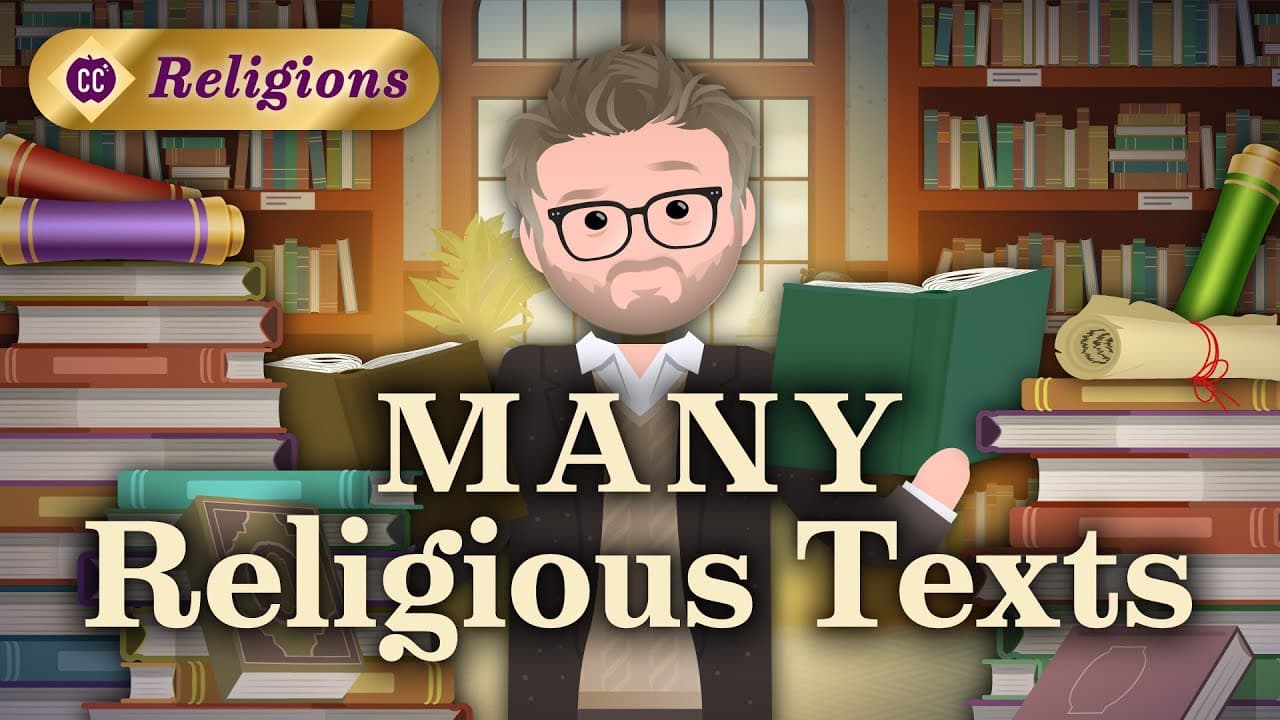
Religious texts often remain unchanged, but the interpretations evolve with time and culture. This dynamic allows religious communities to adapt their beliefs and practices, as seen in the ordination of women clergy in some Christian sects. The negotiation between religious texts and their followers is a source of both conflict and growth, highlighting the diverse ways sacred texts are approached across different faiths.
Transcript
Hi, I’m John Color of My Shirt, and welcome to Crash Course Religions. Here’s a not-at-all controversial question: Should religious leaders exclusively be men? For a number of religions, throughout much of history, the official answer has been: yes. Including my religion of Christianity. Many Church leaders have argued the Bible is clear: boys ... Read More
Key Insights
- Religious texts are static, but interpretations evolve with cultural changes.
- The ordination of women in Christian denominations shows changing interpretations.
- Sacred texts often reflect the social and political issues of their time.
- Interpretations of texts can vary widely among religious followers.
- Some religions view texts as divinely inspired, while others see them as historical records.
- The Bible and the Qur'an are approached differently in terms of interpretation and translation.
- Hindu texts like the Vedas are considered outside of history and without flaws.
- Sikhism's Guru Granth Sahib is both a sacred text and a spiritual leader.
Install to Summarize YouTube Videos and Get Transcripts
Explore YouTube Video Summarizer or Get YouTube Transcript Extractor
Questions & Answers
Q: How do religious texts influence modern beliefs?
Religious texts influence modern beliefs by serving as foundational documents that followers interpret in light of contemporary cultural and social contexts. As societies evolve, the interpretations of these texts can lead to changes in practices and beliefs, such as the ordination of women clergy in some Christian sects, highlighting the dynamic relationship between texts and followers.
Q: Why do interpretations of religious texts vary?
Interpretations of religious texts vary due to differences in cultural, historical, and personal contexts. Each reader brings their own perspective, influenced by their environment and experiences, leading to diverse understandings. This variability allows religious communities to adapt and find relevance in texts despite their static nature.
Q: What role do sacred texts play in different religions?
Sacred texts play varied roles across religions, ranging from historical records to divine revelations. In Christianity and Islam, texts like the Bible and Qur'an hold central theological significance. In Hinduism, texts like the Vedas are seen as flawless and outside history, while Sikhism's Guru Granth Sahib serves as both scripture and spiritual leader, illustrating diverse functions of sacred texts.
Q: How do cultural changes affect religious text interpretations?
Cultural changes affect religious text interpretations by prompting re-evaluations of traditional beliefs and practices. As societies progress, new social norms and values can lead to different readings of texts, allowing communities to adapt their beliefs to better align with contemporary issues, such as gender equality and environmental activism.
Q: What is the significance of translation in religious texts?
Translation plays a crucial role in religious texts by making them accessible to a wider audience, but it also introduces challenges in maintaining the original meaning. For instance, while the Bible has numerous translations considered valid, the Qur'an is viewed as authentic only in its original Arabic, highlighting the importance of language in preserving sacred texts' integrity.
Q: How do religious communities negotiate with their sacred texts?
Religious communities negotiate with their sacred texts by interpreting them in ways that align with contemporary values and challenges. This process involves balancing tradition with modernity, leading to diverse practices and beliefs within the same faith. Negotiation fosters both unity and conflict, as communities strive to find relevance in ancient writings.
Q: What is the role of the Guru Granth Sahib in Sikhism?
In Sikhism, the Guru Granth Sahib serves as both a sacred text and the eternal spiritual leader, following a lineage of ten human gurus. It comprises hymns and poetry, guiding Sikhs in their faith and daily lives. Its status as a legal person in India underscores its significance, illustrating the unique roles sacred texts can assume in different religions.
Q: Why are some religious texts considered outside of history?
Some religious texts, like the Hindu Vedas, are considered outside of history because they are viewed as transcendental and without human authorship. This belief attributes a flawless and eternal nature to the texts, distinguishing them from historical records and emphasizing their divine origin and timeless relevance in guiding spiritual and moral conduct.
Summary & Key Takeaways
-
Religious texts, while static, are subject to evolving interpretations due to cultural shifts. This adaptability is evident in changes such as the ordination of women clergy in some Christian sects. The negotiation between texts and followers fosters both conflict and growth, illustrating diverse approaches to sacred texts across faiths.
-
The Bible and Qur'an are interpreted differently; the former has numerous translations considered valid, while the latter is seen as authentic only in Arabic. Hindu texts like the Vedas are viewed as flawless due to their transcendental authorship, showing the range of perspectives on sacred texts.
-
Sikhism's Guru Granth Sahib serves as both a sacred text and a spiritual leader, highlighting the unique roles texts can play. The negotiation between religious texts and followers is a source of ongoing vibrancy, growth, tension, and conflict within religious communities.
Read in Other Languages (beta)
Share This Summary 📚
Summarize YouTube Videos and Get Video Transcripts with 1-Click
Try YouTube Summary with ChatGPT & Claude or YouTube Transcript Generator
Explore More Summaries from CrashCourse 📚


Summarize YouTube Videos and Get Video Transcripts with 1-Click
Try YouTube Summary with ChatGPT & Claude or YouTube Transcript Generator