How to Scale Intent and Quality in AI Products
TL;DR
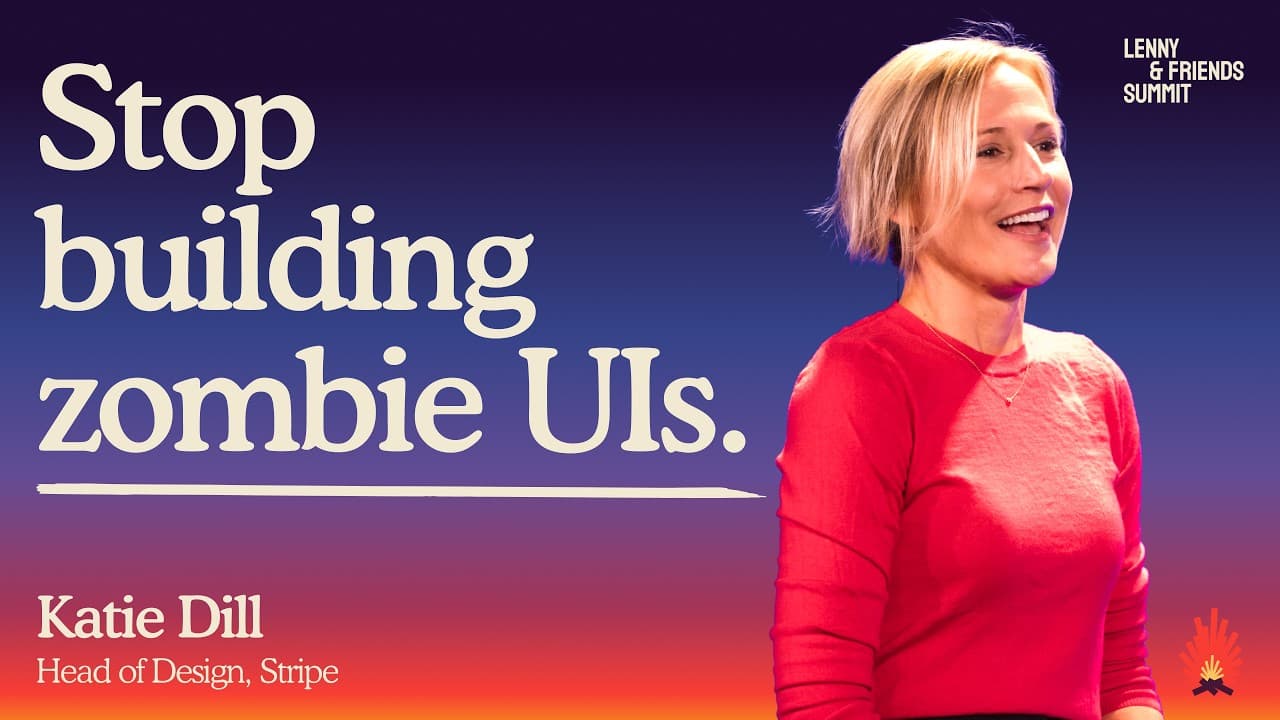
AI products avoid generic results when teams define a clear point of view, encode their standards into the tools used for production, and evaluate outputs by quality rather than speed or method. AI can accelerate building, but teams must still understand user context, revise beyond polished first drafts, and apply meticulous care to details.
Transcript
Good morning. Right after World War II, there was a massive building boom, the largest in history. In the US, people were coming home from war. There were new technologies, new construction methods, and buildings were going up like gang busters. The builders of that day drew on the style of modernism from the 1920s. That's really simple geometries,... Read More
Key Insights
- Large language models are strongest at producing probable answers based on what has worked or become popular, but they are less effective at generating ideas specific to a particular brand, user, and context. Without deliberate direction, their outputs tend toward familiar patterns.
- The temptation of done is created when AI turns a short prompt into an apparently polished interface almost immediately. Finished-looking corners, shadows, and layouts can conceal unresolved questions about whether the product solves the problem, fits its context, or meaningfully differentiates itself.
- AI-generated work can feel disposable because it is quick and easy to produce. Treating it that way weakens responsibility for decisions, including consideration of long-term maintenance, and can contribute to software that appears monotonous, vacant, or insufficiently cared for.
- A clear point of view is the foundation for using AI without surrendering product identity. Teams must define what their brand represents, who they want to be for users, and what those users care about before AI begins making distributed design decisions.
- Quality is determined by the final output, not by whether AI or a person created it. Stripe applied the same standards to an AI-assisted advertisement, identified 17 improvements, and used detailed refinement to bring the work closer to the intended brand expression.
- Taste develops through disciplined noticing of what users need and want, including needs they do not explicitly state. Observing signals of good, great, and mediocre work across products, art, science, and analogous situations helps builders create stronger standards and a broader perspective.
- The object of design is increasingly the system rather than an individual screen. Since agents and distributed builders can create interfaces without a designer present, modern design systems must explicitly encode decisions that people previously supplied informally by filling in the blanks.
- Stripe's design-system CLI is more opinionated than a documentation-only approach because it includes full templates and flows alongside components. It supplies guidance where builders work, consumes documentation at the relevant time, reduces context rot, and makes AI outputs more coherent.
Install to Summarize YouTube Videos and Get Transcripts
Explore YouTube Video Summarizer or Get YouTube Transcript Extractor
Questions & Answers
Q: How can teams prevent AI products from becoming generic?
Teams can prevent generic AI products by establishing a clear point of view before asking AI to build. That point of view should define the brand, its purpose for users, the relationship it wants with them, and what those users value. Teams must then encode these standards into production tools, examine user context, and refine outputs beyond the first polished draft.
Q: Why does AI often produce generic user interfaces?
AI often produces generic interfaces because large language models are good at returning probable answers based on established patterns, popular styles, and approaches that worked previously. They are less capable of independently identifying what is original or uniquely appropriate for a specific brand and user context. When builders provide no strong direction, familiar conventions become the default point of view.
Q: What does zombie UI mean in AI product design?
Zombie UI describes software that is monotonous, vacant, or visibly uncared for. It emerges when familiar patterns are reproduced without sufficient attention to purpose, brand, users, or the surrounding context. The result may look polished and functional, yet still lack differentiation, personality, thoughtful details, and evidence that its builders anticipated the needs of the people using it.
Q: Why should teams avoid treating an AI draft as finished?
AI makes work appear finished very quickly, which can encourage teams to stop before testing the substance of the result. A polished interface with attractive corners or shadows may still fail to solve the intended problem, reflect the brand, or fit the user's context. Teams should treat the initial output as a draft and continue editing until it meets their quality standards.
Q: How should teams judge the quality of AI-generated work?
Teams should judge AI-generated work by the quality of the final output, not by the method used to create it. Users care whether the result is good, useful, and appropriate, rather than whether AI participated. At Stripe, reviewing an AI-assisted advertisement led to 17 improvements, demonstrating that speed of production does not remove the need for meticulous craft and refinement.
Q: How can product teams develop stronger design taste?
Product teams can develop stronger taste by becoming more deliberate observers. They should notice what users need and want, including needs users do not directly express, and study what makes products feel good, great, or mediocre. Inspiration can also come from analogous situations, art, science, and the broader world, helping teams form informed standards that can later be scaled.
Q: Why do AI-era design systems need to be more opinionated?
AI-era design systems need to be more opinionated because designers and other humans will not participate in every product decision. Agents may identify and fix problems independently, while interfaces may be generated for users in real time. Systems therefore need to encode not only reusable components, but also intended behavior, complete templates, flows, and enough guidance to preserve coherence across distributed construction.
Q: How did Stripe improve its design system for AI builders?
Stripe initially used an MCP that understood its design documentation, but the results were insufficiently specific and inconsistent. Three people could enter the same prompt and receive three different results. Stripe then developed a CLI built on its design system, placing a stronger harness where builders work and providing components, full templates, flows, and timely documentation to guide AI more reliably.
Summary & Key Takeaways
-
The current AI building boom resembles the construction boom after World War II, when intentional modernist ideas were repeatedly copied until they became generic patterns. Because large language models favor probable answers and familiar conventions, products generated without strong direction risk becoming monotonous, context-blind, and uncared-for zombie UI.
-
Teams need an explicit point of view grounded in their brand, users, and desired relationship with those users. Quality standards should judge the final output, regardless of whether AI helped create it. Careful observation, broad inspiration, and meticulous refinement help teams develop taste and improve details beyond what customers immediately notice.
-
Design standards must be encoded into the tools that builders and agents use because designers will not participate in every decision. Stripe moved from documentation accessed through an MCP to a design-system CLI containing components, templates, and flows. This more opinionated production harness aims to scale intent, not merely consistency.
Read in Other Languages (beta)
Share This Summary 📚
Summarize YouTube Videos and Get Video Transcripts with 1-Click
Try YouTube Summary with ChatGPT & Claude or YouTube Transcript Generator
Explore More Summaries from Lenny's Podcast 📚





Summarize YouTube Videos and Get Video Transcripts with 1-Click
Try YouTube Summary with ChatGPT & Claude or YouTube Transcript Generator