How to study your childhood for a better life
TL;DR
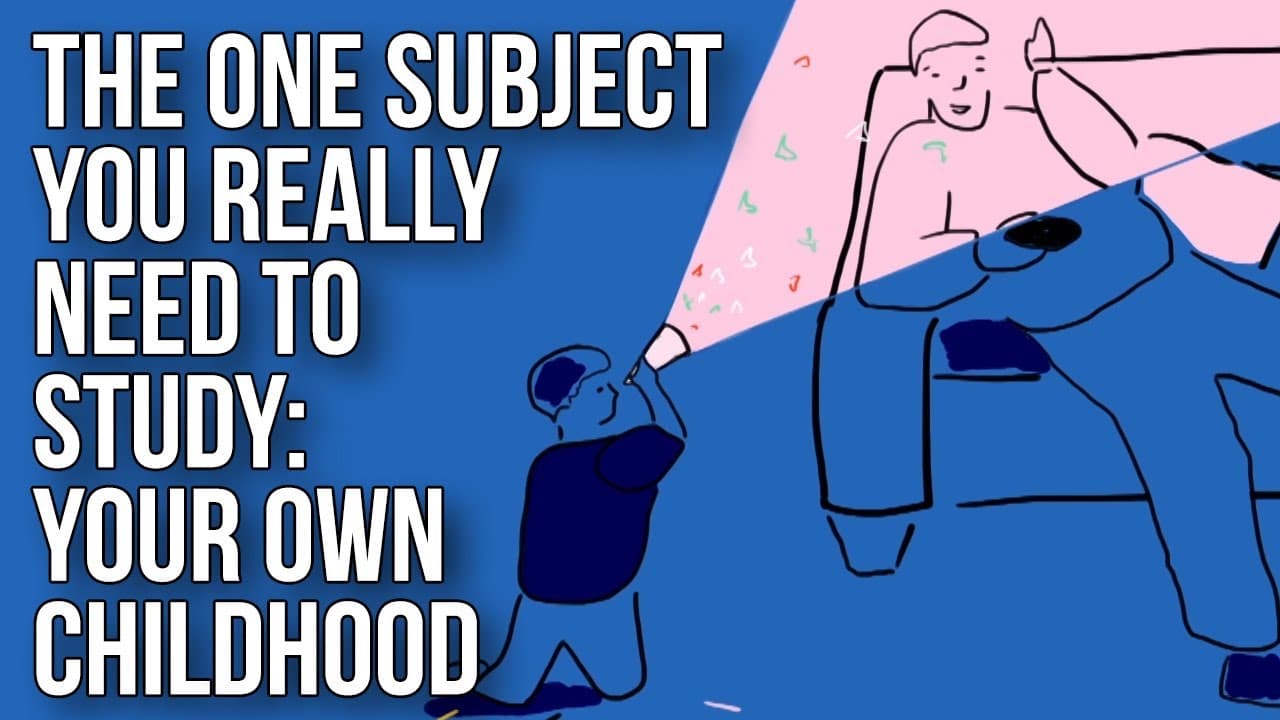
The missing subject for a fulfilled life is our own childhood. Understanding how childhood shapes adult identity helps explain patterns in relationships, work, and self-worth. By examining distortions and unresolved issues from early years, we can reduce anxiety, regain trust, and live more deliberately as adults.
Transcript
There is perhaps no greater priority in childhood than to acquire an education: it’s in the early years that we have to push ourselves with special vigour to learn the lessons, and acquire the experience, that will help us successfully manoeuvre around the pitfalls of adult life. By studying hard and intelligently, we’ll have the best chance of avo... Read More
Key Insights
- Childhood is the most important subject for shaping adult life.
- Distortions in childhood influence our later fears and relationship patterns.
- People often normalize flawed family dynamics, obscuring their impact.
- Understanding childhood can reveal why we seek unhealthy fixations in relationships.
- Adult happiness depends more on self-knowledge than external success.
- Freud’s insights about childhood experiences remain relevant for self-understanding.
- The path to healthier adulthood is through non-defensive reflection on one’s past.
- Education should include intimate self-knowledge as a core topic.
- More videos from this channel:
- More from this channel: The School of Life
Install to Summarize YouTube Videos and Get Transcripts
Explore YouTube Video Summarizer or Get YouTube Transcript Extractor
Questions & Answers
Q: What is the missing subject the video says we need to study to improve our lives?
The missing subject is our own childhood. By studying how early experiences shape our identities, expectations, and patterns of behavior, we can understand and address the unconscious scripts that govern our adult lives. This awareness helps reduce anxiety, improve trust, and allow more intentional choices in relationships and work.
Q: Why does the video claim childhood experiences determine adult happiness?
The video argues that the dominant share of our adult identity is formed in childhood through our relationships with parents and our early experiences. These experiences create expectations, internal scripts, and coping patterns that persist into adulthood, affecting our relationships, work, and sense of self, often more than external accomplishments.
Q: What role does Freud play according to the video?
Freud is presented as having a lasting contribution by alerting us to how adult emotional lives sit on top of childhood experiences and how we can be harmed by not knowing our histories. The video defends the idea that Freud’s insights remain relevant for understanding how early events shape present behavior.
Q: What happens when people do not understand their childhood, according to the transcript?
Without proper understanding of childhood, individuals may founder on the rocks of their psychological complexities, experiencing anxiety, lack of trust, dread, paranoia, rage, and self-loathing. They may also repeat maladaptive patterns in relationships, work, and self-perception across decades.
Q: How does the video describe the effect of family distortions on adulthood?
Distortions from childhood, such as beliefs about sexuality, love, or parental approval, create lasting expectations and scripts. These can lead to patterns like rescuing loved ones, pursuing unavailable partners, or showing up as the humorous, smiling presence that masks inner distress, shaping adult behavior in subtle, persistent ways.
Q: What is suggested as the path to thriving rather than merely surviving?
The path to thriving lies in knowing something closer to home, namely one’s own childhood. By thinking non-defensively about past experiences and recognizing how they shape current behavior, individuals can align their life choices with healthier patterns and reduce maladaptive reactions.
Q: What does the video say about education systems and personal growth?
The video notes a mismatch between school curricula and the need to understand oneself. While schools teach subjects like geometry and history, they often miss teaching the subject of one’s childhood and its impact on identity, suggesting a broader approach to education that includes self-knowledge as essential for real maturity.
Q: According to the video, how many hours with parents influence adulthood?
The video states that by the age of eighteen, we will have spent about 25,000 hours in the company of our parents. This substantial amount of time is a major factor in forming how we think about relationships, work, ambition, self-worth, and how we relate to others as adults.
Summary & Key Takeaways
-
Our schools teach many subjects but often overlook the importance of understanding our childhood and its impact on adult life. The video argues that awareness of early experiences is crucial for psychological health and fulfilled adulthood. This insight can liberate us from repeated negative patterns.
-
The speaker connects early family dynamics to adult relationships and career outcomes, suggesting that without addressing childhood history, success may feel hollow or conflicted. Self-understanding becomes a tool to align values with actions and to heal old wounds.
-
Ultimately, the video asserts that mastering the topic of one’s childhood is key to thriving, not merely surviving, as adults, and that Freud’s insights remain relevant in interpreting how early experiences shape present lives.
Read in Other Languages (beta)
Share This Summary 📚
Summarize YouTube Videos and Get Video Transcripts with 1-Click
Try YouTube Summary with ChatGPT & Claude or YouTube Transcript Generator