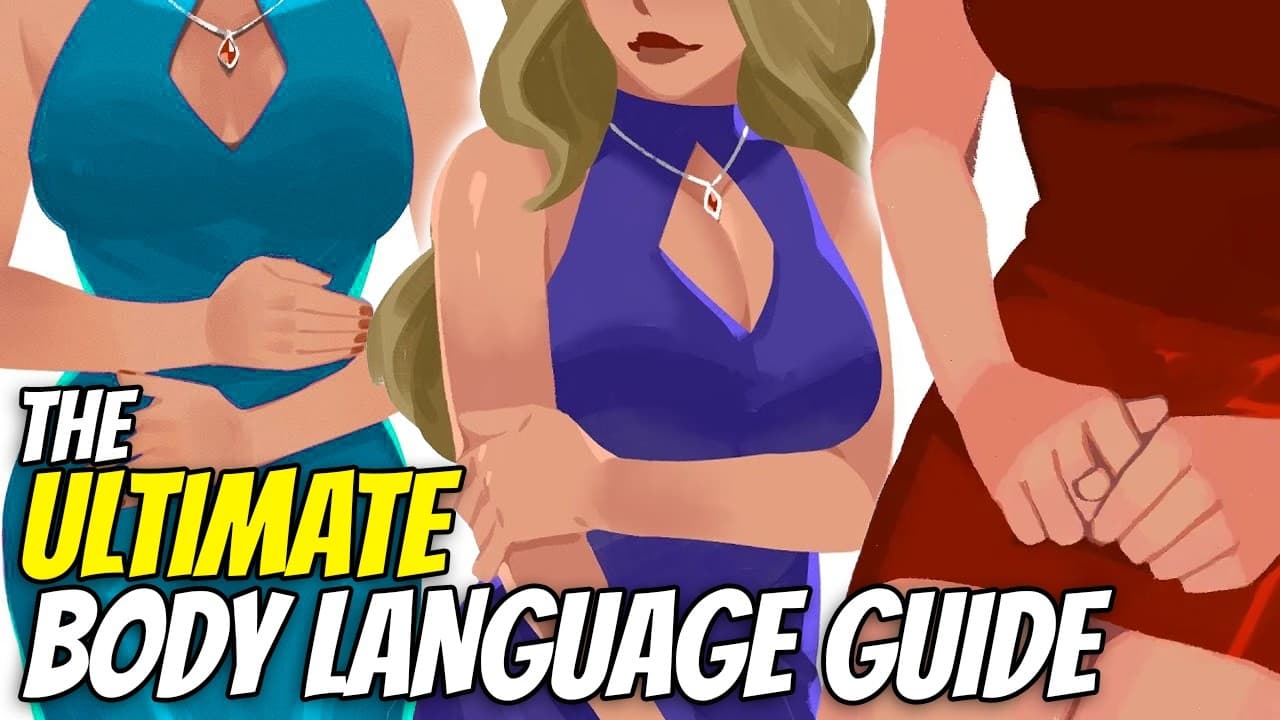
How to read body language for better social skills
TL;DR
Open body language signals boost rapport, while closed or tense postures indicate discomfort. The guide walks through how personal space, leg and foot positions, and micro-movements reflect confidence, anxiety, or interest. By observing these cues in real time, you can assess others’ emotions and adapt your approach to improve interactions.
Transcript
welcome to the ultimate body language guide being able to read body language is crucial when it comes to making you friends and deepening your existing relationships so I've decided to create this series where we go over hundreds of movements with real live actors to help you improve your social skills all of this information is taken directly from... Read More
Key Insights
- Body space is divided into public, social, personal, and intimate zones, with increasing closeness signaling comfort or closeness of relationship and potential for physical approach or challenge.
- Leg position and movement act as powerful indicators of confidence, with wider stances and leg separation often correlating with higher self assurance and potential authority.
- Opening or closing leg posture during interaction can reveal comfort or defensiveness, while sudden shifts may indicate discomfort or a desire to leave an interaction.
- Ankles and feet provide quick reads of mood; locked ankles or feet turning away consistently signal hesitation or intention to disengage, whereas feet pointed toward someone show attraction or interest.
- Knee and leg gestures, such as knee clasping or leg draping, reflect internal states like stress, relaxation, or dominance, and should be observed in context with other cues.
- Foot tapping, bouncing, or shaking can indicate impatience, excitement, or anxiety, and may occur with or without conscious awareness depending on the situation.
- Gestures involving the chest, collar bone, and hand positions (palm on chest, collar bone massage) differentiate sincerity from potential deception and offer additional context to verbal messages.
- Observation of pacing, turning of toes, and body orientation helps interpret overall engagement levels, whether someone feels comfortable, supported, or ready to disengage.
- More videos from this channel:
- More from this channel: Improvement Pill
Install to Summarize YouTube Videos and Get Transcripts
Explore YouTube Video Summarizer or Get YouTube Transcript Extractor
Questions & Answers
Q: How can you tell if someone is uncomfortable by their leg position?
Leg position is a quick read of comfort. If someone crosses their legs to create a barrier or keeps legs close together in a formal setting, this often indicates hesitation or discomfort. When someone sits with open legs or uncrosses them, it typically signals increasing ease or a shift toward a more relaxed state in the current environment. Observing these changes alongside other cues helps determine whether the person is becoming less comfortable or more open to the interaction.
Q: What does foot turning away signify in conversations?
Foot turning away from the person you are talking to usually signals that the person is getting ready to leave or becoming uncomfortable with the situation. If both feet turn away toward the exit, it clearly indicates dislike or strong discomfort. Context matters, but consistent foot directional changes are a strong indicator that engagement is decreasing and the person may want to disengage.
Q: Why is ankle locking considered a powerful indicator in conversations?
Ankle locking commonly appears when someone feels restrained or hesitant to speak. In formal settings, it can signal that a person senses a controversial topic and fears speaking up. If someone suddenly locks their ankles during an interaction, it is often a strong cue that something important or uncomfortable has been said and the person is restraining themselves from reacting physically.
Q: What signs indicate high stress during an interview or interrogation?
Knee clasping while leaning back is a sign of high stress and nervousness. A knee clasping while leaning forward can suggest a desire to leave the conversation. Additionally, rapid shallow breathing or a palm on the chest with force can indicate anxiety or sincerity depending on other cues. Observing a combination of these movements helps determine the level of stress.
Q: How do hand placements help assess sincerity or deception?
Palm on the chest can signal sincerity, with more force often associated with honesty and fingertips touching indicating subtlety or deception. Collar bone massage or chest raking can reflect vulnerability or anxiety. Used together with other nonverbal cues, hand positions provide insight into whether someone is being truthful or withholding information, though context is essential.
Q: What does foot tapping or bouncing indicate beyond impatience?
Foot tapping can indicate impatience, engagement with music, or a habitual movement. It can also signal that someone is thinking hard or trying to regulate nervous energy. When interpreted with overall body language, foot tapping can reveal internal states like anticipation or unease, rather than a single definite emotion.
Q: How do open legs and confident stances relate to perceived power?
Open leg positioning and a broad stance are often associated with higher confidence and perceived authority. This territorial display can imply readiness to engage or challenge appropriately in the social dynamic. The overall message is a display of self-assurance, which can influence how others respond to and interpret the person’s intentions.
Q: What are signs of approaching attraction in body language signals?
Foot kissing or foot turning toward someone can indicate attraction or interest. When someone directs their toes toward another person or keeps their feet oriented toward them, it is a subconscious signal of desire to move closer or engage more deeply. These cues should be interpreted alongside other signals for accuracy.
Summary & Key Takeaways
-
A practical survey of body language signs and what they imply, focusing on personal space, posture, and leg movements to infer confidence and comfort levels in social settings.
-
The guide emphasizes cultural and relational differences in space needs, teaching readers to notice shifts in spacing and positioning as potential signals of changing attitudes or emotions during conversations.
-
By illustrating signs with real life examples and references to the Dictionary of Body Language, the video provides a toolkit for reading nonverbal cues and improving social skills in various contexts.
Read in Other Languages (beta)
Share This Summary 📚
Summarize YouTube Videos and Get Video Transcripts with 1-Click
Try YouTube Summary with ChatGPT & Claude or YouTube Transcript Generator
Explore More Summaries from Improvement Pill 📚





Summarize YouTube Videos and Get Video Transcripts with 1-Click
Try YouTube Summary with ChatGPT & Claude or YouTube Transcript Generator