Who commissioned the Great Sphinx of Giza?
TL;DR
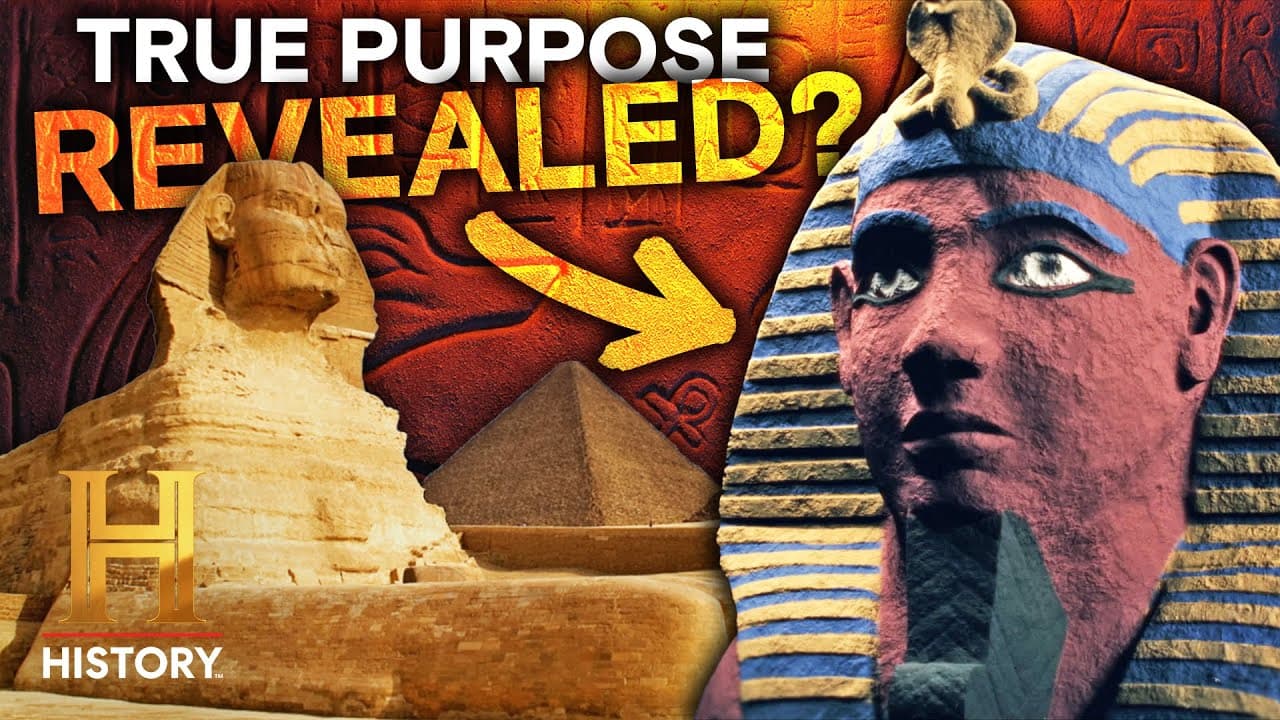
Khufu most likely ordered the sculpting of the Sphinx, aiming to symbolize royal power beside the Great Pyramid. The statue was buried by sand for centuries, later uncovered in the 19th and 20th centuries by European explorers, revealing its lion body and human head along with clues about its painting and purpose.
Transcript
- 1403 BCE, the Giza Plateau of Egypt, home to the Great Pyramids. Pharaoh Amenhotep II rules the land. His younger son, Prince Thutmose, has come to Giza to hunt gazelle. But this royal hunting ground has an extraordinary past. - If you go back around 1,000 years, the Giza Plateau is a very important place of monumental buildings. It's there that ... Read More
Key Insights
- The Sphinx is a colossal statue with a lion body and a human head.
- The Sphinx likely served as a symbol of kingship and protection for a Pharaoh.
- Khufu is the best candidate to match the Sphinx’s face and era.
- The Great Pyramid of Giza sits near the Sphinx, suggesting a shared royal complex.
- Historical records show the statue was buried and later cleared after 1817 and again in the 1920s.
- Remnant pink coloring and eyeliner on the statue hint at its original appearance.
- Beardless depiction in some Khufu-related artifacts supports the Khufu link.
- Scholars compare the Sphinx to Khufu era artifacts to test the theory.
- More videos from this channel:
- More from this channel: HISTORY
Install to Summarize YouTube Videos and Get Transcripts
Explore YouTube Video Summarizer or Get YouTube Transcript Extractor
Questions & Answers
Q: Who most likely ordered the construction of the Great Sphinx of Giza?
The most likely answer is Pharaoh Khufu, king who oversaw the Great Pyramid at Giza, and whose era and imagery align with the Sphinx. The beardless portrait, proximity to the Great Pyramid, and lion body are cited as supporting evidence. However, scholars debate other pharaohs of the era, so certainty remains elusive.
Q: What is the significance of the Sphinx’s lion body with a human head?
The lion body and human head symbolize royal power and kingship in ancient Egypt, linking the statue to the king’s authority. This combination of animal and human form was chosen to convey majesty and protective strength around the tomb complex, possibly guarding the pharaoh’s legacy.
Q: Why was the Sphinx buried for centuries?
Desert sands gradually covered the statue, concealing it from view for long periods, and it remained buried until explorers began clearing the sand in later centuries. This burial helped preserve the monument from continual exposure but also obscured its origins until modern excavations.
Q: What clues hint at the Sphinx’s original appearance?
Pink remnants on the statue suggest the face and body were painted deep red with dark eyeliner, and the nemes headdress showed blue and gold stripes, indicating a vibrant, regal appearance during its prime. These clues help reconstruct how the Sphinx looked when first carved.
Q: When did major rediscoveries of the Sphinx occur?
A key rediscovery occurred in 1817 when an Italian explorer began working on the Sphinx, followed by renewed expeditions in the 1920s and 1930s led by French archaeologists; these efforts fully cleared the sand pockets and revealed the statue in its full form.
Q: How is the Sphinx related to the Great Pyramid of Giza?
The Sphinx stands near the Great Pyramid, and some scholars interpret the alignment as a guardian figure for the tomb complex of Khufu, integrating the statue into a royal ceremonial landscape that underscores the pharaoh’s power.
Q: What ongoing mysteries surround the Sphinx?
Scholars continue to debate which pharaoh commissioned the Sphinx and how it was originally painted, with comparisons to other Khufu era artifacts guiding research. The exact builder remains uncertain, and the full historical context of its construction continues to be explored.
Q: What role did expeditions in the 1920s and 1930s play in Sphinx study?
These expeditions, following earlier rediscoveries, allowed archaeologists to clear away desert sands more effectively and document the Sphinx’s condition, leading to a renewed understanding of its size, craftsmanship, and historical significance, as well as sparking public interest in ancient Egypt.
Summary & Key Takeaways
-
The Sphinx rises from the desert and is linked to Khufu, with the Great Pyramid nearby, suggesting a royal guardian role. The statue was buried for long periods and rediscovered in stages, transforming our understanding of its age and significance. Its face likely represents a pharaoh, possibly Khufu, with lion body symbolism.
-
Clear evidence connects the Sphinx to Khufu era through stylistic links and the Pyramid proximity, reinforcing the theory that it represents royal power. Repeated excavations uncovered the sculpture and revealed painting clues that hinted at its original appearance. The ongoing mystery remains about the exact identity of its sculptor.
-
The Sphinx has been a symbol of power and protection since ancient times, but its true origins stay debated. Excavations, artistic comparisons, and iconography all point toward Khufu, yet no definitive portrait confirms the builder. Continued research aims to resolve this ancient enigma.
Read in Other Languages (beta)
Share This Summary 📚
Summarize YouTube Videos and Get Video Transcripts with 1-Click
Try YouTube Summary with ChatGPT & Claude or YouTube Transcript Generator
Explore More Summaries from HISTORY 📚


Summarize YouTube Videos and Get Video Transcripts with 1-Click
Try YouTube Summary with ChatGPT & Claude or YouTube Transcript Generator