How to forge a Shamshir sword and test its edge
TL;DR
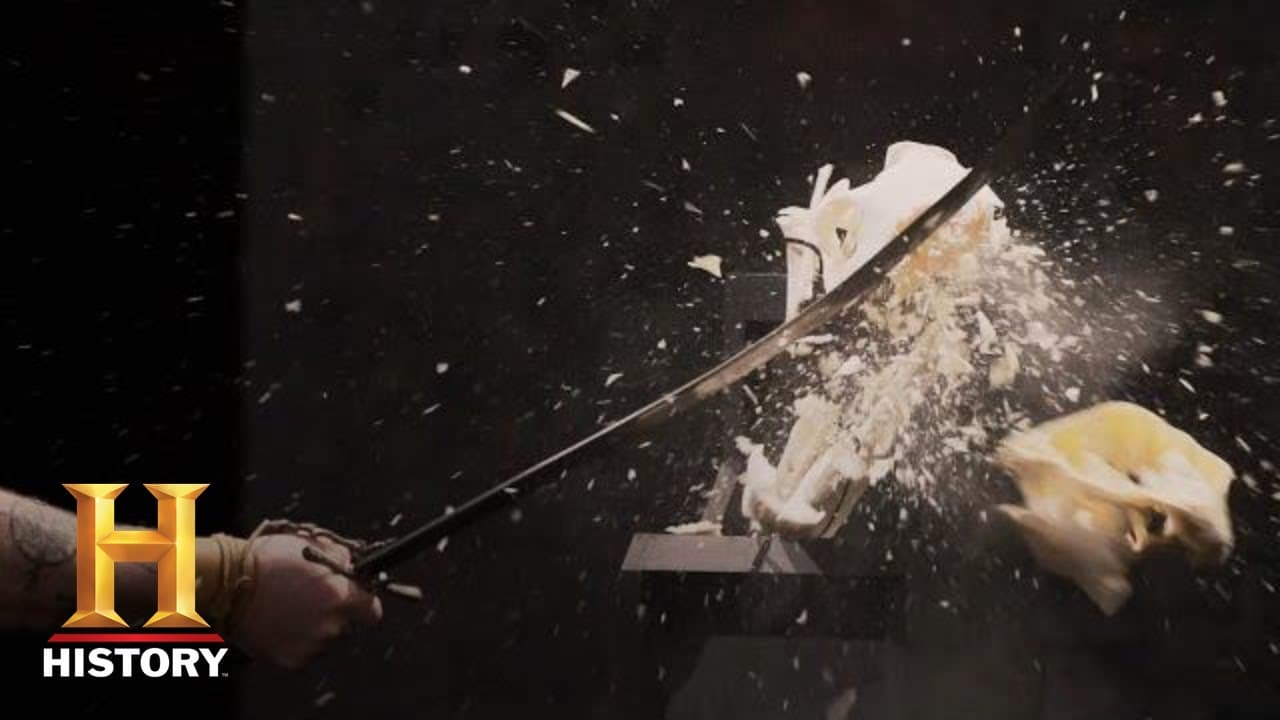
The Shamshir is a curved Persian sword whose blade is thin and light, designed for sweeping cuts. The video follows a bladesmith through heat treatment, guard shaping, and handle fitting, ending with edge testing against carcasses and horse skulls. Warp removal and jig-based straightening are critical steps.
Transcript
andrew tim congratulations you've made it into the final round of this competition so now we're sending you back to your home forges to recreate an iconic weapon from history the shamsheer descending from the sabre family of sorts the shamsheer which means curved like the tiger's tail first gained popularity in persia and quickly spread throughout ... Read More
Key Insights
- The Shamshir name translates to curved like the tiger39s tail and it spread through the Ottoman Empire.
- The blade is light and designed for sweeping or hooking strokes, with a tapered tip for penetration.
- The maker uses a Damascus pattern as a visual flourish, but it slows progress due to longer forging time.
- Straightening a curved blade requires a tempering jig and clamps to remove warp.
- Quench tank issues include leaks that produce oil geysers and threaten process control.
- Warp removal is attempted with tension and multiple passes in heat treat corrections.
- Judges test the blades by cutting fish and carcasses to evaluate sharpness and durability.
- Final adjudication hinges on edge integrity and handle-blade transition performance
- More videos from this channel:
- More from this channel: HISTORY
Install to Summarize YouTube Videos and Get Transcripts
Explore YouTube Video Summarizer or Get YouTube Transcript Extractor
Questions & Answers
Q: What is a Shamshir and where did it originate
A Shamshir is a weapon with a deeply curved blade that originated in Persia and spread through the former Ottoman empire. Its design favors light weight and sweeping or hooking strokes, aided by a tapered tip for efficient slicing. The name itself reflects the curved, tail-like profile that characterizes the blade.
Q: What were the main forging challenges shown
The bladesmith faces several challenges including a very long blade with a major curve, a hot day that compounds fatigue, and reliance on a power hammer that fails when air pressure drops. He also deals with a slight warp in the blade and difficulties in shaping a guard to fit the handle.
Q: How does the maker attempt to straighten the blade
To remove warp, the maker uses a straightening jig and clamps, applying tension to the blade during tempering. He makes iterative adjustments, testing alignment with a straight edge and reapplying clamps as needed until the blade aligns more true, though this process can be lengthy and imperfect.
Q: What role does the quench tank play and what went wrong
The quench tank is used during heat treatment to harden the blade. In this video, the tank leaks oil, creating a geyser effect and threatening the stability of the heat treatment. The incident forces improvisation and careful handling to avoid compromising the blade’s structure.
Q: What is the significance of the Damascus blade mention
The smith mentions a low layer random pattern Damascus blade as a potential feature to set his blade apart. Damascus work is pursued for its distinct visual pattern, though it adds time and complexity to the forging process, testing the blade maker39s endurance and planning.
Q: How is edge sharpness evaluated on the Shamshir
Edge sharpness is assessed by performing tests on carcasses and fish to determine cutting efficiency, penetration, and laceration. The judges observe the blade39s ability to cut cleanly and the handle39s feel, noting any deformation or resistance that affects performance.
Q: What feedback did the judges provide during testing
During testing, the judges commented on blade speed, balance, and the transition between materials at the handle, noting issues such as a small lip where wrap ends and warp in the blade. Their verdicts reflect overall cut capability and practical use in the field.
Q: Who won the competition and what was the outcome
The competition ends with one bladesmith declared the forged and fire champion, earning a ten thousand dollar prize. The final verdict focuses on who delivered the best combination of blade performance, handling, and craftsmanship, while the other finalist expresses respect and pride for their work.
Q: What overall lessons can be drawn about forging a Shamshir from this video
The video demonstrates that forging a Shamshir requires careful control of curve and balance, precise heat treatment, and effective straightening to prevent warp. It also highlights the importance of protecting the blade during quenching, shaping a compatible guard, and ensuring the handle feels right in the hand for practical tests.
Summary & Key Takeaways
-
The forge master explains that the Shamshir is a curved weapon from Persia used for sweeping attacks, with a thin, tapered blade. He highlights the importance of weight, feel, and edge sharpness for performance.
-
The maker faces several challenges including a leaky quench tank, warp in the blade, and guard fit issues that require careful clamping and jig use to salvage the blade.
-
Final testing demonstrates cutting ability and durability, with judges assessing edge deformation and the weapon's practical feel in hand and during chopping
Read in Other Languages (beta)
Share This Summary 📚
Summarize YouTube Videos and Get Video Transcripts with 1-Click
Try YouTube Summary with ChatGPT & Claude or YouTube Transcript Generator
Explore More Summaries from HISTORY 📚


Summarize YouTube Videos and Get Video Transcripts with 1-Click
Try YouTube Summary with ChatGPT & Claude or YouTube Transcript Generator