How to Create Meaningful Ideas in the AI Era
TL;DR
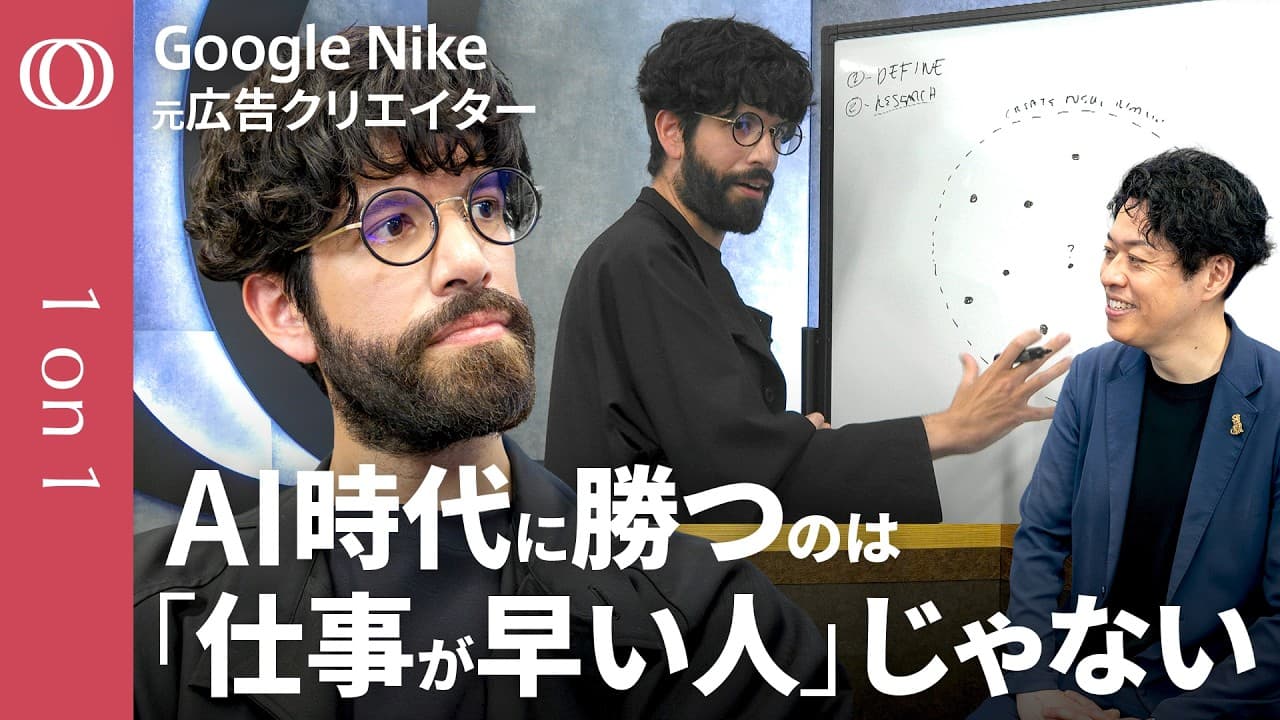
Creative ideas come from novel combinations that create value, then become useful through deliberate thinking, mental rest, and real-world testing. In an AI-driven flood of content, speed and volume are less important than meaning, emotional connection, and the human perspective that gives an idea relevance.
Transcript
And you can combine this and create new things etc etc. Will AI replace your job? Answer is I don't think so. In the era of AI the winner is not going to be who creates faster but who creates meaning and something meaningful to develop your next big idea. You have six steps. Yes. Inspiration doesn't come you need to to create. This is where creativ... Read More
Key Insights
- A creative idea is a novel combination that creates value. Combining existing elements is not enough by itself, because the resulting connection must also be new and useful. The example of joining a human and a fish to form a mermaid illustrates this basic creative mechanism.
- Inspiration is something creators must cultivate rather than simply await. The presented six-step process frames idea development as deliberate work involving combinations, stronger thinking habits, periods of mental rest, and practical testing instead of depending entirely on an unpredictable flash of insight.
- An aha moment occurs when a creator connects multiple points in a new way. Creativity is therefore located in the relationship formed among ideas, experiences, or objects, not merely in the separate elements that already exist before the connection is made.
- Visual storytelling is a format for delivering essential information at a glance. PICTOLINE identifies the central parts of a story, answers common questions such as where, how, and why, and presents a concise visual snapshot that can lead audiences toward more detailed sources.
- Different media formats serve different audience needs. Articles support slower reading, analysis, opinion, and comparison, television can deliver substantial information quickly, and illustration provides an immediate snapshot. The appropriate format depends on the audience and the informational need being addressed.
- Animation can create connection as well as communicate instructions quickly. In the choking-maneuver example, movement makes the action easier to follow, while humorous and visually appealing details help the information feel more approachable and emotionally engaging.
- Information overload puts the brain into a form of survival mode. Salles argues that seemingly short attention spans can reflect the difficulty of processing an overwhelming supply of videos, images, text, and AI-generated material rather than a simple lack of interest.
- Meaning is the decisive creative advantage in the AI era. AI can generate many kinds of content, but audiences still seek emotional bonds with recognizable people and perspectives. The likely winners are therefore those who create something meaningful, not merely those who produce fastest.
Install to Summarize YouTube Videos and Get Transcripts
Explore YouTube Video Summarizer or Get YouTube Transcript Extractor
Questions & Answers
Q: How are creative ideas generated through combinations?
Creative ideas are generated by bringing separate elements together in a novel relationship that creates value. Eduardo Salles illustrates the principle by combining a human being with a fish, producing the concept of a mermaid. The important creative act is not possessing the original elements, but discovering a meaningful connection among them and developing that connection into something useful.
Q: What makes an idea creative rather than merely different?
A creative idea must satisfy two conditions in Salles's definition: the combination must be novel, and it must create value. A random or unusual pairing is therefore not automatically creative. Its usefulness, meaning, or ability to solve a need matters alongside originality. The idea becomes significant when the new relationship gives people something valuable to understand, experience, or use.
Q: How can creators develop inspiration instead of waiting for it?
Creators can treat inspiration as a process they actively create. The discussion presents six steps for developing a major idea and highlights several components: combining existing points, strengthening ways of thinking, allowing the brain to rest, and testing promising ideas in reality. This approach makes creativity a repeatable practice rather than an event that depends solely on spontaneous inspiration.
Q: Why does resting the brain help ideas emerge?
Mental rest is presented as an important part of the creative process because insights can arrive when active effort pauses. The discussion connects rest with the emergence of inspiration, suggesting that continuous production is not the only path to an idea. A creator can gather and consider different points, then provide space for an unexpected connection and aha moment to form.
Q: Why should good ideas be tested in the real world?
Good ideas should be tested because an appealing combination still needs to demonstrate value in reality. The chapter structure explicitly moves from generating and strengthening ideas to trying strong ideas in practice. Testing reveals whether the proposed connection communicates clearly, addresses an actual need, and can become something meaningful rather than remaining an interesting but undeveloped thought.
Q: How does visual storytelling communicate information quickly?
Visual storytelling communicates quickly by selecting the most important parts of a story and arranging them as a concise visual narrative. PICTOLINE aims to answer the common questions people ask when encountering news, including where something happened, how it works, and what may happen next. The visual provides a snapshot, while cited sources let interested viewers investigate further.
Q: Are illustrations better than articles or television news?
Illustrations are not described as inherently better than articles or television. They serve a different purpose. Articles can support slower reading, deeper analysis, opinion, and comparison. Television occupies a faster informational space, while illustration offers an immediate overview at a glance. The best choice depends on the audience, the context, and the specific need the format must solve.
Q: Will AI replace human creative work?
Salles does not think AI will simply replace human creative work, although he acknowledges that nothing is certain. AI can generate images, people, songs, text, and other formats, but production alone does not create an emotional bond. Human creators contribute identity, perspective, and connection, which can make audiences care about the person or meaning behind the content.
Summary & Key Takeaways
-
Eduardo Salles defines a creative idea as a novel combination that creates value. His framework treats creativity as an active process rather than a passive wait for inspiration. Connecting multiple elements can produce an aha moment, while the resulting idea must still be developed and tested in reality.
-
PICTOLINE uses illustration and animation to turn important information into visual narratives that audiences can understand at a glance. These snapshots do not replace articles or television. Each format serves a different need, and visual media can guide interested viewers toward the original source for deeper information.
-
AI can rapidly generate text, images, people, songs, and other content, but greater production also intensifies information overload. Salles argues that success will belong to creators who produce meaning and emotional connection. Human identity, perspective, and relationships give audiences reasons to care beyond the information or format itself.
Read in Other Languages (beta)
Share This Summary 📚
Summarize YouTube Videos and Get Video Transcripts with 1-Click
Try YouTube Summary with ChatGPT & Claude or YouTube Transcript Generator
Explore More Summaries from TBS CROSS DIG with Bloomberg 📚
Summarize YouTube Videos and Get Video Transcripts with 1-Click
Try YouTube Summary with ChatGPT & Claude or YouTube Transcript Generator