Products
Features
YouTube Video Summarizer
Summarize YouTube videos
Web & PDF Highlighter
Highlight web pages & PDFs
Chat with PDF
Ask any PDF questions with AI
Ask AI Clone
Chat with your highlights & memories
Audio Transcriber
Transcribe audio files to text
Glasp Reader
Read and highlight articles
Kindle Highlight Export
Export your Kindle highlights
Idea Hatch
Hatch ideas from your highlights
Integrations
Obsidian Plugin
Notion Integration
Pocket Integration
Instapaper Integration
Medium Integration
Readwise Integration
Snipd Integration
Hypothesis Integration
Apps & Extensions
Chrome Extension
Safari Extension
Edge Add-ons
Firefox Add-ons
iOS App
Android App
Discover
Discover
Ideas
Discover new ideas and insights
Articles
Curated articles and insights
Books
Book recommendations by great minds
Posts
Essays and notes from readers
Quotes
Inspiring quotes collection
Videos
Curated videos and summaries
Explore Glasp
Glasp Newsletter
Weekly insights and updates
Glasp Talk
Interview series with great minds
Glasp Blog
Latest news and articles
Glasp Use Cases
Learn how others use Glasp
Build & Support
Glasp API
Access Glasp's API for developers
MCP Connector
Connect Glasp to Claude & ChatGPT
Community
Glasp Reddit Community
Students
Student discount and benefits
FAQs
Frequently Asked Questions
AboutPricing
DashboardLog inSign up

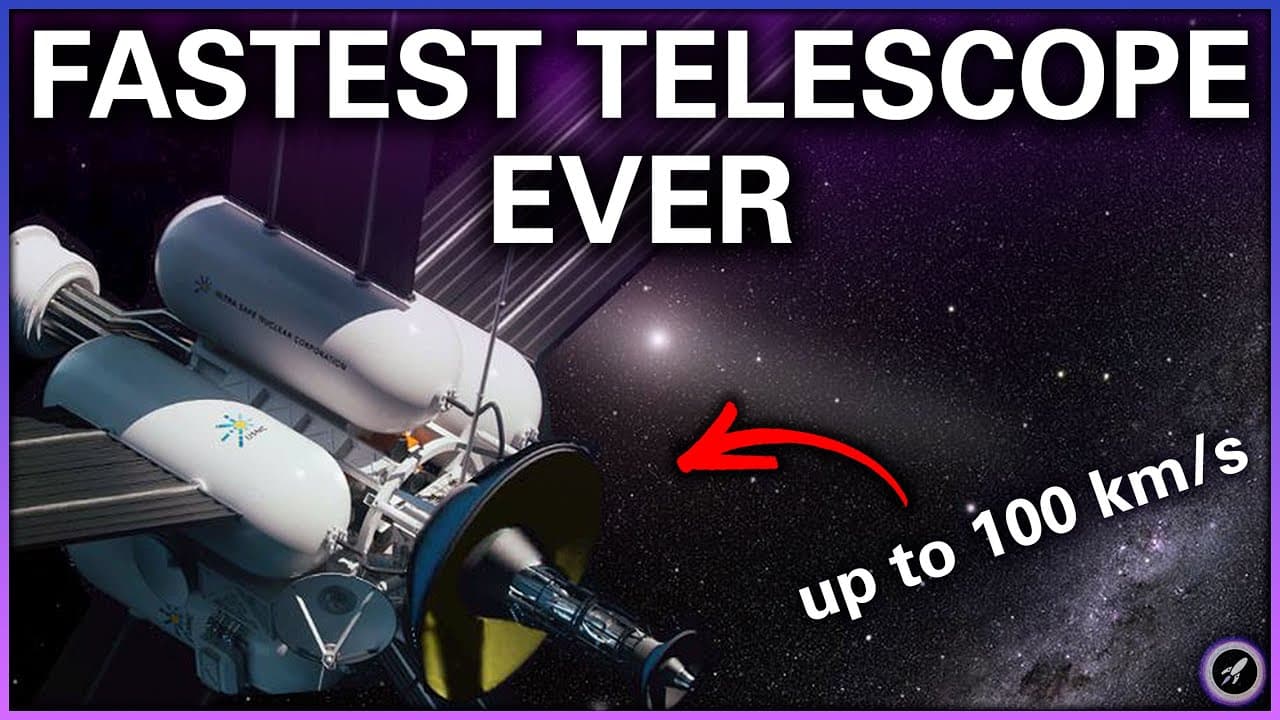
Observe the Universe from Deep Space [NIAC 2023]
27.5K views
•
May 11, 2023
by
Fraser Cain / Universe Today Podcast
YouTube video player
Observe the Universe from Deep Space [NIAC 2023]

TL;DR

An interview discussing a mission to chase down interstellar asteroids, land probes, and recover samples, exploring cutting-edge space technology.

Transcript

can you imagine if there's a way that we could actually recover a sample from like Chase down this Interstellar asteroid land a probe on it retrieve a sample and bring that back home to Earth and this was a Nayak Grant phase one concept that I uh brought about uh I guess about a year ago to your attention and I had a really fascinating conversation... Read More

Key Insights

  • 🎨 Integrated spacecraft design crucial for tackling challenges in radiation shielding.
  • 👶 Exploration of dark, extrasolar objects in the Kuiper belt possible with new telescope technology.
  • 💨 Utilization of two-stage radioisotope system to enable fast acceleration and extended mission capabilities.
  • 👾 Potential for observing gravitational microlensing effects to study mass distributions in space.
  • 👾 Focus on advanced propulsion methods and payload delivery for future space missions.
  • 👾 Importance of balancing technology and science goals in designing space exploration missions.
  • 🎟️ Integration of diverse expertise crucial for developing innovative mission concepts.

Install to Summarize YouTube Videos and Get Transcripts

Explore YouTube Video Summarizer or Get YouTube Transcript Extractor

Questions & Answers

Q: What is the focus of the proposed mission for interstellar asteroids?

The core focus is on intercepting these foreign objects, capturing samples, conducting scientific research on their composition and origin.

Q: How does the proposed two-stage radioisotope electric propulsion system work?

The system involves a boost stage accelerating spacecraft quickly and an endurance stage for sustained power, heat, and propulsion, allowing for versatile mission capabilities.

Q: What are the benefits of moving away from the ecliptic plane for observations?

By getting into darker, less noisy space outside the ecliptic, astronomers can make unprecedented observations of dark objects, potentially discovering extrasolar objects in the Kuiper belt.

Q: How does the proposal aim to address bandwidth limitations for data transfer?

The proposal includes a focus on powering radio systems for efficient data transfer, enhancing the capabilities for scientific discovery and real-time communication during the mission.

Summary & Key Takeaways

  • Proposal involves recovering samples from interstellar asteroids.

  • Phase 2 grant aims to expand the concept and enable further exploration.

  • Integrated spacecraft design and advanced radioisotope propulsion discussed.


Read in Other Languages (beta)

English

Share This Summary 📚

Summarize YouTube Videos and Get Video Transcripts with 1-Click

Download browser extensions on:

Try YouTube Summary with ChatGPT & Claude or YouTube Transcript Generator

Explore More Summaries from Fraser Cain / Universe Today Podcast 📚
Why Isn't the Asteroid Belt a Planet? thumbnail
Why Isn't the Asteroid Belt a Planet?
Fraser Cain
Are We Living in a Simulation? Understanding the Simulation Hypothesis thumbnail
Are We Living in a Simulation? Understanding the Simulation Hypothesis
Fraser Cain
Why Did Mars Lose Its Atmosphere? And How Can We Get It Back? thumbnail
Why Did Mars Lose Its Atmosphere? And How Can We Get It Back?
Fraser Cain
Exploring Space Lava Tubes: How To Prepare For It thumbnail
Exploring Space Lava Tubes: How To Prepare For It
Fraser Cain / Universe Today Podcast
What's On The Far Side Of The Moon? thumbnail
What's On The Far Side Of The Moon?
Fraser Cain

Summarize YouTube Videos and Get Video Transcripts with 1-Click

Download browser extensions on:

Try YouTube Summary with ChatGPT & Claude or YouTube Transcript Generator

Apps & Extensions

  • Chrome Extension
  • Safari Extension
  • Edge Add-ons
  • Firefox Add-ons
  • iOS App
  • Android App

Key Features

  • YouTube Video Summarizer
  • Web & PDF Summarizer
  • Web & PDF Highlighter
  • Chat with PDF
  • Ask AI Clone
  • Audio Transcriber
  • Glasp Reader
  • Kindle Highlight Export
  • Idea Hatch

Integrations

  • Obsidian Plugin
  • Notion Integration
  • Pocket Integration
  • Instapaper Integration
  • Medium Integration
  • Readwise Integration
  • Snipd Integration
  • Hypothesis Integration

More Features

  • APIs
  • MCP Connector
  • Blog & Post
  • Embed Links
  • Image Highlight
  • Personality Test
  • Quote Shots

Company

  • About us
  • Blog
  • Community
  • FAQs
  • Job Board
  • Newsletter
  • Pricing
Terms

•

Privacy

•

Guidelines

© 2026 Glasp Inc. All rights reserved.