Who Were the Progressive Era Presidents?
TL;DR
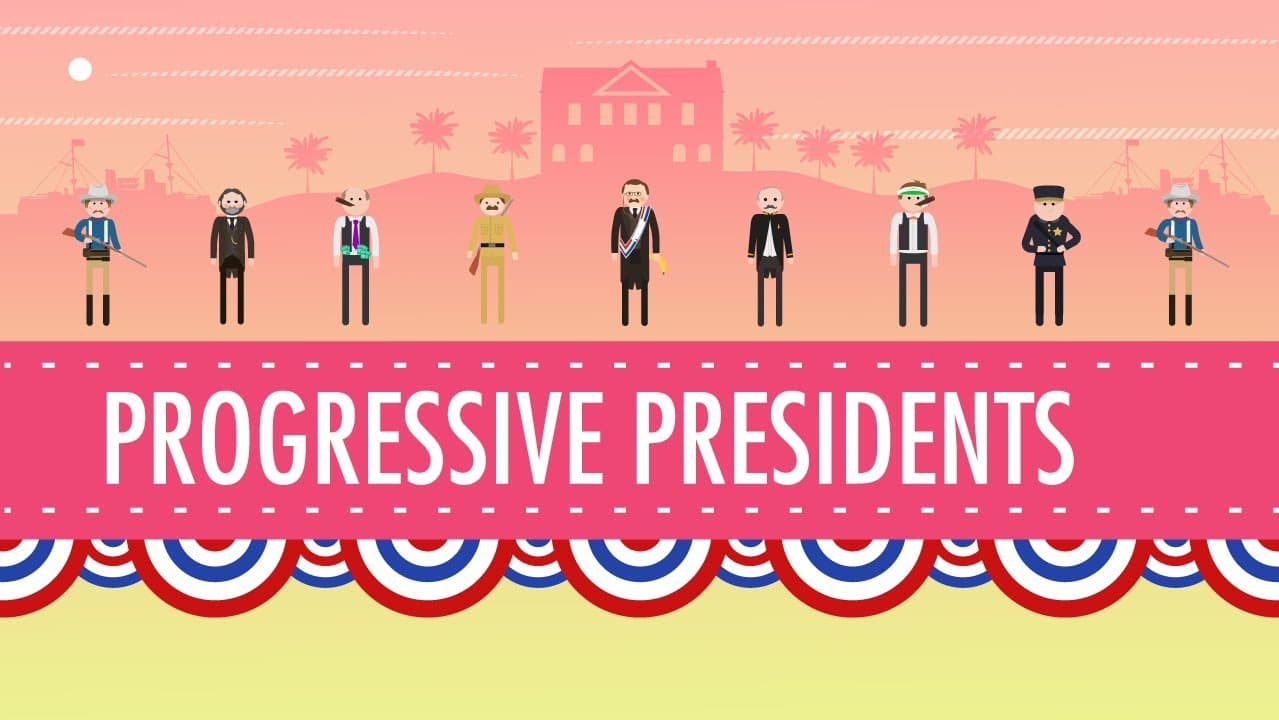
The Progressive Era in U.S. history saw presidents like Theodore Roosevelt, William Taft, and Woodrow Wilson expand federal government power to regulate big business and promote social reforms. Their policies included trust-busting, establishing national parks, and enacting social programs. However, their administrations also saw increased U.S. intervention in Latin America and the onset of World War I.
Transcript
Hi, I’m John Green, this is CrashCourse U.S. History and today we’re going to finish our discussion of Progressivism, and indulge in a bit of “great man” history. Mr. Green, Mr. Green! Great man history, huh? Well I was born on a sunny, summer morning in 197-- Yeah you’re not great, Me from the Past. Also, you’re a boy not a man, and the only histo... Read More
Key Insights
- Theodore Roosevelt became the youngest U.S. president in 1901 after McKinley's assassination.
- Roosevelt's Square Deal aimed to regulate corporations and promote fair business practices.
- William Taft, Roosevelt's successor, was a strong trust-buster but more conservative than many progressives.
- The 1912 election saw Roosevelt, Taft, Debs, and Wilson vying for presidency, highlighting differing progressive ideals.
- Woodrow Wilson's New Freedom sought to reinvigorate democracy by promoting market competition.
- Roosevelt's New Nationalism recognized the inevitability of big business and sought government intervention to curb abuses.
- Progressive presidents expanded U.S. influence abroad, particularly in Latin America, often prioritizing American business interests.
- Wilson's foreign policy interventions in Mexico and pursuit of Pancho Villa reflected his moralistic approach to international affairs.
Install to Summarize YouTube Videos and Get Transcripts
Explore YouTube Video Summarizer or Get YouTube Transcript Extractor
Questions & Answers
Q: What were the main goals of Theodore Roosevelt's Square Deal?
Theodore Roosevelt's Square Deal aimed to regulate corporations by distinguishing between 'good' and 'bad' trusts, promote fair business practices, and protect consumers. It sought to ensure that corporations provided useful products at fair prices, rather than existing solely to make money. Roosevelt used the federal government's power to break up monopolies and regulate the economy directly.
Q: How did William Taft's presidency differ from Roosevelt's?
William Taft's presidency differed from Roosevelt's in that Taft was more conservative and focused on trust-busting without viewing big business as inherently bad. He supported the 16th Amendment, allowing for an income tax, and broke up Standard Oil. However, Taft's firing of Gifford Pinchot and his conservative stance frustrated Roosevelt, leading to a split in the Republican Party.
Q: What was the significance of the 1912 U.S. presidential election?
The 1912 U.S. presidential election was significant because it featured four candidates with differing progressive ideals: Taft, Roosevelt, Debs, and Wilson. Roosevelt's Bull Moose Party split the Republican vote, allowing Democrat Woodrow Wilson to win with just 42% of the popular vote. The election highlighted debates over government power, economic concentration, and the role of big business in American society.
Q: What were the key differences between Wilson's New Freedom and Roosevelt's New Nationalism?
Wilson's New Freedom focused on reinvigorating democracy by restoring market competition and preventing big business from dominating government, with stronger anti-trust laws and support for small businesses. In contrast, Roosevelt's New Nationalism accepted big business as inevitable and sought government intervention to curb abuses, advocating for heavy taxes on personal and corporate fortunes and greater federal regulation of industries.
Q: How did Progressive Era presidents influence U.S. foreign policy?
Progressive Era presidents expanded U.S. influence abroad, particularly in Latin America, often prioritizing American business interests. Roosevelt's 'Big Stick' diplomacy and the Roosevelt Corollary asserted U.S. intervention in Latin America, while Taft's 'Dollar Diplomacy' emphasized economic investment. Wilson's moralistic foreign policy led to interventions in Mexico, reflecting a belief in exporting American principles and products.
Q: What role did the Progressive Era presidents play in the expansion of federal government power?
Progressive Era presidents like Roosevelt, Taft, and Wilson played a crucial role in expanding federal government power to regulate big business and promote social reforms. They recognized the need for a strong national government to address the challenges of the industrial era, implementing policies like trust-busting, establishing national parks, and enacting social programs to ensure Americans retained freedom and prosperity.
Q: How did the Progressive Era impact U.S. domestic policies?
The Progressive Era impacted U.S. domestic policies by expanding federal government power to regulate the economy and promote social reforms. Presidents like Roosevelt, Taft, and Wilson implemented trust-busting initiatives, established national parks, and enacted social programs. Their policies aimed to control corporate excesses, protect consumers, and promote fair business practices, setting the stage for modern American governance.
Q: What contradictions existed in Progressive Era foreign policy?
Contradictions in Progressive Era foreign policy included a focus on promoting freedom and democracy domestically while prioritizing American business interests abroad. Presidents like Roosevelt, Taft, and Wilson expanded U.S. influence in Latin America, often intervening to create stable environments for American investments, even as they expressed concerns about big business as a threat to freedom within the United States.
Summary & Key Takeaways
-
The Progressive Era featured presidents like Theodore Roosevelt, William Taft, and Woodrow Wilson, who expanded federal power to regulate big business and promote social reforms. Roosevelt's Square Deal and Taft's trust-busting efforts aimed to control corporate excesses, while Wilson's New Freedom promoted market competition. These policies were accompanied by increased U.S. intervention in Latin America.
-
The 1912 election highlighted differing progressive visions, with Roosevelt's New Nationalism accepting big business as inevitable, while Wilson's New Freedom emphasized market competition. Despite their domestic focus, these presidents also expanded U.S. influence abroad, often prioritizing American business interests, and set the stage for U.S. involvement in World War I.
-
Roosevelt, Taft, and Wilson's presidencies marked a shift towards modern American governance, with increased federal involvement in economic regulation and social reform. Their administrations saw the establishment of national parks, trust-busting initiatives, and social programs, but also highlighted contradictions in U.S. foreign policy, particularly in Latin America.
Read in Other Languages (beta)
Share This Summary 📚
Summarize YouTube Videos and Get Video Transcripts with 1-Click
Try YouTube Summary with ChatGPT & Claude or YouTube Transcript Generator
Explore More Summaries from CrashCourse 📚






Summarize YouTube Videos and Get Video Transcripts with 1-Click
Try YouTube Summary with ChatGPT & Claude or YouTube Transcript Generator