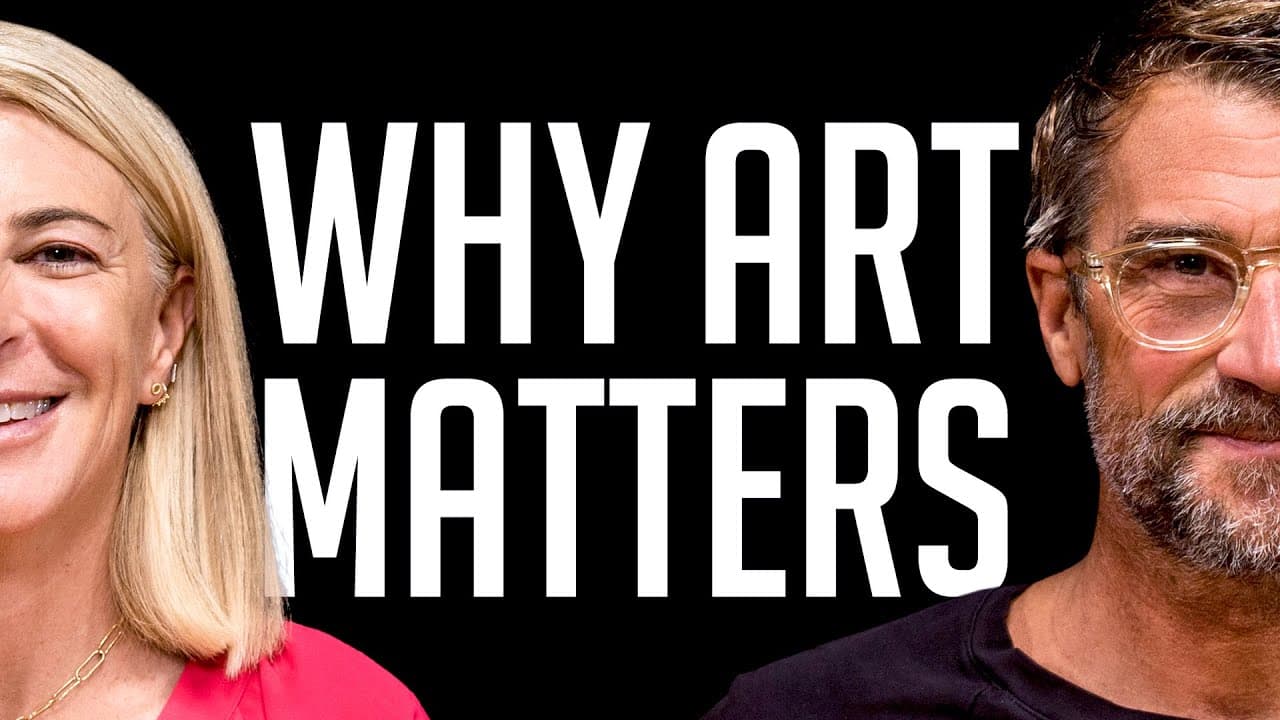
Why Does Art Matter? Heidi Zuckerman on the Rich Roll Podcast
TL;DR
Art matters because it communicates what other forms of expression fail to convey, according to Heidi Zuckerman. She defines art through the maker’s intention, describes artists as people who create for others, and calls art her North Star. Her conversation with Rich Roll also connects creative work with athletic practice through repetition, endurance, daily variation, and productive discomfort. Read on for a practical framework for understanding art and the people who make it.
Transcript
(slow music) If the person who made it says it's art, then it's art. So, it's all about the intention. Artists are people who make things for other people. Art communicates things that everything else fails short to do. (slow music continues) Art is my North Star. (slow music continues) Today, we're gonna talk about art, how to define it, how to un... Read More
Key Insights
- Art is defined by the maker’s intention, according to Zuckerman’s opening formulation. If the person who created something identifies it as art, that intention establishes its status as art rather than requiring validation from a particular material, format, institution, or outside observer.
- Artists are people who make things for other people. This definition emphasizes communication and human exchange, presenting artistic creation not merely as private self-expression but as an act that produces something another person can encounter, interpret, or experience.
- Art communicates things that other forms of expression fail to convey. Its importance lies in its ability to carry meanings, feelings, and experiences that may resist ordinary explanation, which is why Zuckerman describes art as her North Star.
- Practice is a repeated activity that allows improvement while remaining subject to daily variation. Artists, athletes, and musicians all practice, but their energy, strength, and ideas fluctuate, so sustained work includes both productive days and periods when little seems available.
- Endurance can create a shared setting for artists and athletes. Zuckerman and Rickey Gates discuss bringing six artists and six athletes together for a hundred miles of movement across five days and five nights at altitude, followed by conversations about how the experience feels.
- Productive discomfort is a matter of stretching people without making the experience unbearably uncomfortable. Zuckerman’s interest in limits connects physical endurance with creative practice, suggesting that challenge can become a subject for reflection when it remains within a tolerable range.
- Ricky Gates’s projects combine art and athleticism through running, photography, film, and writing. Rich Roll describes his activities as an amalgam of performance art and ephemera because the act of moving through places is temporary unless it is documented through another medium.
- A shared conversation can change when people use direct emotional language. At Gary’s seventieth-birthday gathering in London, family members were invited to say what they loved about him, and he was asked to name something he loved about himself, creating a moving shift in tone.
Install to Summarize YouTube Videos and Get Transcripts
Explore YouTube Video Summarizer or Get YouTube Transcript Extractor
Questions & Answers
Q: Why does art matter according to Heidi Zuckerman?
Art matters because it communicates things that other forms of expression fail to convey. Zuckerman describes artists as people who make things for other people, making art a form of exchange between a creator and an audience. She also calls art her North Star.
Q: What makes something art according to Heidi Zuckerman?
The maker’s intention determines whether something is art in Zuckerman’s definition. If the person who created it says it is art, then it is art. This places intention at the center of how art is identified.
Q: How can people understand art?
Zuckerman’s framework begins by considering the maker’s intention and what the work communicates to other people. Art does not have to convey its ideas or experiences in the same way as ordinary forms of expression. Understanding it therefore involves encountering what the artist made and considering what it communicates.
Q: Who is Heidi Zuckerman?
Heidi Zuckerman is presented as a global authority on contemporary art and the CEO and director of the Orange County Museum of Art. She formerly led the Aspen Art Museum and held positions at the Berkeley Art Museum and Pacific Film Archive and the Jewish Museum in New York. She also hosts “Conversations About Art” and wrote the “Conversations With Artists” book series.
Q: How are artistic and athletic practices similar?
Both artistic and athletic practices depend on repetition while allowing for daily variation. Artists, athletes, and musicians can improve through practice, but their energy, strength, and ideas are not identical every day. Sustained practice includes both productive periods and days when less is available.
Q: What endurance experience did Heidi Zuckerman and Rickey Gates envision?
They envisioned bringing six artists and six athletes together for a hundred miles of movement over five days and five nights at altitude. Participants would move during the day, stay in mountain huts, and discuss how the experience felt afterward. The shared challenge was designed to connect creative and athletic practice.
Q: What does productive discomfort mean in this conversation?
Productive discomfort means stretching people without making an experience unbearably uncomfortable. Zuckerman is interested in challenges that approach a person’s limits while remaining tolerable enough for effort and reflection. The proposed endurance experience would let artists and athletes explore that boundary together.
Q: Why is Rickey Gates described as both an artist and an athlete?
Gates combines running with photography, film, writing, and documentation. Rich Roll describes his projects as an amalgam of performance art and ephemera because moving through a place is temporary. Recording the experience through other media turns the run into a broader creative project.
Summary & Key Takeaways
-
Heidi Zuckerman defines art through intention: if its maker says it is art, then it is art. She describes artists as people who create things for others and argues that art communicates ideas or experiences that other methods cannot adequately express. For her, art serves as a personal North Star.
-
Zuckerman’s career includes leadership at the Aspen Art Museum and the Orange County Museum of Art, along with earlier positions at the Berkeley Art Museum and Pacific Film Archive and the Jewish Museum. Her work also includes curating hundreds of exhibitions, hosting Conversations About Art, and writing Conversations With Artists books.
-
The conversation connects artistic and athletic practices through repetition, changing daily capacity, endurance, and discomfort. Zuckerman and runner Rickey Gates envision a five-day, hundred-mile experience at altitude that would bring artists and athletes together. Participants would move during the day, stay in mountain huts, and discuss their experiences afterward.
Read in Other Languages (beta)
Share This Summary 📚
Summarize YouTube Videos and Get Video Transcripts with 1-Click
Try YouTube Summary with ChatGPT & Claude or YouTube Transcript Generator
Explore More Summaries from Rich Roll 📚

Summarize YouTube Videos and Get Video Transcripts with 1-Click
Try YouTube Summary with ChatGPT & Claude or YouTube Transcript Generator