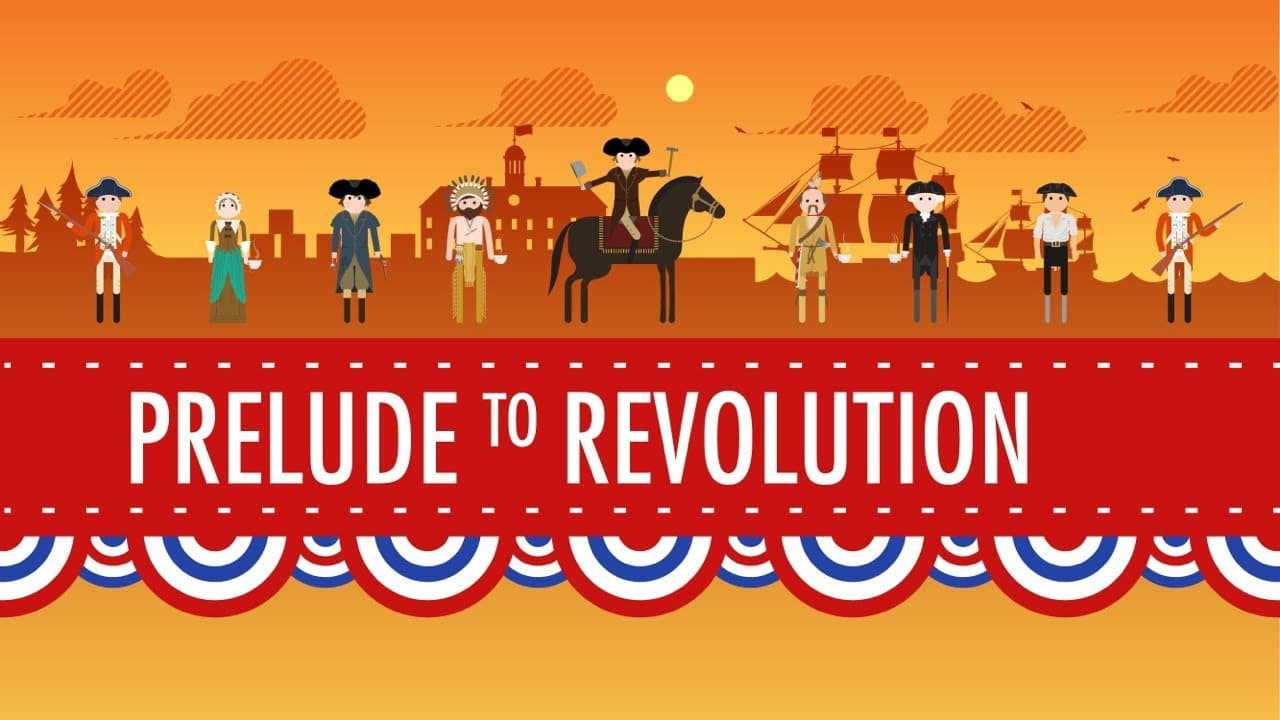
Taxes & Smuggling - Prelude to Revolution: Crash Course US History #6
TL;DR
The American Revolution was complex, not just about taxes.
Transcript
Hi, I'm John Green, this is Crash Course: US History, and today we begin discussing the American Revolution. So two things to keep in mind here: One, the American Revolution and the American War for Independence are not the same thing. And two, while I know this will upset some of you, the American Revolution was not really about taxes. Mr. Green, ... Read More
Key Insights
- The American Revolution and the American War for Independence are distinct events, with different starting points and motivations.
- Colonists were upset by British taxes due to lack of representation, not the taxes themselves, which had existed for years.
- The Stamp Act of 1765 angered colonists by taxing printed materials, sparking coordinated protests and boycotts.
- The Boston Massacre and Boston Tea Party were pivotal events that increased tensions between colonists and Britain.
- The Intolerable Acts further united the colonies against Britain, leading to the formation of the First Continental Congress.
- Thomas Paine's 'Common Sense' was influential in shifting public opinion towards independence with its straightforward arguments.
- The First Continental Congress marked a significant step towards American self-governance and coordinated resistance.
- Not all colonists supported independence; some remained loyal to Britain, fearing the consequences of republicanism.
Install to Summarize YouTube Videos and Get Transcripts
Explore YouTube Video Summarizer or Get YouTube Transcript Extractor
Questions & Answers
Q: What was the main cause of the American Revolution according to the video?
The video suggests that the main cause of the American Revolution was not taxes themselves but the lack of representation in the British Parliament. Colonists were accustomed to setting their own taxes and were upset by new taxes imposed without their input.
Q: How did the Stamp Act contribute to the American Revolution?
The Stamp Act of 1765 required all printed materials to carry a tax stamp, affecting those who used paper, like printers and lawyers. This angered colonists and sparked the first major coordinated protest, the Stamp Act Congress, leading to a boycott of British goods.
Q: What was the significance of the Boston Tea Party?
The Boston Tea Party was a protest against the Tea Act, which allowed the British East India Company to sell cheap tea, undermining local merchants. Colonists viewed it as a symbol of British overreach, leading to the Intolerable Acts and further uniting the colonies against Britain.
Q: Why were the Intolerable Acts significant?
The Intolerable Acts were punitive measures by Britain in response to the Boston Tea Party, curtailing self-governance and forcing colonists to house British soldiers. These acts united the colonies in opposition and led to the formation of the First Continental Congress.
Q: How did Thomas Paine's 'Common Sense' influence the revolution?
'Common Sense' was a pamphlet that argued for American independence using straightforward language and powerful rhetoric. It sold widely, influencing public opinion by emphasizing natural rights and the absurdity of an island governing a continent, contributing to the push for independence.
Q: What role did the First Continental Congress play in the revolution?
The First Continental Congress was the first coordinated effort by the colonies to resist British rule, setting up the Continental Association to enforce boycotts and encourage domestic manufacturing. It marked the beginning of a unified colonial government and resistance strategy.
Q: Why were some colonists opposed to independence?
Some colonists, especially elites in New York and Pennsylvania, feared that revolutionary fervor would lead to a loss of control and the empowerment of artisans and small farmers. They were concerned about the instability and potential chaos of a republican form of government.
Q: How did the American Revolution differ from the American War for Independence?
The American Revolution was a broader movement for self-governance and representation, starting before the war. The American War for Independence was the armed conflict that began in 1775, with independence formally declared in 1776. The revolution involved political and ideological shifts, while the war was the military struggle.
Summary & Key Takeaways
-
The American Revolution was a complex event, not solely about taxes or the Boston Tea Party, but about representation and self-governance. The Stamp Act and subsequent taxes sparked protests and boycotts, uniting the colonies.
-
The Boston Massacre and Tea Party were key events leading to the Intolerable Acts, which further united the colonies. The First Continental Congress marked a significant step towards coordinated resistance against British rule.
-
Thomas Paine's 'Common Sense' played a crucial role in swaying public opinion towards independence, emphasizing natural rights and the absurdity of an island governing a continent. The revolution was not universally supported, with loyalists fearing republicanism.
Read in Other Languages (beta)
Share This Summary 📚
Summarize YouTube Videos and Get Video Transcripts with 1-Click
Try YouTube Summary with ChatGPT & Claude or YouTube Transcript Generator
Explore More Summaries from CrashCourse 📚



Summarize YouTube Videos and Get Video Transcripts with 1-Click
Try YouTube Summary with ChatGPT & Claude or YouTube Transcript Generator