How to retain book knowledge while traveling and reading fast
TL;DR
To improve retention, organize new information in your mind so your brain treats it as useful rather than random. Keep cognitive load in the optimal range by thinking about the material rather than passively consuming it, and adapt your study session to the situation, even when you only have a few minutes. This boosts memory and practical use of what you read.
Transcript
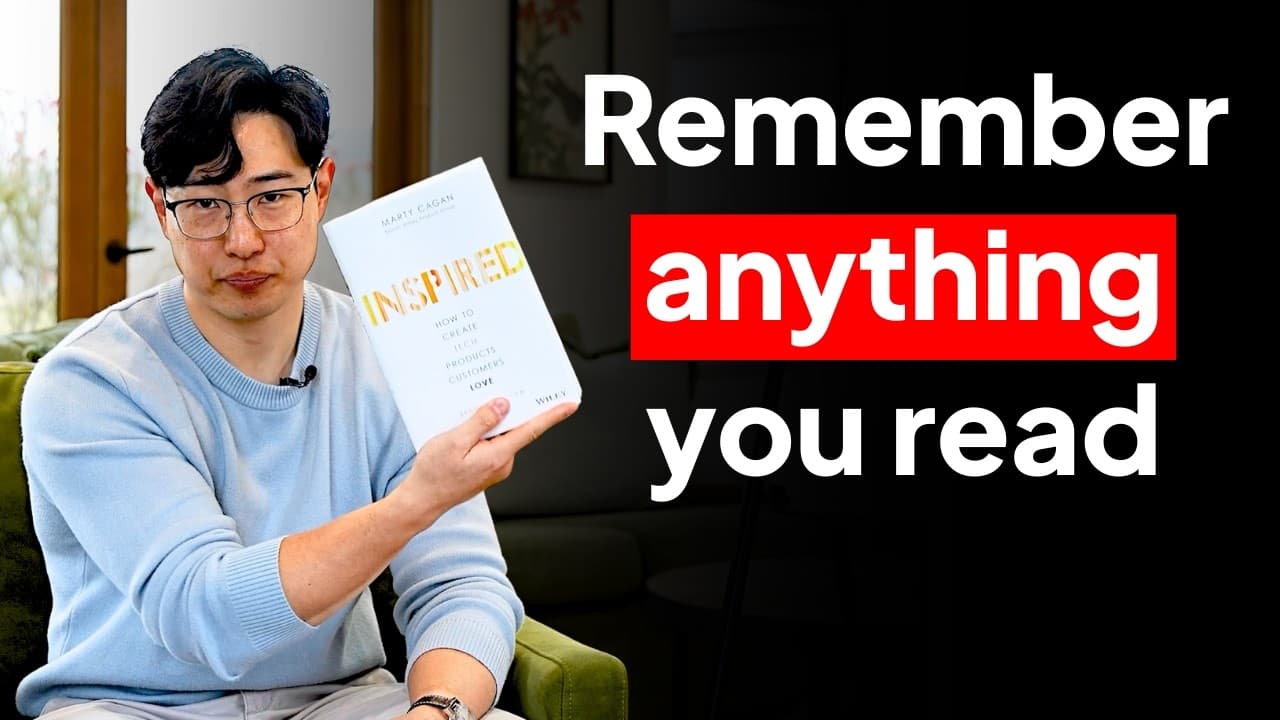
I recently read this book. Uh it's a book on product strategy and I read this book which is 300 pages. Um it took me about an hour and a half and I did it on the flight here. One of the most common questions people ask me actually the lady next to me on the flight was asking me about this as well. Uh is how you can read 300 pages of a book and have... Read More
Key Insights
- Information must be organized in the brain for durable memory, otherwise the brain will discard it as irrelevant. This organization acts like a clean warehouse with an efficient system.
- Memory success depends on staying within an optimum cognitive load range where ideas click and flow, enabling deeper learning and retention.
- Forgetting is biological and inevitable; you cannot outpace it, but you can trick your brain into treating information as important enough not to forget.
- Overconumption creates overload; consuming too much too quickly without processing leads to diminished retention and engagement.
- Underload results from passive thinking; without active engagement, information is not encoded effectively into memory.
- The secret to strong learning is thoughtful processing, not simply exposure to information, which is why strategic reflection matters.
- Learning can and should be flexible; even short, well focused sessions can be effective when adapted to the situation, such as in flight or in a busy environment.
- Maintaining motivation and relevance is crucial; if the material feels irrelevant, the brain will discard it, so learners should connect new knowledge to practical use.
- More videos from this channel:
- More from this channel: Justin Sung
Install to Summarize YouTube Videos and Get Transcripts
Explore YouTube Video Summarizer or Get YouTube Transcript Extractor
Questions & Answers
Q: What is the main idea behind improving retention when reading a book, especially in busy situations?
The main idea is to organize information in your brain so it is treated as meaningful knowledge rather than random data. By thinking about how to apply the material and by keeping cognitive load in an optimal range, you increase retention and can use what you read in real life, even during travel or short study bursts.
Q: How does the speaker describe cognitive load and its impact on learning?
Cognitive load is described as the mental effort required to process information. When it stays in the optimal band, learning happens with flow and retention improves. If you go above or below this band, you enter overload or underload, which makes retention difficult and learning less effective.
Q: What happens when you experience overload while reading or learning, according to the video?
Overload occurs when you try to consume too much information too fast or process it without sufficient thinking. This leads to a breakdown in the ability to hold and relate new knowledge, making memory weaker and the material harder to apply in practice.
Q: What is underload, and how does it affect learning outcomes?
Underload is when you are too passive in processing information, not actively thinking about it. This results in poor encoding of the material into memory, so retention and practical use are diminished despite exposure to the information.
Q: Why is it important to think about how information will be used when learning?
Thinking about use helps the brain assign relevance to new information, increasing the likelihood that it will be retained. If the information feels irrelevant, the brain will deprioritize it and forget it quickly, undermining long term learning.
Q: What practical tips does the video offer for learning in non-ideal conditions like travel?
The video suggests adapting the ideal learning session to the moment: even with limited time, you can focus on how to think about the material, maintain cognitive load in a workable range, and extract practical insights that can be used in meetings or real tasks.
Q: How does the speaker describe memory as a function of forgetting, and how can one counteract it?
Memory is framed as the brain not forgetting information, which is aided by making information feel important and relevant. By presenting knowledge in a way that seems useful and applying it, you strengthen retention and reduce the natural tendency to forget.
Q: What role does motivation play in retention according to the transcript?
Motivation acts as a driver for organizing and maintaining attention to new information. When learners feel the material could be useful or life changing, they are more likely to engage in strategic thinking about it and prevent forgetting, leading to better long term retention.
Summary & Key Takeaways
-
The process of learning hinges on organizing information so it stays in long term memory, not just being read. By focusing on how to think about the material, you prevent the brain from treating it as clutter and you increase retention.
-
Optimal cognitive load is key to learning; staying in a zone where ideas click leads to better understanding and memory retention, while overload or underload causes forgetfulness and disengagement.
-
Practical reading strategies work even when conditions are imperfect, such as during travel or in fast paced situations, by adapting the ideal learning session to the moment and maintaining a purposeful approach to thinking about the material.
Read in Other Languages (beta)
Share This Summary 📚
Summarize YouTube Videos and Get Video Transcripts with 1-Click
Try YouTube Summary with ChatGPT & Claude or YouTube Transcript Generator
Explore More Summaries from Justin Sung 📚

Summarize YouTube Videos and Get Video Transcripts with 1-Click
Try YouTube Summary with ChatGPT & Claude or YouTube Transcript Generator