How to learn efficiently as an adult while working
TL;DR
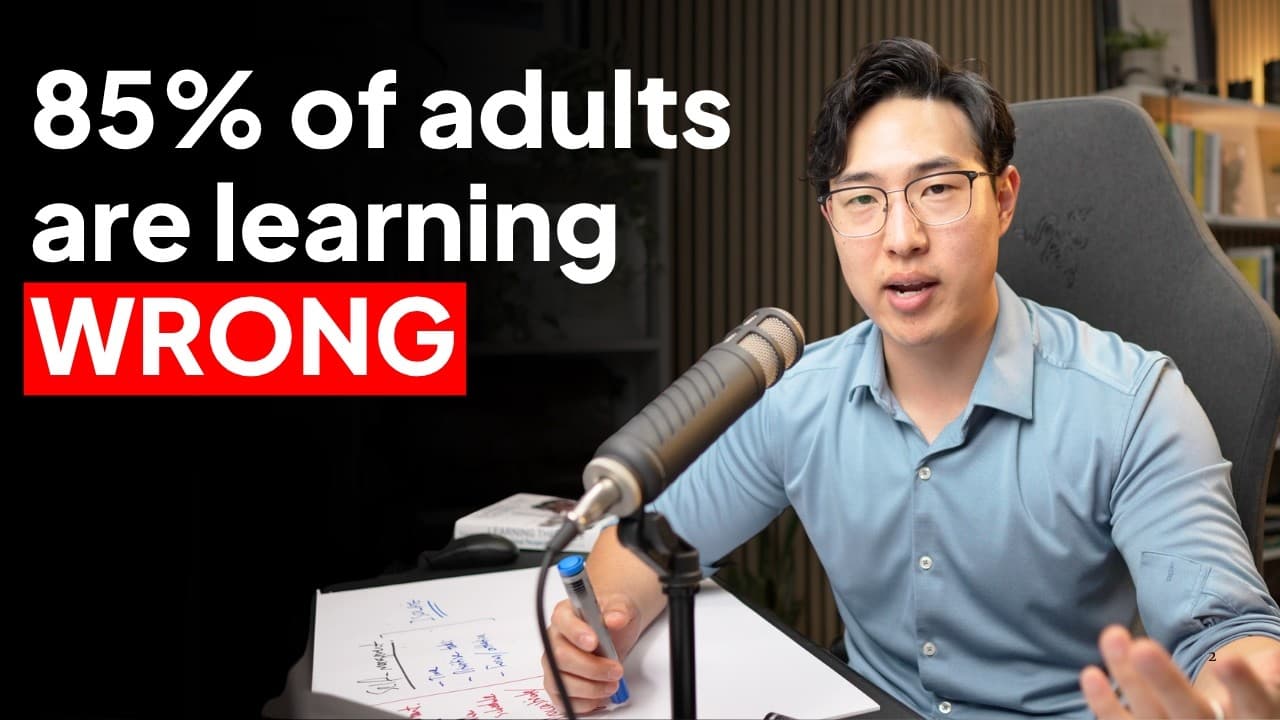
Efficient adult learning hinges on treating learning as a process you can optimize, not a fixed time burden. The main shift is recognizing that the belief I don’t have time is reverse causation: your time is wasted by slow learning, so improve the method and you gain time. Habits formed from school may no longer serve modern work life, so update them to learn faster.
Transcript
Learning as an adult is hard, but why? Of the thousands of professionals that I've coached, they all tell me that they never have enough time. You feel guilty for not spending your free evenings and weekends with your friends and family, or you feel guilty for not spending that time learning and studying. And even then, it still feels like it's not... Read More
Key Insights
- The key to aware adult learning is treating it as a learnable process rather than a fixed amount of time, which enables consistent progress without sacrificing other life domains.
- The belief I dont have time is a reverse causation where slow learning creates a perceived time crunch, so increasing learning efficiency reduces the required time and expands free time.
- Habits formed from school for exam success do not align with modern professional needs, so those outdated strategies hinder real world performance and must be replaced with feedback-driven methods.
- Time is relatively fixed in adults, but knowledge requirements are also relatively fixed, making efficient learning essential to avoid endless study and burnout.
- Exams historically prioritized recall and large information loads, which foster suboptimal learning techniques for today’s dynamic knowledge landscape.
- Modern learning demands creative thinking and problem solving, which require different methods and more constructive feedback than traditional schooling.
- Learning debt accumulates as we cling to tired methods; upgrading learning habits resets the baseline for what counts as effective study and accelerates improvement.
- Effective adult learning relies on iterating methods with real results, then updating those methods to fit contemporary career pressures and knowledge growth rates.
- More videos from this channel:
- More from this channel: Justin Sung
Install to Summarize YouTube Videos and Get Transcripts
Explore YouTube Video Summarizer or Get YouTube Transcript Extractor
Questions & Answers
Q: What is reverse causation in learning and why does it matter?
Reverse causation in learning is the idea that telling yourself you dont have time actually results from slow learning, not from a fixed schedule. Time is relatively fixed, so the path to more time lies in learning faster and more efficiently. This shifts the focus from hoping for more hours to redesigning the learning process for better outcomes.
Q: Why are school-based study methods not suitable for working professionals?
School methods emphasize memorization, exams, and cramming, which build habits geared toward passing tests rather than solving real world problems. Working professionals need time efficient, feedback-driven approaches that support flexible problem solving and knowledge application in dynamic environments, not just recall under pressure.
Q: How does knowledge doubling affect adult learning?
Knowledge doubling increases the volume of what needs to be learned over a career, while the usefulness of what is learned can decay quickly. Adults must learn how to learn efficiently to keep pace with this rapid growth, ensuring that study time translates into transferable skills and current competence.
Q: What role do feedback and habits play in effective learning?
Feedback helps adjust methods toward more productive results, refining learning habits. As habits form, they can become autopilot routines that may no longer suit current needs. Periodically updating methods ensures that expertise stays aligned with contemporary demands and maximizes learning efficiency.
Q: Why is time often not the real constraint in adult learning?
Time is numerically fixed, but the rate at which you convert study time into usable knowledge is what matters. If your learning process is slow, more time appears necessary. Optimizing methods yields more knowledge per hour, effectively increasing available free time without sacrificing outcomes.
Q: What is the risk of sticking with outdated learning methods as you advance professionally?
Outdated methods create a learning debt where your confidence and comfort zone rely on techniques that no longer produce adequate results. This mismatch can slow growth and hinder career progression, making it essential to update learning strategies to maintain competence and momentum.
Q: How can one begin updating their learning habits today?
Start by identifying current methods and the results they yield, then seek feedback-driven techniques that align with real world tasks. Replace cram cycles with spaced, applied practice and cut down ineffective repetition. Over time, adopt a more flexible approach focused on understanding and applying knowledge rather than memorization alone.
Q: What is the ultimate goal of learning in a modern professional life?
The goal is to develop thinking and problem solving abilities that transfer across contexts, enabling you to adapt to new information and responsibilities. Efficient learning supports sustained competence, reduces time spent on unnecessary study, and frees up space for meaningful work and personal life.
Summary & Key Takeaways
-
A practical framework shows that learning is a process, not a fixed cost, and time can be regained by improving learning efficiency, not by carving out more hours. The speaker links modern career demands with outdated school methods that emphasize cramming and recall. Updating habits is crucial for sustained growth.
-
The talk explains reverse causation, where saying you lack time masks slow learning. By optimizing learning methods, you reduce overall time spent while achieving the same or better knowledge levels, freeing life space for family, hobbies, and sleep.
-
The origin of exams in the 1800s created habits centred on passing tests rather than applying knowledge creatively. Modern professionals need feedback-driven learning and flexible problem solving, not memory-heavy recall, to stay competent as knowledge doubles rapidly.
Read in Other Languages (beta)
Share This Summary 📚
Summarize YouTube Videos and Get Video Transcripts with 1-Click
Try YouTube Summary with ChatGPT & Claude or YouTube Transcript Generator
Explore More Summaries from Justin Sung 📚
Summarize YouTube Videos and Get Video Transcripts with 1-Click
Try YouTube Summary with ChatGPT & Claude or YouTube Transcript Generator