How to train memory for exceptional learning
TL;DR
Memory is not fixed and can be trained through robust construction of information. The key ideas are spacing and generation: space repetition helps retention, but meaningful, effortful engagement is crucial. Producing your own understanding strengthens memory and makes recall more reliable over time.
Transcript
I'm a learning coach and a doctor. But to be honest, I think I have a pretty bad memory. 10 years ago, I spent every hour of every day just studying, mostly just relearning stuff that I kept forgetting. But today, I can learn 100 pages of a dense textbook with over 90% retention. And the reason that I can do that today when I definitely couldn't be... Read More
Key Insights
- Memory is best viewed as a quality of the information, not a fixed trait, and robust construction determines how well it sticks.
- The spacing effect shows that repeated exposure over time reduces forgetting, progressively flattening the forgetting curve and improving long term recall.
- Relying solely on repetition is not scalable, so you should combine spacing with deeper, more thoughtful reviews.
- The generation effect proves that producing your own knowledge strengthens memory more than passive intake of information.
- Passive methods like rereading are less effective than generative practices such as recalling and rewriting notes from memory.
- Active generation can come from summarizing content after listening, or reconstructing notes from memory to enhance retention.
- The memory concept is tied to the residue of thought, meaning memory reflects the thought processes engaged during learning.
- A robust memory system uses practical strategies that balance effort, time investment, and meaningful engagement to maximize long term retention.
- More videos from this channel:
- More from this channel: Justin Sung
Install to Summarize YouTube Videos and Get Transcripts
Explore YouTube Video Summarizer or Get YouTube Transcript Extractor
Questions & Answers
Q: How does the video define memory and why is it not a fixed trait?
Memory is described as a property of information called a memory quality that emerges from how the information is constructed in the brain. If the construction is robust, the memory remains sticky and durable; if it is flimsy or navigation is haphazard, it fades quickly. This reframes memory as a skill that can be trained rather than a fixed attribute.
Q: What is the spacing effect and why is it important for learning?
The spacing effect states that repetition over time helps retain information longer by slowing the natural knowledge decay. Early on we forget quickly, but spacing repetitions a few days apart and then again gradually makes the memory curve flatter, leading to stronger long term recall and less forgetting.
Q: Why should one not rely only on spacing when improving memory?
Relying solely on spacing can be inefficient because some repetition methods are passive and offer limited benefits. To achieve durable memory with fewer repetitions, you should pair spacing with deeper, more effortful review methods that actively engage thinking and retrieval.
Q: What is the generation effect and how can it be applied?
The generation effect shows that producing knowledge strengthens memory more than passively receiving it. Practically, this means summarizing content from memory, rewriting notes without looking, or pausing to recall and articulate main points after listening, all of which require more mental effort and improve retention.
Q: What is meant by the residue of thought in memory science?
The residue of thought means that when you recall information, you are remembering the thoughts and processes you used when first engaging with it, not just the raw facts. Deep processing during learning creates a stronger, more retrievable memory trace.
Q: How does the speaker describe building a robust memory box for information?
The metaphor is that information is placed into a memory box, and the box must be built with strong materials and careful construction. A flimsy box degrades quickly, while a robust box with durable components preserves the information for a lifetime, reflecting how memory strength affects recall longevity.
Q: What role does time and effort play in memory training according to the video?
Time and effort are crucial because meaningful, effortful engagement strengthens memory traces, while quick, superficial processing yields fragile memory. Investing resources to create robust representations and periodic, thoughtful reviews yields durable long term retention without endless repetition.
Q: How can a learner implement these four principles in practice?
A learner can implement the four principles by combining spaced reviews with active generation methods, such as recalling information before reviewing notes, rewriting summaries from memory, and summarizing key points after listening. This blend reduces forgetting, enhances depth of processing, and makes learning more efficient over time.
Summary & Key Takeaways
-
The video argues memory is a controllable quality of information, not a fixed trait, and emphasizes robust construction of knowledge to improve retention.
-
It introduces the spacing effect, explaining how repetition over time reduces forgetting and flattens the forgetting curve when done with effective strategies.
-
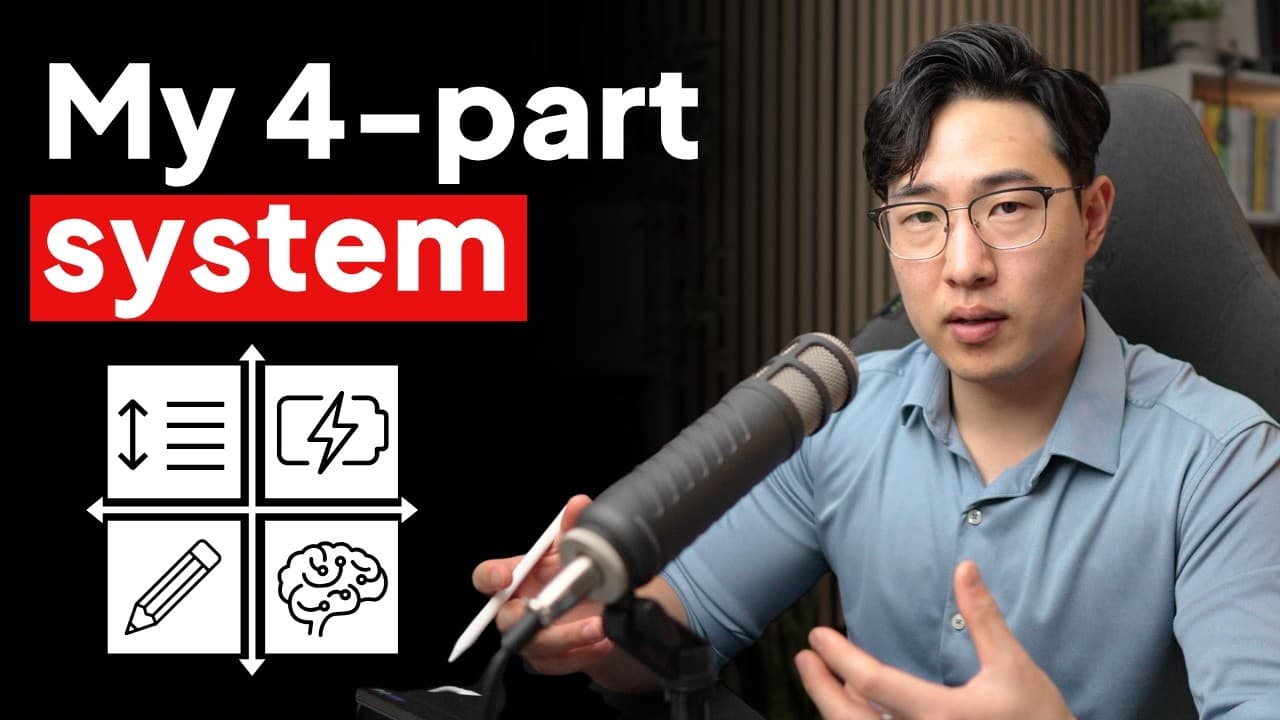
The four universal principles are introduced with a focus on how spacing and generation interact to create durable memory for efficient learning.
Read in Other Languages (beta)
Share This Summary 📚
Summarize YouTube Videos and Get Video Transcripts with 1-Click
Try YouTube Summary with ChatGPT & Claude or YouTube Transcript Generator
Explore More Summaries from Justin Sung 📚


Summarize YouTube Videos and Get Video Transcripts with 1-Click
Try YouTube Summary with ChatGPT & Claude or YouTube Transcript Generator