What Is The Crisis in Cosmology? With Dr. Paul Sutter
TL;DR
The age of the universe cannot be accurately measured due to conflicting measurements of the expansion rate.
Transcript
how old is the universe now in order to figure that question out astronomers have to measure the expansion of the universe today and then run the clock backwards to the beginning of the universe and then do the math and the problem is that astronomers have measured the expansion at various times in the universe and they've done it very accurately a... Read More
Key Insights
- ☠️ Astronomers are attempting to measure the current expansion rate of the universe, known as the Hubble constant, but different measurements are giving conflicting results.
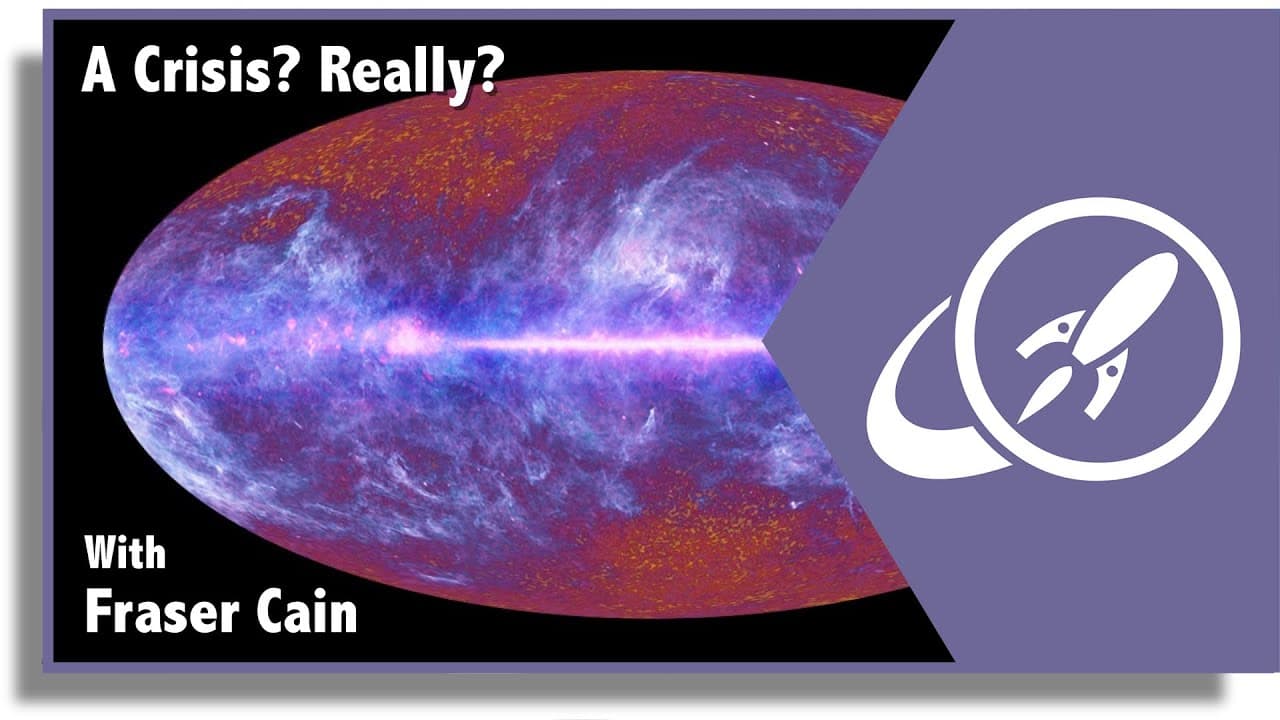
- 🙂 The Planck mission, which measured the cosmic microwave background radiation, obtained a slightly lower value for the expansion rate compared to measurements based on nearby supernovae.
- 👶 The discrepancies between the measurements suggest the presence of errors or the need for new physics to explain the variations.
- 🕶️ Possible explanations for the discrepancies include incorrect assumptions about dark energy, uncertainties in the data, or errors in the measurements.
- 🤕 The tension between the measurements highlights the need for further research and observations to understand the expansion rate and the age of the universe.
- ⌛ Upcoming missions such as WFIRST and Euclid aim to gather more data on dark energy and its behavior over time.
- 🧑🔬 The discrepancies in the measurements present an opportunity for scientists to learn more about supernovae and dark energy, regardless of the outcome.
Install to Summarize YouTube Videos and Get Transcripts
Explore YouTube Video Summarizer or Get YouTube Transcript Extractor
Questions & Answers
Q: Why are astronomers having difficulty measuring the age of the universe accurately?
Astronomers are measuring the current expansion rate of the universe, but different measurements give conflicting results, indicating errors or the need for new physics.
Q: How do astronomers measure the expansion rate of the universe?
Astronomers measure the expansion rate by observing the movements of distant objects, such as supernovae, and calculating the increase in distance over time.
Q: What role did the Planck mission play in measuring the age of the universe?
The Planck mission measured the cosmic microwave background radiation, which provided insights into the early universe. From this data, the Planck collaboration calculated the expected expansion rate.
Q: What are the possible explanations for the conflicting measurements of the expansion rate?
The discrepancies could be due to errors in the measurements, uncertainties in the data, or the need for a better understanding of the nature of dark energy.
Summary & Key Takeaways
-
Astronomers are trying to measure the current expansion rate of the universe, known as the Hubble constant, but different measurements give conflicting results.
-
The Planck mission, which utilized the cosmic microwave background radiation, calculated a slightly lower value for the expansion rate than the measurements based on nearby supernovae.
-
The disagreement between the measurements suggests either errors in the measurements or the need for new physics to explain the variations.
Read in Other Languages (beta)
Share This Summary 📚
Summarize YouTube Videos and Get Video Transcripts with 1-Click
Try YouTube Summary with ChatGPT & Claude or YouTube Transcript Generator
Explore More Summaries from Fraser Cain 📚


Summarize YouTube Videos and Get Video Transcripts with 1-Click
Try YouTube Summary with ChatGPT & Claude or YouTube Transcript Generator