How to Make Websites AI Agent Ready with WebMCP
TL;DR
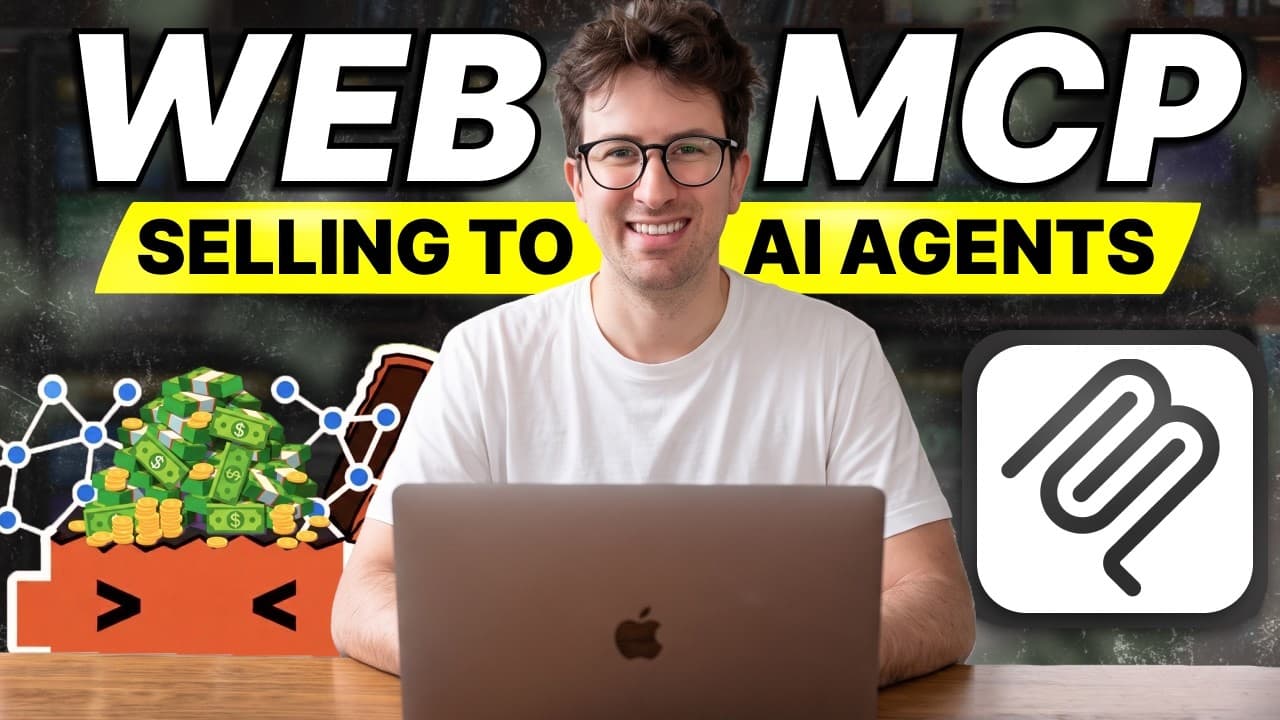
WebMCP makes websites ready for AI agents by exposing a concise set of actions for tasks such as searching, booking, buying, comparing products, and adding items to a cart. The browser session carries the user’s login, while agents can act through the site’s visual interface instead of scanning the entire DOM or relying on screenshots. Read on to understand how WebMCP works, where it fits, and which business opportunities it creates.
Transcript
Think about this. AI agents are about to become a new kind of visitor on the internet. And I think billions of dollars of wealth will change hands in the process because millions of AI agents are going to be browsing and buying on the internet. But the internet isn't designed for them to do that. And that creates a really interesting question, whic... Read More
Key Insights
- WebMCP enables websites to become agent-readable and agent-actionable through a concise list of tools.
- The browser session carries the login, maintaining conditional tools and simplifying setup.
- A live store demo shows how WebMCP can compare products, match accessories, add items to the cart, and apply coupons.
- WebMCP is positioned between headless APIs and in-app agents, offering a visual UI that users prefer.
- WebMCP launched in February as a joint experimental feature by Microsoft and Google in Chrome.
- Key markets for WebMCP include complex commerce, SaaS admin consoles, regulated industries, and internal tools.
- The agent-native approach allows users to bring their own agents, maintaining context and memory across interactions.
- WebMCP offers a middle ground by providing app agent capabilities without requiring users to separate from their preferred agents.
Install to Summarize YouTube Videos and Get Transcripts
Explore YouTube Video Summarizer or Get YouTube Transcript Extractor
Questions & Answers
Q: What is WebMCP and how does it make websites AI-agent ready?
WebMCP lets a website expose a clear, concise list of tools that an AI agent can use through the browser UI. Instead of interpreting the whole page like a human, the agent receives explicit ways to perform actions such as searching, booking, or buying.
Q: How does WebMCP differ from ordinary browser automation?
Ordinary browser agents may scan the entire DOM, inspect website code, take screenshots, and search for buttons to click. WebMCP gives the agent a smaller, more efficient list of available actions, making it easier to understand and operate the site.
Q: What can an AI agent do on a WebMCP-enabled online store?
The demonstrated store let an agent compare espresso machines, place two options side by side, and highlight specifications matching the shopper’s request. The broader store demo also included matching accessories, adding products to the cart, and applying coupons.
Q: How did WebMCP help choose an espresso machine?
The shopper asked for an upgrade from a Mara X that could easily make two flat whites a day and fit a counter about 32 cm wide. The agent found two machines and highlighted relevant details such as width, drink capability, and portafilter compatibility.
Q: Can users bring their own AI agent to a WebMCP website?
Yes. The episode describes using agents such as Claude Code, ChatGPT, or Grokbot to communicate with a WebMCP-enabled site. This agent-native approach lets users keep the context and memory associated with their preferred agent.
Q: How does WebMCP handle login and authentication?
WebMCP uses the existing browser session to carry the user’s login. This keeps tools conditional on the user’s state and avoids requiring a separate setup with API keys or tokens.
Q: Which businesses and applications could benefit from WebMCP?
The identified opportunities include complex commerce, SaaS administration consoles, regulated industries such as insurance and banking, and internal company tools. These settings involve tasks where agents could benefit from clearly defined actions within an existing visual interface.
Q: What startup ideas could be built around WebMCP?
One idea is a WebMCP conversion agency that helps businesses make their websites agent-ready. Another is an agent mystery-shopping service that tests whether AI agents can complete important user journeys on a website.
Summary & Key Takeaways
-
WebMCP transforms websites into agent-ready platforms by providing tools that AI agents can use to interact with content, simplifying the process of completing tasks. This innovation is positioned between headless APIs and in-app agents, maintaining a user-friendly interface.
-
WebMCP's browser session-based login ensures tools remain conditional and setup remains straightforward, eliminating the need for API keys. This approach is particularly beneficial for complex commerce, SaaS admin, and regulated industries.
-
The technology offers a first-mover advantage for early adopters, with potential applications in compatibility-driven commerce and internal tools. As AI agents become more prevalent, WebMCP provides a critical solution for optimizing websites for these new digital visitors.
Read in Other Languages (beta)
Share This Summary 📚
Summarize YouTube Videos and Get Video Transcripts with 1-Click
Try YouTube Summary with ChatGPT & Claude or YouTube Transcript Generator
Explore More Summaries from Greg Isenberg 📚




Summarize YouTube Videos and Get Video Transcripts with 1-Click
Try YouTube Summary with ChatGPT & Claude or YouTube Transcript Generator