How Will the Sun Die and What Happens Afterwards?
TL;DR
The Sun will ultimately shed its outer layers and become a white dwarf, cooling over billions of years until it crystallizes into a diamond-like core. Throughout this process, it will no longer be capable of nuclear fusion, leaving it as a remnant that symbolizes the ending of its life cycle.
Transcript
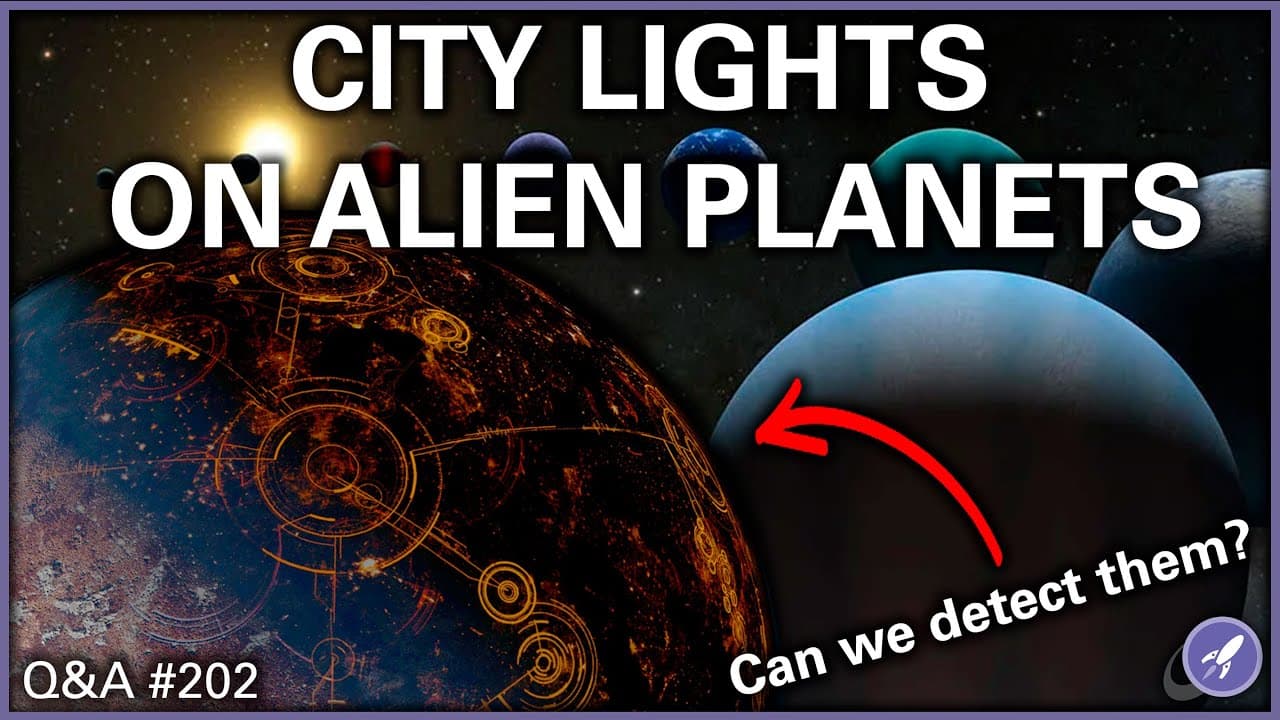
how will the sun die is climate engineering a good idea and could we see city lights on an exoplanet all this and more in this week's question show hi everyone welcome to the question show your questions my answers now as always wherever you are across my channel if a question Pops in your brain just write it down I'll gather a bunch of them up and... Read More
Key Insights
- 🫢 "Termination Shock" by Neil Stevenson explores the idea of a billionaire attempting to fix climate change through geoengineering, with unintended consequences.
- 😮 Climate engineering offers potential solutions to offset rising temperatures but can have unforeseen negative impacts.
- 🙂 Detecting artificial lights on exoplanets may be possible in the future, potentially within the next few decades.
- 🖤 Living within the event horizon of a black hole is not feasible, but black holes can serve as gravitational anchors for complex civilizations.
- 👾 Iron meteorites form from shattered planetesimals or planetoids sprayed into space, leaving behind concentrated metal fragments.
Install to Summarize YouTube Videos and Get Transcripts
Explore YouTube Video Summarizer or Get YouTube Transcript Extractor
Questions & Answers
Q: What happens to the sun in the black dwarf stage? Will it have a solid surface?
During the black dwarf stage, the sun becomes a white dwarf and eventually cools down to a diamond-like object. While it would have a solid surface, the immense gravity would make it impossible to walk on without being squished.
Q: Is climate engineering a good idea? Are there studies showing negative consequences?
Climate engineering offers potential solutions to offset rising temperatures, but it carries the risk of unintended consequences. Past experiences with large-scale interventions in the environment have shown unexpected negative effects. Some studies show positive outcomes, while others highlight negative consequences.
Q: Could we see artificial lights on an exoplanet? How long will it take?
Detecting artificial lights on an exoplanet is possible through future telescopes or utilizing solar gravitational lensing. However, it may not happen until around 2050 or when a spacecraft takes advantage of the solar gravitational lens, providing a megapixel view of an exoplanet.
Q: Could there be a habitable world with advanced societies within the event horizon of a black hole?
Living within the event horizon of a black hole would not be possible due to intense tidal forces. However, living near the event horizon, as in the case of supermassive black holes, is feasible, although it would involve certain time dilation effects.
Q: How do iron meteorites form? Where do they come from?
Iron meteorites are believed to be remnants of planetesimals or planetoids that were shattered and sprayed out into space. These fragments, consisting mainly of metal, eventually recombined and formed iron meteorites.
Q: How did perchlorate end up on Mars?
Perchlorate on Mars is formed by the interaction of the ultraviolet light from the sun with the upper layer of the Martian regolith. It is only present in the top layer and could be washed off to make the regolith safe for plant growth.
Summary & Key Takeaways
-
"Termination Shock" by Neil Stevenson is a highly recommended book that explores climate change and geoengineering solutions in a near-future setting.
-
The sun's death involves shedding outer layers, forming a white dwarf, and eventually cooling down to become a diamond-like object within billions or trillions of years.
-
Climate engineering, such as injecting sulfur dioxide into the atmosphere, is a potential solution to offset rising temperatures, but it carries the risk of unintended consequences.
-
Detecting city lights on an exoplanet could be possible through future telescopes or utilizing solar gravitational lensing, but it may not happen until around 2050.
-
Living within the event horizon of a black hole is not feasible due to intense tidal forces, but living near, though far from the event horizon, is possible under certain conditions.
-
Iron meteorites form from planetesimals or planetoids that were shattered and sprayed out into space, leaving behind concentrated fragments of metal.
-
The presence of perchlorate on Mars is due to the interaction of the planet's regolith with ultraviolet radiation from the sun.
Read in Other Languages (beta)
Share This Summary 📚
Summarize YouTube Videos and Get Video Transcripts with 1-Click
Try YouTube Summary with ChatGPT & Claude or YouTube Transcript Generator
Explore More Summaries from Fraser Cain / Universe Today Podcast 📚


Summarize YouTube Videos and Get Video Transcripts with 1-Click
Try YouTube Summary with ChatGPT & Claude or YouTube Transcript Generator