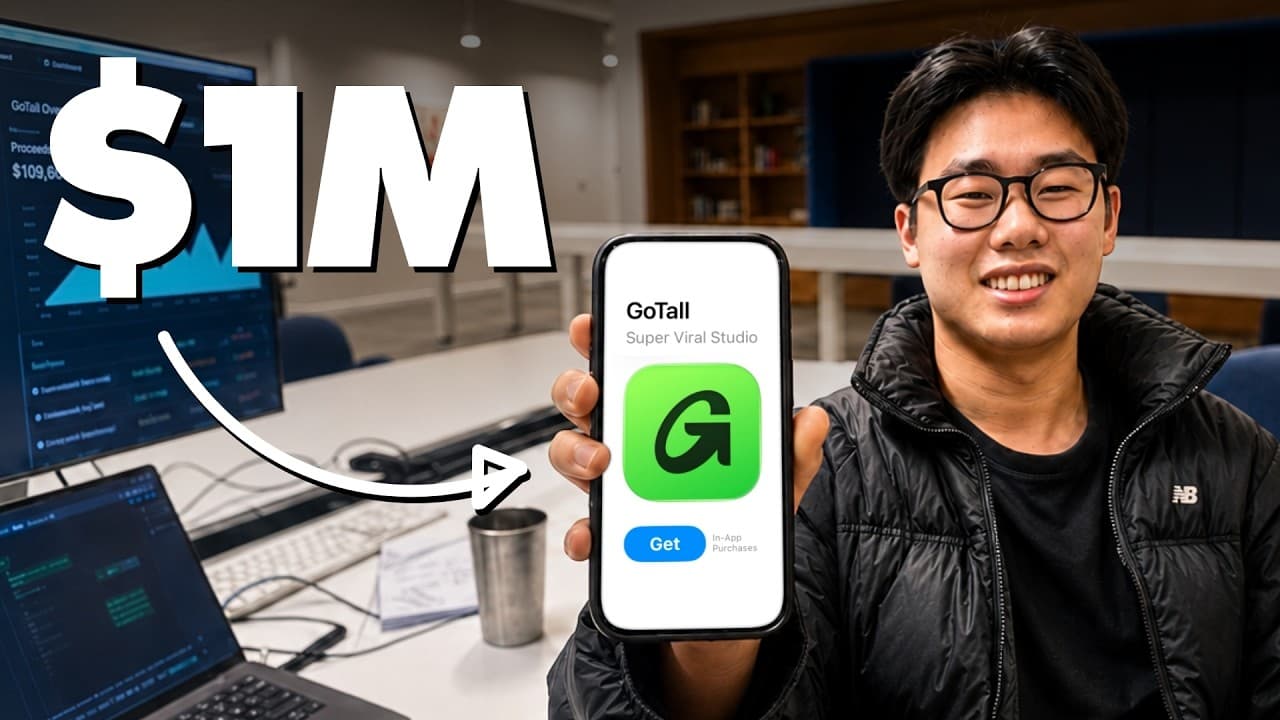
How did a height predictor app reach six figures monthly?
TL;DR
The founder built Go Tall after seeing a need for height prediction and user guidance. He validated the idea by launching quickly, generating early sales, and leveraging TikTok comments to prove demand, then scaled with a simple distribution strategy and affordable creator support. The result is a high performing app in health and self improvement.
Transcript
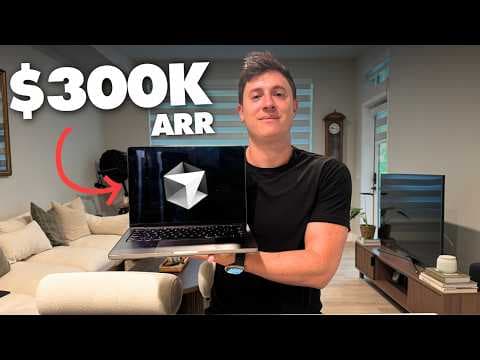
When I heard about this app idea, I started cracking up because I thought there's no way this thing actually makes [music] any money until I found out just how much it was making. >> I am 20 years old. I built an app called Go Tall that now makes on average about 100K a month. >> This is Michael. He's a 20-year-old college student who came across h... Read More
Key Insights
- Go Tall solved a real user problem, height prediction, and paired it with habit guidance.
- The idea validation came from early sales and observing social media demand.
- Initial distribution relied on rapid, consistent content creation focused on format that resonated.
- A viral content strategy on TikTok accelerated user acquisition and validation.
- UGC creators were recruited affordably to scale content output.
- A tiered pricing or premium access model was used to monetize the app.
- Feedback from user DMs confirmed the pain point and willingness to pay.
- Continuous testing of ideas and formats is essential to identify scalable growth channels.
Install to Summarize YouTube Videos and Get Transcripts
Explore YouTube Video Summarizer or Get YouTube Transcript Extractor
Questions & Answers
Q: A real search query question about the video: How can I validate a mobile app idea quickly before building it?
Validation in this case came from real world signals rather than theoretical interest. The founder launched the idea and secured an initial sale within days, proving there was demand. He then observed social media interactions, particularly TikTok comments asking for height predictions, which reinforced the problem’s relevance. This combination of early sales data and organic social proof can demonstrate viability without large upfront investment.
Q: What was the core idea behind Go Tall and why did it appeal to users?
The core idea was a height prediction app that also offered habit guidance to help users reach their potential. It appealed because height is a sensitive topic for many young people, and users expressed a clear desire for predictions and related behavioral tips. This combination created a strong perceived value and a sense of personalized guidance that resonated with the audience.
Q: How did the founder discover the idea and decide to pursue it?
He discovered the idea while browsing acquire.com and finding a similar app for sale. Seeing validated demand, he recalled his own experience with height questions during adolescence and decided to build the concept himself. The quick two day period to a first sale confirmed he was on the right track and sparked further action.
Q: What growth strategy was used to scale the app to significant revenue?
The growth strategy started with content generation, posting many TikTok videos to identify a reusable format. Once a successful format was found, it was replicated across multiple accounts and even with a partner, amplifying reach. He then recruited affordable creators to produce content around that format and refined the pricing model to monetize effectively.
Q: How did social proof influence product-market fit for Go Tall?
Social proof came from direct user interactions in comments and DMs showing demand for height predictions and related habits. This feedback validated the product category and messaging, making it clear that users cared about the problem and would pay for a solution. Social signals helped confirm demand and guide the monetization approach.
Q: What role did pricing and monetization play in the app’s success?
There was a tiered pricing approach including a yearly plan and a weekly option, with additional premium features for extended access. The pricing structure provided options for different willingness to pay, enabling more users to convert and creating recurring revenue. The structure was chosen to align with user needs and perceived value.
Q: What lessons did the founder share about finding ideas and avoiding ego?
The founder emphasized looking for real customer needs rather than clinging to a favorite concept. He suggested not letting ego block exploration of other ideas and staying open to multiple angles. The key is to test quickly, validate with real signals, and iterate based on what customers actually want.
Q: What advice does the interviewer give for others wanting to replicate this success?
The interviewer advises focusing on a problem that people clearly want solved and validating it with early traction, such as initial sales or direct user feedback. They suggest starting with a simple, testable version, learning from the data, and then scaling using a repeatable content and marketing approach, while maintaining a lean, learn-and-iterate mindset.
Summary & Key Takeaways
-
Go Tall started from a personal problem and a quick launch, validating demand with early sales and social media feedback. The creator used a simple monetization model and iterated content formats to drive growth. The approach shows how fast validation and smart marketing can propel a new app.
-
The growth relied on a repeatable content strategy, leveraging user requests and viral formats on TikTok. By outsourcing content production to affordable creators and refining the paywall, the team expanded traction and kept the funnel efficient.
-
The broader takeaway is to focus on clear customer needs and test ideas quickly through small experiments. Use social proof and simple monetization to validate fit before scaling, then expand with additional channels and value propositions.
Read in Other Languages (beta)
Share This Summary 📚
Summarize YouTube Videos and Get Video Transcripts with 1-Click
Try YouTube Summary with ChatGPT & Claude or YouTube Transcript Generator
Explore More Summaries from Starter Story 📚


Summarize YouTube Videos and Get Video Transcripts with 1-Click
Try YouTube Summary with ChatGPT & Claude or YouTube Transcript Generator