How to Think Like a Cybersecurity Architect: Mindset and Tools
TL;DR
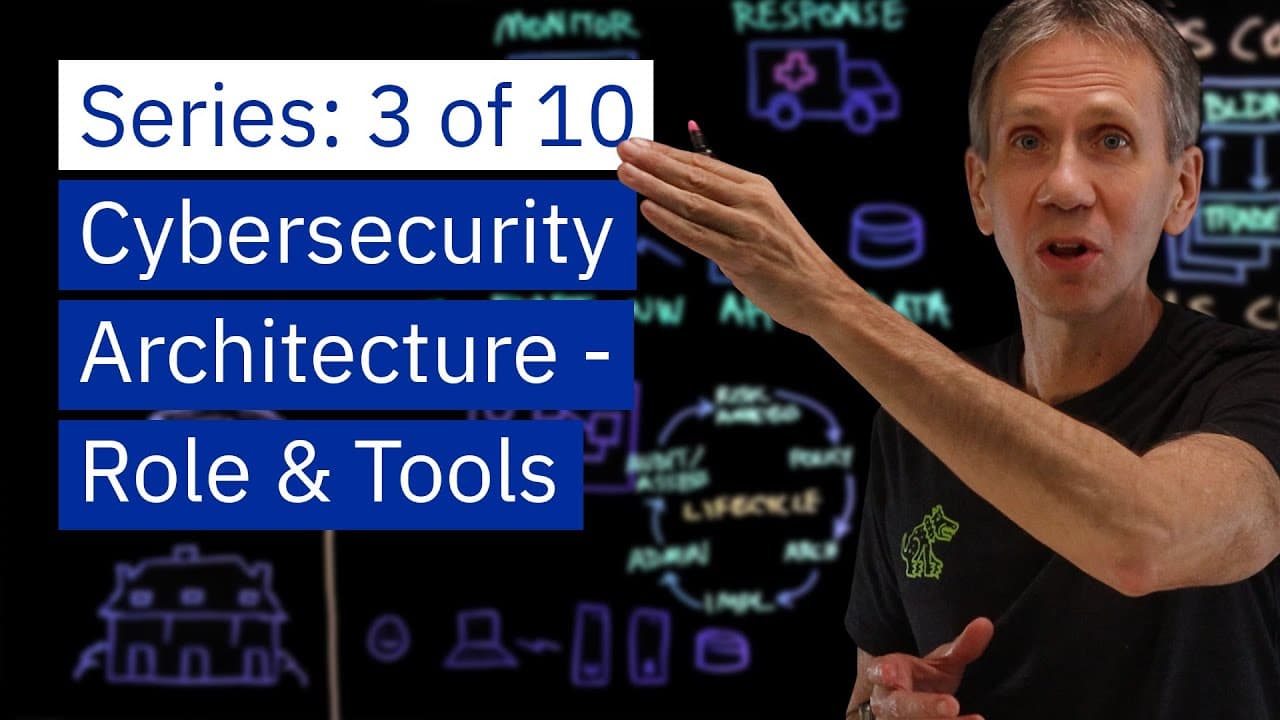
The key is to focus on the big picture and how a system could fail, then add protections. Start by aligning with stakeholders, using diagrams to map components, and applying the CIA Triad alongside a recognized framework like the NIST Cybersecurity Framework to identify, protect, detect, respond, and recover. This approach guides secure IT architecture end to end.
Transcript
In the previous two videos on Cybersecurity Architecture Fundamentals, we discussed principles that you should follow--essential security principles. The next video, we discussed the CIA Triad, where you could basically use this as a checklist to know that you've done a cybersecurity architecture correctly. In this video, we're going to focus on th... Read More
Key Insights
- A cybersecurity architect starts from stakeholders and a big picture blueprint, then translates it into secure, workable IT designs.
- The mindset focuses on how a system could fail, not just how it should work, to proactively implement mitigations.
- Common diagrams such as business context, system context, and architecture overview diagrams are used to communicate and decompose the system.
- The architect integrates security into the IT blueprint using the CIA Triad as a fundamental checklist for protection, integrity, and availability.
- Frameworks like the NIST Cybersecurity Framework provide a structured set of activities across identify, protect, detect, respond, and recover.
- Security tools and roles are layered, with dedicated engineers for database, network, and identity management to implement protections.
- The analogy of whiteboard versus keyboard emphasizes planning and design work by the architect before implementation by engineers.
- The approach combines practical controls like multi factor authentication, device management, encryption, and firewalls to slow or stop adversaries.
Install to Summarize YouTube Videos and Get Transcripts
Explore YouTube Video Summarizer or Get YouTube Transcript Extractor
Questions & Answers
Q: What is the main role of a cybersecurity architect according to the video
The main role is to think about the big picture and how a secure solution fits with stakeholders, then add mitigations so that the architecture can withstand failures and attacks. The architect develops a blueprint, considers failure scenarios, and aligns with security principles and frameworks to guide implementation by specialized engineers.
Q: How does the video describe the difference between normal IT architects and cybersecurity architects
The normal IT architect focuses on how a system will work while the cybersecurity architect concentrates on how it might fail and what to do to prevent those failures. The cybersecurity architect adds layers of defense, such as authentication, device management, and encryption, to ensure resilience against threats.
Q: What diagrams does an IT architect use to communicate, as mentioned in the video
The video highlights business context diagrams, system context diagrams, and architecture overview diagrams as essential tools. These diagrams show relationships among entities, decompose the system into components, and illustrate how high level pieces connect to operational details, enabling clear planning and communication.
Q: What framework is recommended for cybersecurity planning in the video
The video recommends applying the NIST Cybersecurity Framework to structure activities across identify, protect, detect, respond, and recover. This framework serves as a checklist similar to building codes, guiding how to identify assets, protect them with controls, detect issues, respond to incidents, and recover from problems.
Q: What security concepts are tied to the CIA Triad in the video
Confidentiality, integrity, and availability are used as core principles to check that data remains private, accurate, and accessible when needed. The architect uses these concepts to decide where to implement protections such as encryption for confidentiality, integrity checks for data, and backups or resilience measures to ensure availability.
Q: How are tools and roles organized in the described cybersecurity architecture
Tools and roles are organized by function: database administration for encryption, network administration for firewalls, and desktop or device management for identity and access control. The architect coordinates these specialists, ensuring that each component aligns with the overall secure blueprint and that protective measures are consistently applied.
Q: What analogy is used to describe the architect's work
The analogy compares building architects and IT architects, emphasizing that the cybersecurity architect operates like a builder thinking with a plan drawn on a whiteboard rather than someone typing at a keyboard. This reflects the emphasis on planning, design decisions, and thinking through failure scenarios before implementation.
Q: What practical mitigations are mentioned for securing IT systems
Practical mitigations include multi factor authentication to guard against stolen credentials, mobile device management for device health, endpoint detection, antivirus protections, network firewalls to isolate segments, and data encryption in the database. These measures work together to slow or stop attackers and protect critical data.
Summary & Key Takeaways
-
This summary explains how the cybersecurity architect combines stakeholder input with architecture diagrams to shape secure IT systems, emphasizing the mindset of anticipating failures and applying protective controls.
-
The video connects building analogies to IT design, illustrating how firewalls, encryption, and device management fit into a structured framework, and how the architecture evolves from high level to detailed components.
-
The content highlights the role of frameworks and the importance of planning for failure, misconfigurations, and layered defenses to maintain confidentiality, integrity, and availability in complex networks.
Read in Other Languages (beta)
Share This Summary 📚
Summarize YouTube Videos and Get Video Transcripts with 1-Click
Try YouTube Summary with ChatGPT & Claude or YouTube Transcript Generator
Explore More Summaries from IBM Technology 📚
Summarize YouTube Videos and Get Video Transcripts with 1-Click
Try YouTube Summary with ChatGPT & Claude or YouTube Transcript Generator