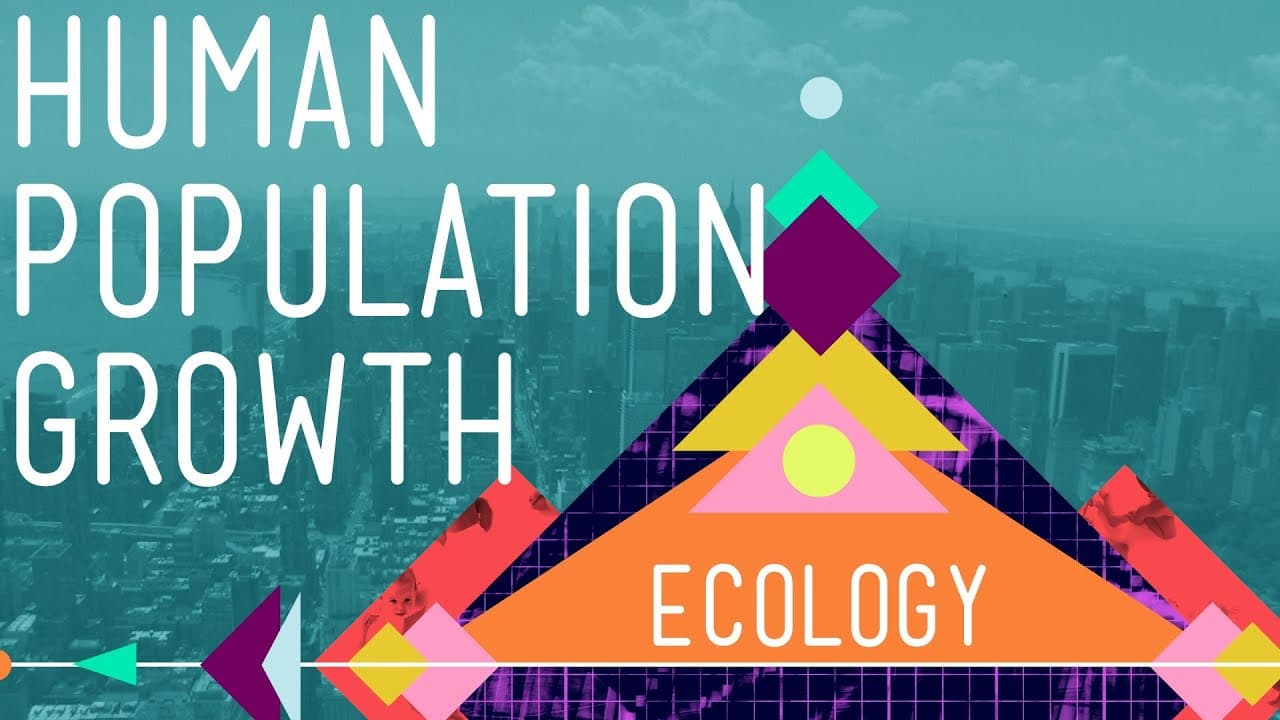
Why Is Human Population Growing Exponentially?
TL;DR
Human population has experienced exponential growth since the 1650s due to advancements in agriculture, medicine, and sanitation, which have increased our carrying capacity. Despite a declining growth rate, the population continues to rise, impacting ecological balance. The future challenge is managing resources sustainably while considering cultural factors that influence growth.
Transcript
If being alive on earth was some kind of contest, humans, I think, would win it hands down. As a population of organisms, we're the Michael Phelps of being alive, only we have like 250,000 times more gold medals. Last week, we talked about exponential growth, when a population grows at a rate proportional to the size of the population, even as that... Read More
Key Insights
- Human population growth has been exponential since 1650, driven by increased carrying capacity.
- R vs. K Selection Theory explains species' reproductive strategies; humans are K-selected but show R-selected growth patterns.
- Advancements in agriculture and mechanization in the 17th century boosted food production and population growth.
- Medical advancements, like germ theory and vaccinations, increased human longevity and survival rates.
- Improved sanitation systems in the 1800s reduced disease spread and increased population capacity.
- Technological advancements allow humans to inhabit diverse environments, further raising carrying capacity.
- Cultural shifts, such as women's education, have contributed to a declining population growth rate since 1962.
- Ecological footprints vary globally, affecting resource consumption and ecological balance.
Install to Summarize YouTube Videos and Get Transcripts
Explore YouTube Video Summarizer or Get YouTube Transcript Extractor
Questions & Answers
Q: How has human population growth been exponential since the 1650s?
Human population growth has been exponential since the 1650s due to advancements in food production, medicine, and sanitation, which have significantly raised our carrying capacity. Mechanized agriculture, germ theory, vaccinations, and improved sanitation systems have allowed more people to survive and live longer, leading to rapid population increases.
Q: What is the R vs. K Selection Theory?
The R vs. K Selection Theory explains reproductive strategies in organisms. R-selected species focus on rapid growth with many offspring, while K-selected species invest in fewer offspring with higher survival rates. Humans are typically K-selected, having fewer children but investing heavily in them, yet our population growth resembles R-selected patterns due to overcoming limiting factors.
Q: What role did agriculture play in human population growth?
Agriculture played a crucial role in human population growth by increasing food production and raising carrying capacity. Mechanization and new farming practices in the 17th century, such as the domestication of animals and crops, allowed for more efficient food production, supporting larger populations and contributing to exponential growth.
Q: How did medical advancements affect human population growth?
Medical advancements, including the germ theory of disease and vaccinations, significantly impacted human population growth by reducing mortality rates and increasing longevity. These advancements led to improved childhood survival rates and allowed more individuals to reach reproductive age, contributing to the exponential growth of the human population.
Q: Why is the human population growth rate declining?
The human population growth rate is declining due to cultural shifts, such as increased education and career opportunities for women, leading to delayed childbirth and fewer offspring. Urbanization and access to birth control have also contributed to smaller family sizes, forming a negative feedback loop that slows population growth.
Q: What are ecological footprints and how do they vary globally?
Ecological footprints measure the amount of land and resources each person requires to live. They vary globally based on consumption habits and lifestyle. For example, individuals in developed countries typically have larger ecological footprints due to higher resource consumption compared to those in developing nations, impacting global resource distribution and ecological balance.
Q: How does human population growth impact other species?
Human population growth impacts other species by reducing available space and resources. As humans expand, they consume resources like water and land, leading to habitat loss and competition with other species. This contributes to one of the largest extinction events in recent geological history, as humans outcompete other organisms for survival essentials.
Q: What challenges do we face with continued human population growth?
Continued human population growth presents challenges in resource management and ecological sustainability. As the population grows, the demand for food, water, and space increases, leading to potential conflicts and environmental degradation. Sustainable practices and cultural shifts are necessary to balance human needs with ecological preservation and resource conservation.
Summary & Key Takeaways
-
Human population has grown exponentially since the 1650s due to increased carrying capacity from agricultural, medical, and technological advancements. This growth has significant ecological impacts as resources become limited. Despite a declining growth rate since 1962, the population continues to rise, necessitating sustainable resource management.
-
R vs. K Selection Theory describes reproductive strategies; humans, although K-selected, exhibit R-selected growth due to overcoming limiting factors. Factors like women's education and urbanization have contributed to a slowing growth rate, yet ecological footprints and resource consumption remain critical concerns.
-
Technological and cultural advancements have allowed humans to inhabit diverse environments and increase carrying capacity. However, the ecological impact of resource consumption and space usage is significant, leading to species extinction and resource competition. Sustainable practices and cultural shifts are essential for future population management.
Read in Other Languages (beta)
Share This Summary 📚
Summarize YouTube Videos and Get Video Transcripts with 1-Click
Try YouTube Summary with ChatGPT & Claude or YouTube Transcript Generator
Explore More Summaries from CrashCourse 📚


Summarize YouTube Videos and Get Video Transcripts with 1-Click
Try YouTube Summary with ChatGPT & Claude or YouTube Transcript Generator