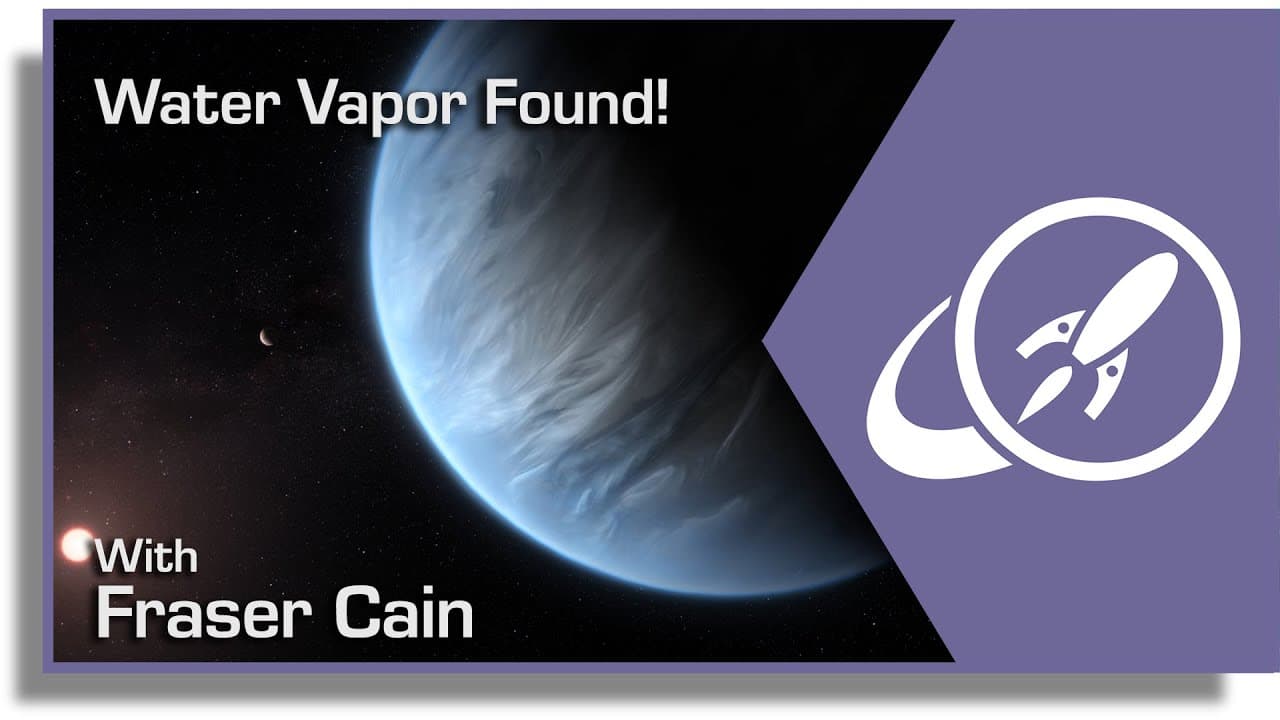
Water Vapor Seen In the Atmosphere Of An Exoplanet. It Might Even Be Rain
TL;DR
Astronomers have detected water vapor in the atmosphere of exoplanet K2 18b, the first step in finding habitable places in the universe.
Transcript
we're learning more and more about extrasolar planets and for the first time astronomers have discovered water vapor in the atmosphere of a planet orbiting another star the planet is located in the habitable zone of its star so this might even be rain of course it's not all good news it's much more massive than Earth with higher gravity and it's pr... Read More
Key Insights
- 🤩 Water vapor has been detected in the atmosphere of exoplanet K2 18b, which is located in the habitable zone of its star.
- 🌊 K2 18b is larger and more massive than Earth, with higher gravity and potential significant atmosphere or liquid water oceans.
- 🤩 The planet's proximity to its star and the star's dimness contribute to its average temperature of about 10 degrees Celsius.
- 👨🎤 M dwarf stars, like the one K2 18b orbits, can release powerful solar flares that could strip away the planet's atmosphere.
- ⛈️ The detection of water vapor suggests the possibility of clouds, thermal vents, or even rain, but further research is needed for confirmation.
- 🌥️ Future telescopes like Nakoa, James Webb Space Telescope, ARIEL, Giant Magellan Telescope, and Extremely Large Telescope will provide more data on exoplanets like K2 18b.
- 💋 The discovery of water vapor marks an exciting milestone in the search for habitable worlds, although K2 18b may not be one itself.
Install to Summarize YouTube Videos and Get Transcripts
Explore YouTube Video Summarizer or Get YouTube Transcript Extractor
Questions & Answers
Q: How did astronomers discover water vapor in the atmosphere of K2 18b?
Astronomers used NASA's Kepler space telescope and the transit method, measuring the dimming of light as the planet passed perfectly in front of its star. Chemical signatures during the transit revealed the presence of water vapor.
Q: Is K2 18b potentially habitable?
While K2 18b is located in the habitable zone and has the right temperature for liquid water, it faces challenges such as powerful solar flares from its red dwarf star and potential tidal locking. More research is needed to determine habitability.
Q: What future telescopes will help gather more information about K2 18b?
Telescopes like Nakoa, James Webb Space Telescope, and ESA's Atmospheric Remote Sensing Infrared Exoplanet Large Survey (ARIEL) will provide more insights into the atmosphere and potential for life on K2 18b.
Q: Are there other telescopes being developed to study exoplanets?
Yes, ground-based telescopes like the Giant Magellan Telescope and ESA's Extremely Large Telescope will directly resolve extrasolar planets, providing more detailed observations.
Summary & Key Takeaways
-
Astronomers have discovered water vapor in the atmosphere of exoplanet K2 18b, located in the habitable zone of its star.
-
The planet is much larger and more massive than Earth, with higher gravity and the potential for significant atmosphere or large oceans of liquid water.
-
K2 18b is located about one-sixth the distance from its star than Earth orbits the Sun, with an average temperature of about 10 degrees Celsius.
Read in Other Languages (beta)
Share This Summary 📚
Summarize YouTube Videos and Get Video Transcripts with 1-Click
Try YouTube Summary with ChatGPT & Claude or YouTube Transcript Generator
Explore More Summaries from Fraser Cain 📚



Summarize YouTube Videos and Get Video Transcripts with 1-Click
Try YouTube Summary with ChatGPT & Claude or YouTube Transcript Generator