How to Build a 20K/Month AI App in College
TL;DR
The core idea is to pick a niche with demand, use AI tools to design and assemble the app with minimal coding, and monetize with a low monthly price. The founders built an all in one track app, earned around 70K in six months, and scaled while still in college. The approach emphasizes rapid prototyping and continuous iteration.
Transcript
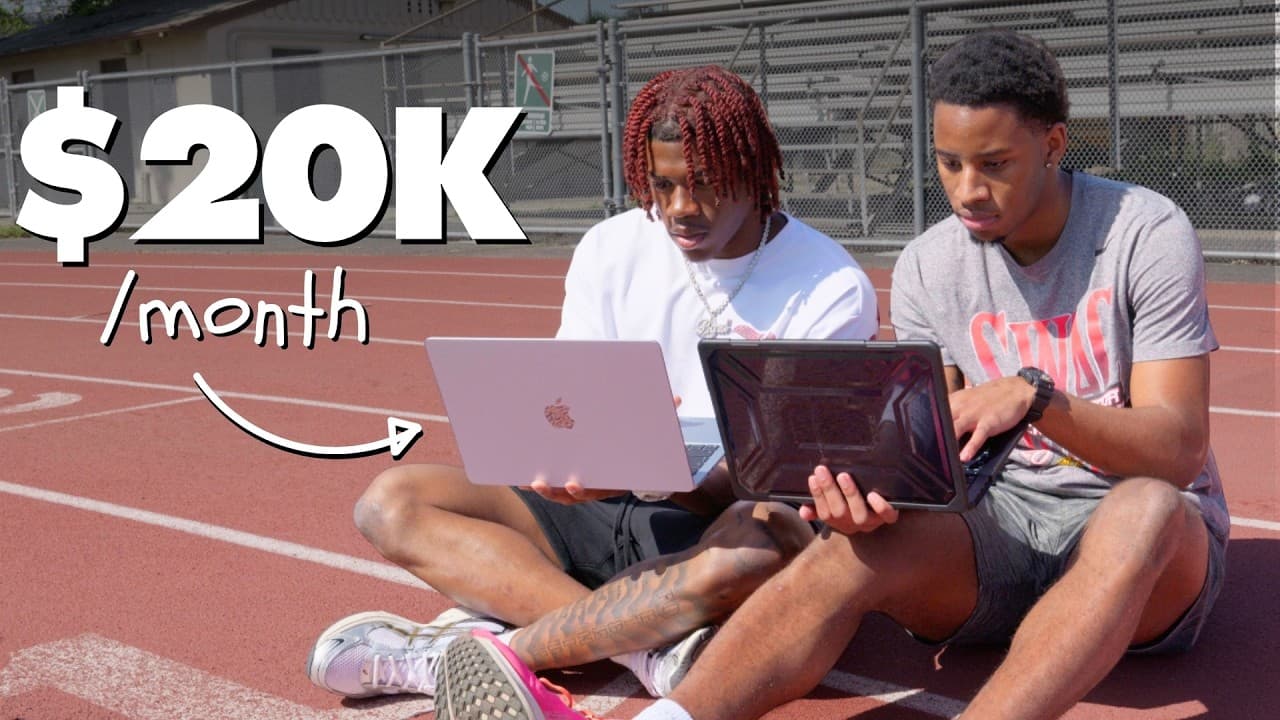
Just the other day, these two college guys DM'd me saying they're making $20,000 a month with an app they built for track athletes, but they're not developers, they have zero coding experience, and [music] they're still in college. So, I asked them to come out to LA and meet me and tell me all about it. In this video, you're going to see the crazy ... Read More
Key Insights
- Finding a profitable niche is the first step; the track app filled a gap for runners and coaches by combining workouts, form analysis, nutrition guidance, and community features.
- The key to rapid development is leveraging AI tools for UI generation and code verification, reducing the need for traditional coding and enabling non developers to build functional apps.
- Validation comes from real user metrics such as downloads, usage, and subscription uptake; early traction is crucial to confirm market fit before scaling.
- Pricing strategy matters; a low monthly price aligns with the preferences of a younger audience, making subscriptions more accessible and increasing lifetime value.
- Brand leverage matters; existing social followings in the niche can accelerate adoption and word of mouth, reducing the need for heavy upfront marketing spend.
- Automation and AI enable ongoing improvement; the app uses AI analysis to score running form and provide actionable feedback, creating ongoing value for users.
- The founders balance studies and entrepreneurship by time management and prioritizing tasks with high impact, a pattern useful for any student entrepreneur.
- Transparency about results and limitations builds trust; the team demonstrates real test runs and outcomes to illustrate what the app can and cannot do.
Install to Summarize YouTube Videos and Get Transcripts
Explore YouTube Video Summarizer or Get YouTube Transcript Extractor
Questions & Answers
Q: How can I identify a niche where an AI app could succeed?
Start by looking for communities with clear needs and frequent problems that current tools do not fully address. In the video, the founders targeted track and field athletes by offering workouts tracking, form analysis, nutrition guidance, and a supportive community. Validate by surveying potential users, checking existing engagement, and testing a minimal viable product to observe usage patterns and willingness to pay.
Q: What role did AI play in building the app quickly?
AI tools were used to design the user interface, generate app features, and verify code. The founders mention using Work for UI prompts and Claude for verification, which helped them avoid writing extensive code from scratch. This approach significantly reduced development time and allowed non coders to bring an idea to market in weeks.
Q: How did they monetize the app and what pricing strategy did they use?
The app offered a monthly subscription at $10 and a yearly option, with experimentation around pricing to suit a younger audience. By providing ongoing value such as workouts, video analysis, and nutrition checks, they encouraged longer term commitments while aligning with affordability for athletes who may prefer smaller, recurring payments.
Q: What metrics indicated early success for the app?
Early milestones mentioned include around 70,000 in revenue and about 40,000 users within six months, alongside a strong App Store rating. These indicators demonstrate product-market fit, consistent engagement, and a scalable monetization model, which together validate the viability of continuing to iterate and grow.
Q: How did they balance college commitments with building the app?
Balancing athletics, academics, and entrepreneurship required disciplined time management and prioritization of high impact tasks. The founders emphasized pursuing their project despite parental expectations and used their existing track profiles to gain traction while maintaining their studies, illustrating a model for student entrepreneurs.
Q: What tools besides AI did they rely on for building and maintaining the app?
They mentioned RevenueCat for in app purchases, Apple Developer tools, Claude for coding help, Work as a UI/AI design aid, and Supabase for backend services. These tools together provided a low cost, scalable stack, enabling rapid development and ongoing maintenance without deep coding expertise.
Q: What is the broader takeaway about building niche AI apps according to the interview?
Niche AI apps can be built by people without traditional coding experience by coupling domain knowledge with AI assisted design and development. The key is to identify a passionate audience, deliver tangible, measurable value, and iterate based on real user feedback, all while managing time and resources effectively as a student or early career founder.
Q: What would you advise someone who wants to replicate this success?
Start with a niche you know well and a problem you can solve uniquely. Use AI to prototype quickly, test with a small audience, and measure engagement and willingness to pay. Build a simple, validated MVP, then scale with feedback loops, maintain transparency about capabilities, and balance commitments to avoid burnout while pursuing growth.
Summary & Key Takeaways
-
The story centers on two college athletes who built a profitable AI powered track app without coding experience, reaching $20K a month and 40,000 users in six months. They leveraged AI design tools, low cost hosting, and a subscription model to scale quickly.
-
They emphasize identifying a niche with passionate audiences, leveraging existing followings, and validating the product through real user feedback and data, including app store ratings and engagement metrics.
-
The interview also covers time management, balancing athletics and studies, and advice for aspiring creators to start small, use AI to prototype, and iterate based on user data and feedback.
Read in Other Languages (beta)
Share This Summary 📚
Summarize YouTube Videos and Get Video Transcripts with 1-Click
Try YouTube Summary with ChatGPT & Claude or YouTube Transcript Generator
Explore More Summaries from Starter Story 📚


Summarize YouTube Videos and Get Video Transcripts with 1-Click
Try YouTube Summary with ChatGPT & Claude or YouTube Transcript Generator