What Is Crash Course Geography About?
TL;DR
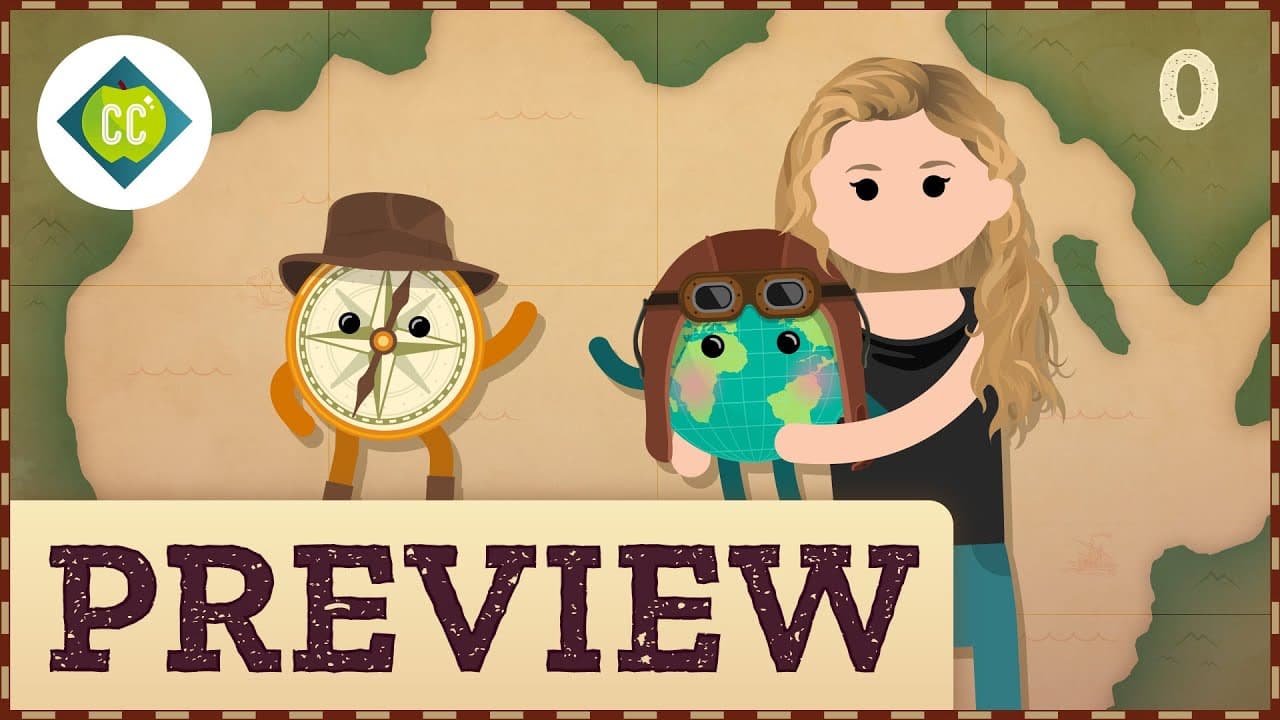
Crash Course Geography explores the complex interactions between humans and the Earth, highlighting how our actions shape the landscape and vice versa. It covers both physical and human geography, examining natural processes and human activities while raising important questions about sustainability and resource management.
Transcript
Geography is maps, and rivers, and mountains. But, it’s more than that. Geography is cities and cultures and people. But it’s more than that too. Geography is finding patterns and connections between places and seemingly unrelated processes, digging deeper into the stories behind facts, and asking “why is this happening here?” Hi, I’m Ali... Read More
Key Insights
- 🍁 Geography encompasses more than just maps and physical features; it involves studying the dynamic relationship between humans and the Earth.
- 👨🔬 Research in different regions reveals how humans are both impacted by and shape the environment.
- 💪 Geography is divided into physical and human branches, but there is a strong connection between the two.
- 🤨 The study of geography raises important questions about sustainability, culture, and resource management.
- ❓ Physical geography explores natural phenomena and processes, while human geography focuses on human occupation and interaction with the Earth.
- 👨🔬 Examples of research conducted by Alizé Carrère highlight the diverse and interconnected nature of geography.
- 🌍 Geography helps us understand the profound interconnectedness of the world and the complex stories behind seemingly ordinary things.
Install to Summarize YouTube Videos and Get Transcripts
Explore YouTube Video Summarizer or Get YouTube Transcript Extractor
Questions & Answers
Q: What is the importance of geography in understanding the relationship between humans and the Earth?
Geography helps us understand the interconnectedness of the world, exploring how our actions impact the environment and how the environment affects us. It allows us to ask critical questions about sustainability, culture, and resource management.
Q: Can you provide examples of the research conducted by Alizé Carrère in different regions?
Alizé Carrère has researched electronic waste disposal in the Middle East, adaptation to erosion in Madagascar, sea level rise in Bangladesh, the consequences of glacial melt in the Himalayas, and the impact of invasive fish species in the Mississippi River.
Q: How is geography divided into different branches?
Geography is split into physical geography, which focuses on the processes and phenomena of the physical world, and human geography, which explores how humans occupy and interact with the Earth's surface. However, there is overlap and interconnectedness between these two branches.
Q: What are some examples of the topics covered in physical and human geography?
Physical geography topics may include seafloor formation, wind and ocean currents, and environmental disasters like the Aral Sea. Human geography topics may cover language migration, human-environment interaction, and the reliance on seasonal monsoon rains for agriculture in India.
Summary & Key Takeaways
-
Geography is about more than just maps and physical features; it involves understanding how humans shape the land and how the land, in turn, shapes us.
-
The host, Alizé Carrère, shares her research experiences in different parts of the world, studying issues such as electronic waste disposal, agricultural practices, sea level rise, and environmental disasters.
-
Geography is divided into physical and human geography, examining both the natural processes of the Earth and how humans occupy and interact with the planet.
Read in Other Languages (beta)
Share This Summary 📚
Summarize YouTube Videos and Get Video Transcripts with 1-Click
Try YouTube Summary with ChatGPT & Claude or YouTube Transcript Generator
Explore More Summaries from CrashCourse 📚

Summarize YouTube Videos and Get Video Transcripts with 1-Click
Try YouTube Summary with ChatGPT & Claude or YouTube Transcript Generator