How good is OpenAI Dots as a personal assistant?
TL;DR
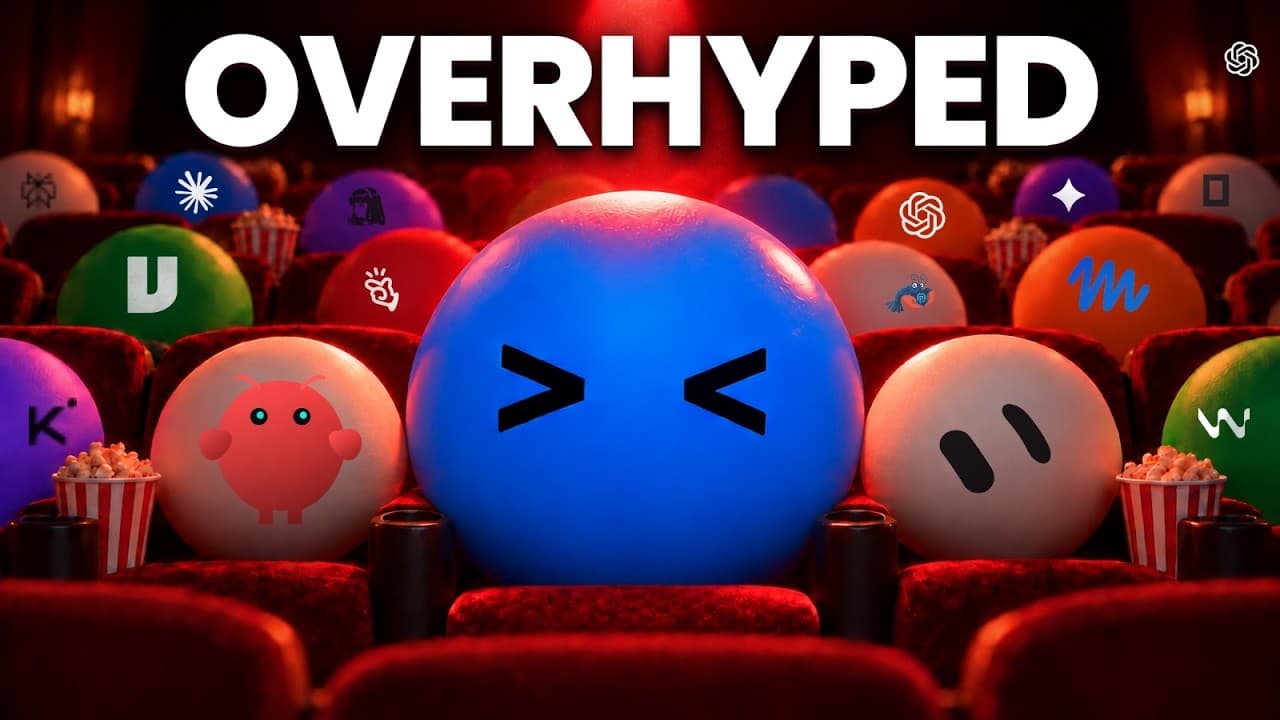
Dots feels like a basic codec session with limited proactive behavior. Onboarding is lengthy, you can add a Slack integration, and you can run a sub agent, but there is no clear advantage over existing tools yet. It requires manual prompting to act and lacks multi agent coordination. Overall, not worth upgrading for most users.
Transcript
So, OpenAI just released their own line of personal assistants called Dots. And luckily, I didn't get early access so that I could speak freely about what it really looks like underneath the hood. For a company that hired the very person that invented OpenClaw and really kicked off this entire revolution of personal assistance, I expected the moon ... Read More
Key Insights
- Dots is described as a Glorified codec session with 24 7 uptime rather than a full blown personal assistant.
- Onboarding requires re connecting services and is not seamless, which reduces immediate value for new users.
- The product uses GPT6 Astra under the hood, which is fast but not highly proactive in taking independent actions.
- Users expect multiple Dots to collaborate, but current design supports only a single active instance for now.
- Sub agents can be created, such as Zeno, to share context within a chat, but its practical usefulness is limited.
- Compared to Grockbot, Dots lacks goal tailored bots and group chat orchestration that would enhance productivity.
- Slack integration is straightforward, but the overall workflow remains less disruptive than expected.
- The reviewer feels there is no compelling reason to upgrade from a basic Codex setup to Dots.
Install to Summarize YouTube Videos and Get Transcripts
Explore YouTube Video Summarizer or Get YouTube Transcript Extractor
Questions & Answers
Q: What is OpenAI Dots in simple terms and what is the basic idea behind it?
OpenAI Dots is described as a personal assistant that can be connected to services, used via voice, and integrated with tools like Slack. The core experience centers on a Grobot style interface with some configuration options, custom memory, and the ability to run within a persistent session. The reviewer notes that despite these features, Dots feels like a more advanced codec session rather than a fully proactive assistant. The practical takeaway is that it currently lacks multi agent collaboration and a clear, autonomous initiative that would set it apart from existing setups.
Q: How does onboarding for Dots work and what potential frustrations does the reviewer highlight?
Onboarding involves connecting various services and then choosing to skip or proceed with integration. The reviewer points out that many services do not translate over and require re onboarding, which makes setup repetitive and time consuming. This friction reduces the initial payoff and can deter users who want a quick start. The presence of a Grockbot esque interface but without full feature parity adds to the confusion about the product’s value.
Q: What are the key limitations of Dots according to the reviewer?
The reviewer highlights several limitations: it cannot reliably explain its own capabilities, making it hard to determine what it can do in a given context; there is limited proactive behavior, as the assistant requires explicit prompts to act; multi agent support is lacking, with only a single active instance and no seamless orchestration of multiple dots; and the latency and transparency of actions can be confusing, such as when it is unclear whether it is actually performing a task.
Q: How does Dots compare to Grockbot, Hermes, and OpenClaw in terms of features and usefulness?
Compared to Grockbot, Dots lacks the ability to tailor bots to specific goals and to build a group chat ecosystem with multiple bots working together. Hermes and OpenClaw offer more proactive behavior and better personality/memory customization, making them feel more capable as personal assistants. The reviewer concludes that Dots does not deliver a compelling edge over these alternatives and that the experience does not justify upgrading.
Q: What is the user experience like when using Dots for practical tasks like flight searching?
The reviewer demonstrates a flight search task where Dots attempts to fetch data from Emirates and compares it to using a browser based workflow. The experience shows slower performance and less reliable results. There is a lack of visible progress or proof that actions are being performed, which contributes to a perception of limited usefulness for real world tasks.
Q: Is there value in the Slack integration and cross platform use of Dots?
Slack integration works with a simple setup and allows interaction within threads, which can be convenient for team based workflows. However, the reviewer notes that this integration does not create a transformative disruption or a strong efficiency gain compared with existing tools. In practice, the value seems limited unless future updates unlock more collaborative capabilities.
Q: What is the reviewer’s overall verdict on OpenAI Dots and who should consider trying it?
The reviewer concludes that OpenAI Dots is not a breakthrough and does not justify upgrading from existing tools or paying a premium for the feature set described. It may be worth trying for those who are curious about new AI agent capabilities or who want to experiment with a persistent personal assistant, but the current state offers limited practical benefits for most users.
Q: What future improvements or expectations does the reviewer imply could make Dots more valuable?
The reviewer implies that true value would come from multi agent coordination, clearer self explanation of capabilities, more proactive behavior, and a workflow that demonstrates tangible advantages over existing codecs. If OpenAI adds reliable orchestration of multiple Dots, improved proactive task handling, and smoother onboarding that preserves service integrations, the product could become more compelling for power users and teams.
Summary & Key Takeaways
-
Dots onboarding is lengthy and requires re onboarding for many services, making setup cumbersome. The interface resembles Grockbot but lacks key features, reducing its novelty and usefulness. The reviewer finds it hard to see a compelling use case beyond what codecs already offer.
-
It can spin up a sub agent like Zeno, but there is limited visibility into its ongoing actions and a perceived latency in its execution, confusing the user. Slack integration exists, yet it does not translate into a dramatic workflow disruption.
-
Compared to Hermes and OpenClaw, Dots is described as a glorified codecs session with 24 seven uptime but no clear, proactive strategy or multi agent collaboration that would justify a upgrade for most users.
Read in Other Languages (beta)
Share This Summary 📚
Summarize YouTube Videos and Get Video Transcripts with 1-Click
Try YouTube Summary with ChatGPT & Claude or YouTube Transcript Generator
Explore More Summaries from Mark Kashef 📚

Summarize YouTube Videos and Get Video Transcripts with 1-Click
Try YouTube Summary with ChatGPT & Claude or YouTube Transcript Generator