How Is a New Ocean Forming in East Africa?
TL;DR
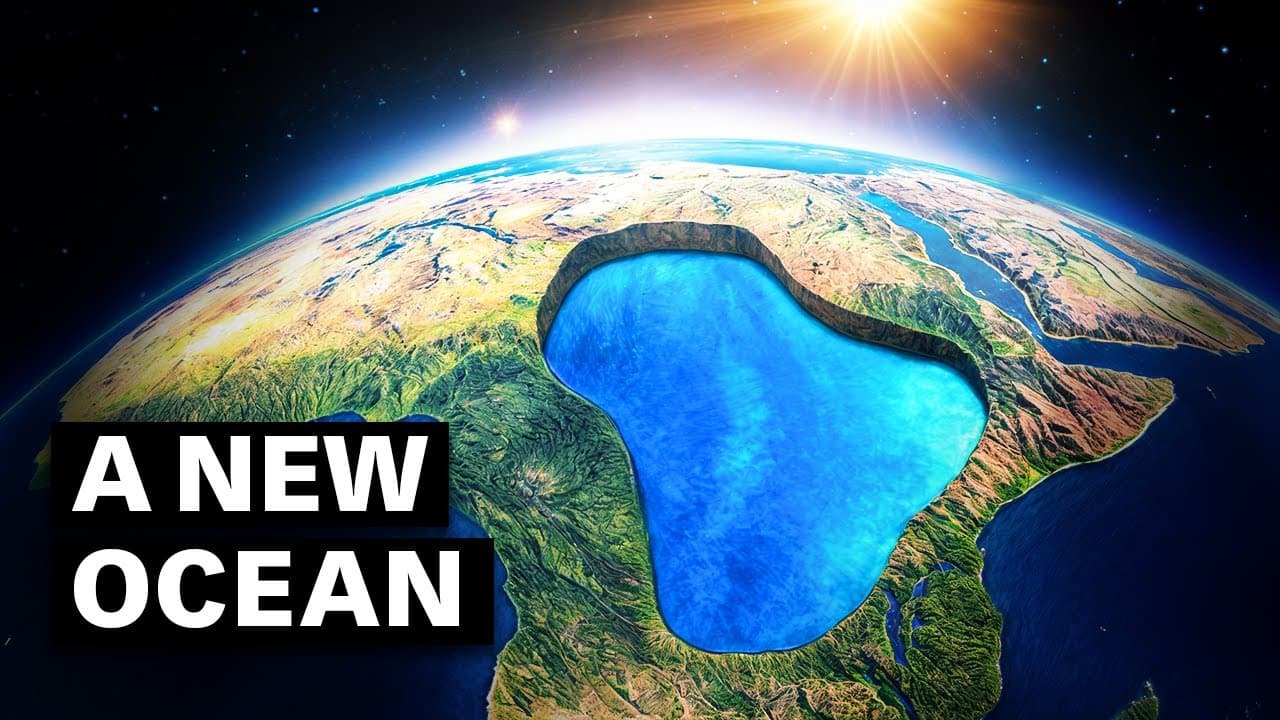
East Africa is slowly splitting as the Somali and Nubian plates drift apart, thinning the crust and creating rift valleys. The process extends across the 6,000-kilometer East African Rift system, with especially intense volcanic and tectonic activity in Ethiopia's Afar region, where three plates meet. If rifting continues, the land may eventually separate enough for an ocean basin to form.
Transcript
one day we on Twitter and come across this picture a new ocean is forming in Africa a 35 mile crack opened up in Ethiopia in 2005 wait what the African continent is breaking apart no way this can't be real or is it so we went down a rabbit hole what is happening here does this massive crack actually exist over the course of the last 6 months we tri... Read More
Key Insights
- The East African Rift system is the largest active continental rift on Earth, extending more than 6,000 kilometers from the edge of the Red Sea through Ethiopia and south toward Mozambique, with connected rift valleys visible from space.
- The African continent is separating along boundaries where the Somali plate moves away from the Nubian plate. This movement stretches and thins the crust, causes land to sink into basins, and can eventually break continental crust apart.
- The Afar region is a tectonic junction where the Nubian, Arabian, and Somali plates meet. Movement is faster in the northern section because Somalia is rotating clockwise away from Nubia, reaching roughly half a centimeter per year there.
- The Dabbahu fissure opened in Ethiopia in 2005 when the Dabbahu volcano erupted. It lies between the Dabbahu and Gabho volcanoes, with the specific vent area identified in the scientific literature as Da'Ure, following the local name.
- The 2005 eruption affected nearby communities and livestock through volcanic ash and gases. A cited scientific paper reported that 700 goats, 200 camels, and 70 donkeys were killed, while no people died and one person was injured.
- A mantle superplume may help drive the tectonic changes beneath Africa. Hot rock rising from deep in the mantle spreads beneath the crust, pushes against it, expands it, and contributes to cracking where the crust becomes thinner.
- The East African Rift divides into eastern and western branches before becoming a single rift again near Malawi. The eastern branch runs through central Kenya, while much of the western branch follows borders involving Rwanda, Burundi, Uganda, Tanzania, and the Democratic Republic of Congo.
- Continental separation is an extremely slow geological process even when sudden fissures appear. Africa and North America required more than 40 million years to separate, while tectonic plates can move as quickly as 20 millimeters per year, roughly the speed of fingernail growth.
- More videos from this channel:
- More from this channel: fern
Install to Summarize YouTube Videos and Get Transcripts
Explore YouTube Video Summarizer or Get YouTube Transcript Extractor
Questions & Answers
Q: How is a new ocean forming in East Africa?
A new ocean can form because the Somali and Nubian tectonic plates are moving away from each other along the East African Rift system. As the plates separate, the continental crust stretches, becomes thinner, and sinks into basins. Continued rifting can eventually break the crust apart, although the transcript emphasizes that this geological transformation unfolds over millions of years.
Q: What is the East African Rift system?
The East African Rift system is an active continental rift zone extending more than 6,000 kilometers from the edge of the Red Sea through Ethiopia toward Mozambique. It consists of a series of rift valleys created as tectonic plates move apart. The system divides into eastern and western branches farther south before becoming a single rift again near Malawi.
Q: Why is Ethiopia's Afar region important to plate tectonics?
The Afar region is important because three tectonic plates meet there: the Nubian, Arabian, and Somali plates. It is described as the heart of the East African Rift system and contains highly active volcanic terrain. Somalia is rotating clockwise away from Nubia, producing faster movement in the north at roughly half a centimeter per year.
Q: What caused the Dabbahu fissure to open in 2005?
The Dabbahu fissure opened during the 2005 eruption of the Dabbahu volcano in Ethiopia's Afar region. The fissure lies between the Dabbahu and Gabho volcanoes, and the specific vent area is called Da'Ure in the scientific literature, based on the local name. The eruption released volcanic ash and gases and killed many nearby livestock.
Q: Was the photographed crack in Ethiopia real?
The photograph of the Ethiopian fissure was real according to its photographer, Anthony Philpotts, a professor emeritus of geology and geophysics at the University of Connecticut. He confirmed that he took it in Ethiopia's Afar region. The investigators also located the rifting area on satellite imagery near Dabbahu volcano after consulting earth scientist Derek Keir.
Q: How quickly are the African tectonic plates separating?
Plate movement varies across the rift system. In the northern area, where Somalia rotates clockwise away from Nubia, the movement is roughly half a centimeter per year. The transcript also states that tectonic plates can reach speeds of up to 20 millimeters per year, approximately the speed at which human fingernails grow.
Q: How could a mantle superplume contribute to Africa's rifting?
A mantle plume is an upwelling of hot rock material from deep inside Earth's mantle, while a superplume is a much larger version extending across hundreds of kilometers. Researchers cited in the transcript believe a superplume beneath Africa may help separate the plates because spreading hot material presses against, expands, and eventually cracks the overlying crust.
Q: How does the East African Rift affect landscapes and climate?
Rifting created major landforms, volcanic areas, mountain masses, lakes, and valleys across East Africa. Forces associated with the rift helped form Mount Kilimanjaro, Africa's highest mountain. Mountain masses can block clouds and influence rainfall, contributing to dry landscapes and broad savannas in the east, while rainforests and lakes occur in the west.
Summary & Key Takeaways
-
The East African Rift system is an active continental rift stretching more than 6,000 kilometers from the Red Sea through Ethiopia toward Mozambique. Along this enormous zone, the Somali and Nubian plates are moving apart, thinning the crust, lowering sections of land, producing rift valleys, and supporting extensive volcanic activity.
-
Ethiopia's Afar region is the heart of the rifting process because the Nubian, Arabian, and Somali plates meet there. The region contains active volcanic terrain, extreme summer temperatures above 50 degrees Celsius, and the Dabbahu fissure, which opened during a 2005 eruption between the Dabbahu and Gabho volcanoes.
-
The dramatic fissure photographed in Ethiopia is real, but it represents one visible event within a geological process lasting millions of years. Africa and North America took more than 40 million years to separate, while present plate movement near northern East Africa reaches roughly half a centimeter per year, making ocean formation extremely gradual.
Read in Other Languages (beta)
Share This Summary 📚
Summarize YouTube Videos and Get Video Transcripts with 1-Click
Try YouTube Summary with ChatGPT & Claude or YouTube Transcript Generator
Explore More Summaries from fern 📚






Summarize YouTube Videos and Get Video Transcripts with 1-Click
Try YouTube Summary with ChatGPT & Claude or YouTube Transcript Generator