How to Learn React JS for Beginners Course?
TL;DR
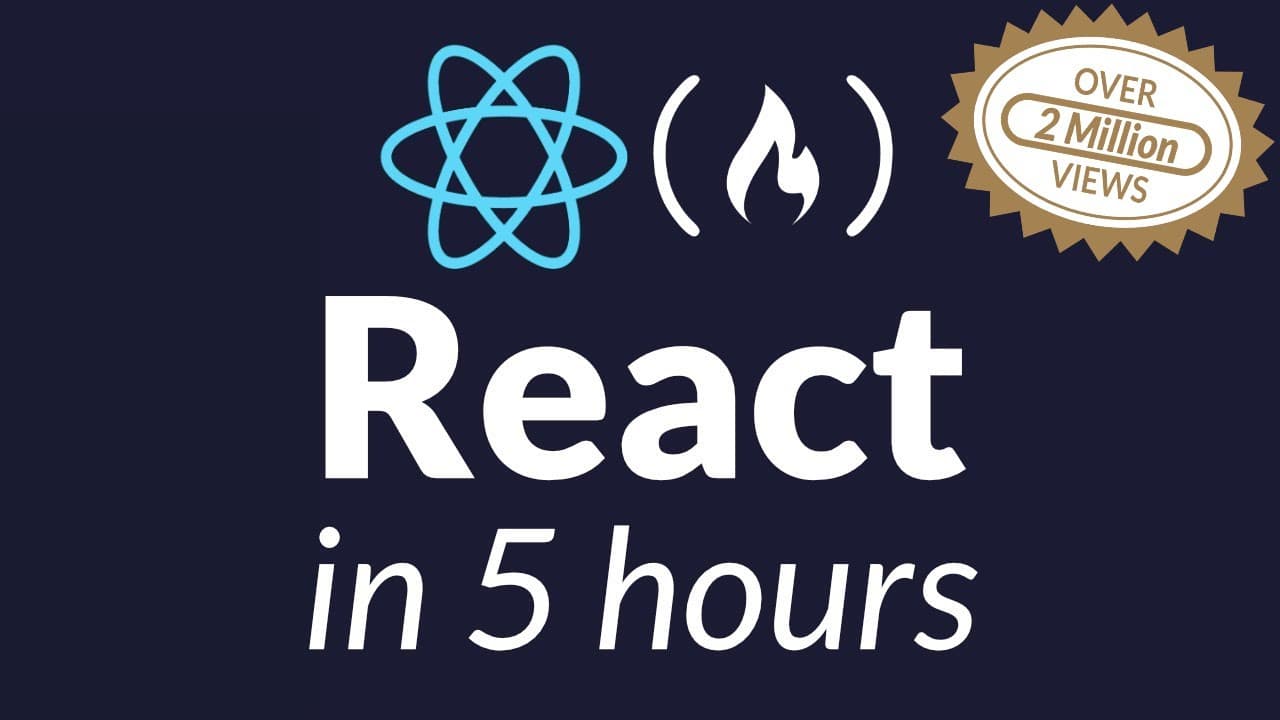
React JS basics are covered, including components, JSX, state, props, and lifecycle. The course emphasizes hands on coding, exercises, and using Scrimba to avoid tutorial hell. You will build a to do list app and a meme generator as capstones, and learn about the virtual DOM and reusable components.
Transcript
Welcome to an introduction to react. My name is Bob Ziroll, and I'm here to guide you through learning how to build front end web applications. using one of the world's most popular front end web frameworks react. But first, a little background about me. I'm the Director of Education at V School, which is a technology education school that teaches ... Read More
Key Insights
- Learning by doing is essential and there is no substitute for writing code frequently.
- React components are the core building blocks for creating reusable HTML pieces.
- JSX is Reacts syntax that lets you write HTML like structures within JavaScript.
- Props are used to pass data between components and state manages data within a component.
- Event handling enables interactivity in React applications.
- Lifecycle methods provide hooks to run code at specific times in a components life cycle.
- The virtual DOM is a key performance feature that improves speed over vanilla JavaScript.
- Projects like a to do list and meme generator demonstrate practical use of React concepts.
- More videos from this channel:
- More from this channel: freeCodeCamp.org
Install to Summarize YouTube Videos and Get Transcripts
Explore YouTube Video Summarizer or Get YouTube Transcript Extractor
Questions & Answers
Q: How can a beginner start learning React JS effectively?
A beginner should start by understanding the core ideas of components, JSX, props, and state, then practice by building small interactive elements. The course emphasizes writing real code, pausing to experiment, and using spaced repetition to reinforce memory. Regular practice helps move from theory to practical skills, and benchmarking progress with small projects keeps motivation high.
Q: What role do components play in React development?
Components serve as the core building blocks for React applications, allowing developers to break down UI into reusable pieces. This modular approach makes code easier to read, test, and maintain. By composing components, you can build complex interfaces from simple, well defined parts, improving reusability across different pages or projects.
Q: Why is JSX important in React and how does it relate to JavaScript?
JSX is a syntax extension that lets you write HTML like code within JavaScript, making UI descriptions more intuitive. It compiles down to JavaScript function calls and enables seamless integration of dynamic data and event handlers. Understanding JSX is foundational for effectively creating React components and managing their rendering.
Q: How do props and state differ in React, and why are they important?
Props pass data from parent to child components, enabling customization and configuration of child components without changing their internal logic. State holds data that can change over time within a component, driving dynamic UI updates. Together, props and state enable interactive, data driven interfaces that respond to user input.
Q: What is the virtual DOM and how does it affect performance?
The virtual DOM is an in memory representation of the user interface that React uses to determine the minimal set of changes needed to update the UI. This optimization reduces expensive DOM operations, resulting in faster rendering and smoother user experiences, especially in applications with frequent UI updates.
Q: What kind of projects are typically used to teach React fundamentals?
Core projects include a to do list to practice state, props, and event handling, and a meme generator to combine data fetching with UI updates. These capstone style tasks demonstrate how components interact, how data flows through an app, and how external APIs can be integrated.
Q: What prerequisites should you have before starting a React course?
You should be comfortable with HTML, CSS, and vanilla JavaScript. Familiarity with ES6 features like const, let, and arrow functions is helpful since React uses modern JavaScript syntax. If these areas feel rusty, review related topics or go through beginner friendly tutorials before diving into React.
Q: How does spaced learning benefit React mastery according to the course?
Spaced learning breaks study into shorter sessions with deliberate breaks, which improves long term retention of React concepts. Returning to material after a break helps reinforce memory and reduces cognitive overload. This approach supports deeper understanding and helps avoid tutorial fatigue over a long course.
Summary & Key Takeaways
-
The course focuses on learning by doing, encouraging students to write code frequently and pause to experiment. It stresses using Scrimba and spaced repetition to reinforce memory, aiming to prevent tutorial fatigue.
-
Core concepts covered include components, JSX, props, state, event handling, and lifecycle methods, with practical examples and exercises.
-
Aimed at beginners, the course outlines prerequisites such as HTML, CSS, and vanilla JavaScript, and sets expectations for hands on practice and progressive projects to solidify understanding.
Read in Other Languages (beta)
Share This Summary 📚
Summarize YouTube Videos and Get Video Transcripts with 1-Click
Try YouTube Summary with ChatGPT & Claude or YouTube Transcript Generator
Explore More Summaries from freeCodeCamp.org 📚




Summarize YouTube Videos and Get Video Transcripts with 1-Click
Try YouTube Summary with ChatGPT & Claude or YouTube Transcript Generator