What Is the Welfare Trap and How Does It Affect Poverty?
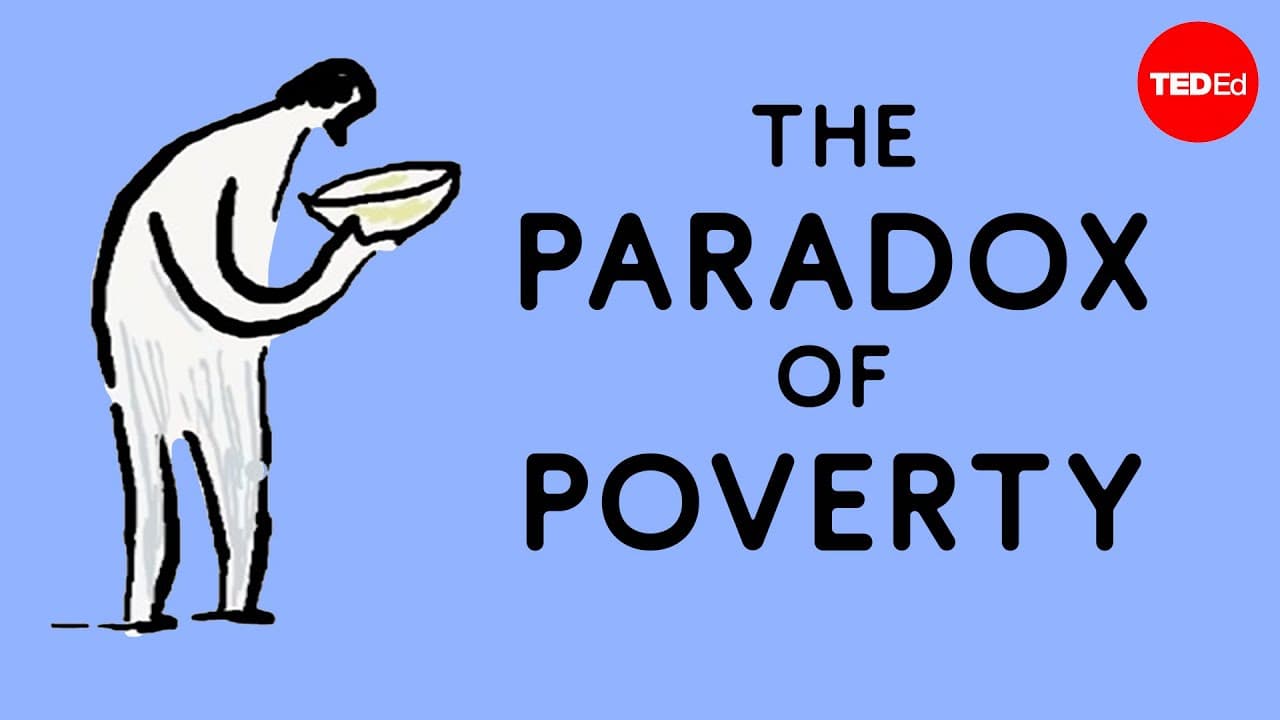
TL;DR
The welfare trap occurs when individuals earn just enough to disqualify themselves from benefits, making them financially worse off than when unemployed. This cycle perpetuates poverty, as traditional welfare programs often penalize work. Strategies like gradual benefit phasing or universal basic income could help eliminate this trap and empower individuals to improve their economic situations.
Transcript
Imagine that you’ve been unemployed and seeking work for months. Government benefit programs have helped you cover rent, utilities, and food, but you're barely getting by. Finally, you hear back about a job application. You receive your first paycheck in months, and things seem to be turning around. But there’s a catch. Your new job pays just enou... Read More
Key Insights
- 💔 The welfare trap is a demoralizing situation where individuals, despite finding employment, end up with less money due to the loss of government benefits and additional expenses such as transportation and childcare.
- 💰 Welfare programs, although designed to battle poverty, can unintentionally create poverty traps, as they often disqualify individuals from benefits as soon as they earn above a certain income threshold, regardless of financial stability.
- 🔄 Poverty traps perpetuate poverty for generations and can be tied to individual circumstances, such as lack of access to healthy food and education, or affect entire nations through corrupt governments and climate change.
- 🏘️ Before the 20th century, religious groups and private charities led initiatives to help people meet basic needs. Today, these initiatives take the form of means-tested welfare programs provided by the government.
- 🚫 People in poverty may choose to remain on government assistance if they know that working will not provide them with a net benefit, which can have a negative impact on the economy and keep more people in poverty.
- 🏡 To circumvent the welfare trap, governments have implemented policies that allow individuals to continue receiving benefits for a period after finding a job or gradually phase out benefits as income increases, reducing the risk of a welfare trap.
- 💡 A universal basic income (UBI) is a proposed solution that would provide a fixed benefit to all members of society, regardless of wealth or employment status, thereby eliminating welfare traps and potentially preventing people from falling into poverty.
- 🌍 While UBI remains largely hypothetical, local experiments have been conducted, but its implementation across an entire nation or planet is uncertain. Any strategy to solve the welfare trap must empower individuals and respect their agency and autonomy.
Install to Summarize YouTube Videos and Get Transcripts
Explore YouTube Video Summarizer or Get YouTube Transcript Extractor
Questions & Answers
Q: How does the welfare trap affect individuals and society?
The welfare trap has demoralizing effects on individuals as they find themselves worse off financially, creating a disincentive to work and trapping them in poverty. From a societal perspective, this trap slows down economic growth as fewer people seek employment, perpetuating the cycle of poverty.
Q: Are there any alternative strategies to traditional welfare programs?
Yes, there are alternative strategies to navigate the welfare trap. Some countries allow individuals to continue receiving benefits for a certain period after finding a job, while others phase out benefits gradually as income increases. These approaches reduce the risk of a welfare trap while still providing necessary support.
Q: How does a universal basic income address the welfare trap?
A universal basic income provides a fixed benefit to all members of society, regardless of wealth or employment status. This eliminates the welfare trap because any earned wages supplement the benefit rather than replacing it. By creating a stable income floor, basic income can prevent people from falling into poverty and empower them to pursue long-term change.
Q: Is eliminating government assistance programs a feasible solution?
Eliminating government assistance programs altogether is neither realistic nor humane. While it may remove the welfare trap, it would leave vulnerable individuals without necessary support. Redesigning benefits to account for the welfare trap and incentivize work is a more pragmatic approach.
Summary & Key Takeaways
-
Poverty traps, like the welfare trap, perpetuate poverty by creating circumstances where individuals earn just enough to lose access to benefits but not enough to cover their costs.
-
Traditional welfare programs often have means-testing, causing individuals to lose benefits as soon as they earn above the income threshold, discouraging work and perpetuating the cycle of poverty.
-
Various strategies to circumvent the welfare trap exist, such as gradually phasing out benefits or implementing universal basic income, which provides a fixed benefit to all members of society regardless of employment status.
Read in Other Languages (beta)
Share This Summary 📚
Summarize YouTube Videos and Get Video Transcripts with 1-Click
Try YouTube Summary with ChatGPT & Claude or YouTube Transcript Generator
Explore More Summaries from TED-Ed 📚


Summarize YouTube Videos and Get Video Transcripts with 1-Click
Try YouTube Summary with ChatGPT & Claude or YouTube Transcript Generator