How to Build a High-Impact Centralized Data Team
TL;DR
Treat analytics as a business-impact function that identifies opportunities, shapes decisions, and recommends what to do next. A centralized reporting structure can preserve a consistent talent bar and shared analytics culture, while pods mapped to product, engineering, operations, and marketing provide embedded partnership, aligned goals, and ownership of each function’s most important outcomes.
Transcript
So you've built one of the largest and most respected data teams in all of tech. For me, analytics is a business impact driving function and not purely a service function, not just answering the why, but answering the, "What do we do now that we know this?" One of your colleagues told me that you are incredibly good at defining metrics. Retenti... Read More
Key Insights
- Analytics is a business-impact function, not merely a service that answers requests or builds dashboards. Its role is to discover opportunities, develop informed perspectives, clarify trade-offs, and recommend what the company should do after understanding why a result occurred.
- A centralized reporting model keeps specialists such as marketing analysts inside the broader analytics organization rather than placing them under functional leaders. DoorDash uses this structure while ensuring that analysts share goals and initiatives with the product, engineering, operations, and marketing teams they support.
- Analytics pods are mapped directly to the company’s cross-functional structure. This arrangement makes analysts effectively embedded in partner teams for day-to-day collaboration, while centralized reporting preserves their connection to the larger analytics organization and its leadership.
- Shared goals are the foundation of successful centralized analytics partnerships. When analysts and functional leaders pursue the same outcomes, incentives remain aligned, each group’s success depends on the other’s success, and analytical work naturally focuses on important business priorities.
- A seat at the decision-making table must be earned through valuable contributions. Analytics teams justify strategic influence by bringing forward insights, deep investigations, efficient growth opportunities, explicit trade-offs, and promising areas that cross-functional teams can pursue together.
- A centralized organization supports a consistent and high talent bar. Common reporting lines make it easier to maintain shared expectations for technical skills and analytical quality rather than allowing separate functions to develop disconnected standards for their individual data teams.
- Extreme ownership means pursuing the answer beyond the conventional boundaries of a data science role. If understanding what is happening requires calling customers or completing other hands-on investigative work, the analyst should roll up their sleeves and do it.
- Retention is difficult to use as a short-term operating goal because teams may struggle to change it meaningfully over a limited period. A more actionable approach is to identify a short-term metric that can be measured promptly and that contributes to the desired long-term outcome.
Install to Summarize YouTube Videos and Get Transcripts
Explore YouTube Video Summarizer or Get YouTube Transcript Extractor
Questions & Answers
Q: How should a high-impact analytics team be structured?
A high-impact analytics team can use centralized reporting with pods that map directly to product, engineering, operations, and marketing. Analysts remain part of one broader analytics organization, but work closely enough with partner functions to operate as embedded collaborators. They should also share those functions’ goals and initiatives, which aligns incentives while preserving centralized standards, leadership, and professional cohesion.
Q: Why centralize analytics instead of embedding separate teams?
Centralization helps maintain a consistent talent bar, shared expectations, and a unified analytics organization. Fully embedding analysts under individual business functions may give those leaders direct control and certainty, but it can separate analysts from their professional peers. DoorDash’s model seeks both benefits by centralizing reporting while mapping analytics pods to the functions they support and giving both groups shared goals.
Q: How can centralized analysts stay close to business teams?
Centralized analysts can be organized into pods that mirror the structure of their partner teams. A marketing analytics pod, for example, remains within the broader analytics organization but works directly with marketing and shares its goals. This creates day-to-day ownership, camaraderie, and reliable support without moving the analyst’s formal reporting line into the business function.
Q: What should an analytics team contribute beyond dashboards?
An analytics team should identify opportunities, investigate business problems, explain trade-offs, and recommend concrete actions. It should answer not only why something happened, but also what the organization should do next. Useful contributions can include finding efficient ways to grow, locating pockets of opportunity, conducting deep dives, and bringing an evidence-based perspective into cross-functional decisions.
Q: How does an analytics team earn strategic influence?
An analytics team earns strategic influence by consistently contributing insights and opportunities that improve decisions. Having a seat alongside product, engineering, operations, and business leaders creates an obligation to add value. Analysts must understand the problems being solved, surface relevant evidence, clarify possible trade-offs, and help partners select actions that advance their shared goals rather than simply responding to requests.
Q: How should teams choose actionable business metrics?
Teams should look for short-term metrics that can be measured and influenced within the relevant operating period, while still contributing to a desired long-term result. Retention is presented as a poor short-term goal because it is difficult to move meaningfully over a limited period. The better metric connects immediate team actions to the longer-term output the company ultimately wants.
Q: What does extreme ownership mean for data scientists?
Extreme ownership means treating the investigation’s outcome as the responsibility, rather than limiting work to tasks traditionally associated with data science. A data scientist’s goal is to determine what is happening. If that requires calling customers, gathering qualitative information, or doing hands-on work outside routine analysis, the person should take those steps to reach a useful answer.
Q: How do shared goals improve analytics partnerships?
Shared goals align the incentives of analysts and their cross-functional partners. When an analytics pod pursues the same outcomes as marketing, product, engineering, or operations, analytical priorities are more likely to reflect the function’s most important needs. Success becomes mutual, which supports stronger ownership and collaboration while reducing the risk that a centralized team behaves like a detached service desk.
Summary & Key Takeaways
-
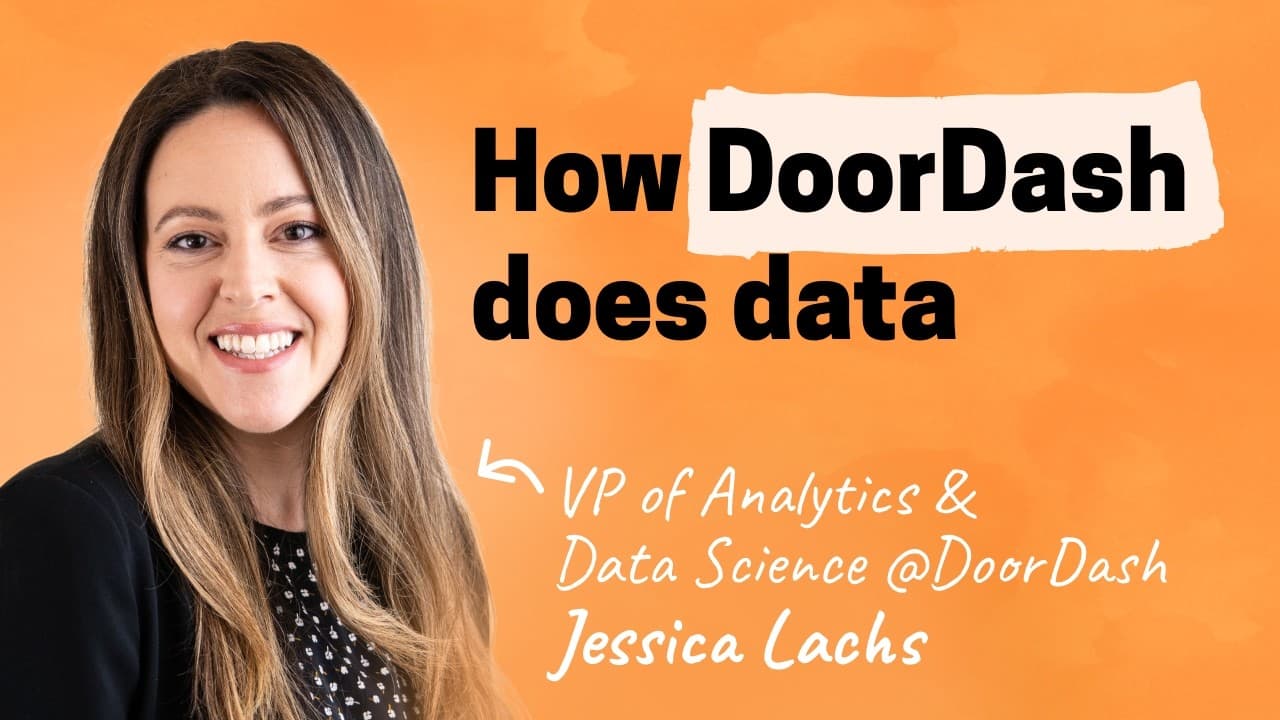
Jessica Lachs argues that analytics should hold the same strategic standing as product, engineering, and business operations. Analysts should move beyond answering questions and building dashboards. Their responsibility is to investigate business problems, identify opportunities, explain trade-offs, recommend actions, and earn influence by helping cross-functional partners achieve shared goals.
-
DoorDash centralizes analytics reporting while organizing analysts into pods that mirror product, engineering, operations, and marketing teams. This arrangement gives analysts close relationships with their functional partners without fragmenting the broader data organization. Shared goals align incentives, making the analytics team’s success dependent on the success of the teams it supports.
-
A centralized organization offers a consistent talent bar and a unified professional community, while mapped pods address business leaders’ desire for dedicated support and roadmap certainty. Lachs also emphasizes extreme ownership and actionable metrics, including finding short-term measures that influence long-term outcomes instead of relying on goals such as retention that change slowly.
Read in Other Languages (beta)
Share This Summary 📚
Summarize YouTube Videos and Get Video Transcripts with 1-Click
Try YouTube Summary with ChatGPT & Claude or YouTube Transcript Generator
Explore More Summaries from Lenny's Podcast 📚






Summarize YouTube Videos and Get Video Transcripts with 1-Click
Try YouTube Summary with ChatGPT & Claude or YouTube Transcript Generator