How Does Elon Musk Choose and Solve Hard Problems?
TL;DR
Choose work by asking what useful thing needs to exist, then focus resources on the single constraint blocking progress. Elon Musk’s approach combines mission-driven problem selection, detailed technical hiring, rapid promotion of capable engineers, cross-company knowledge sharing, flexible control of time, and an unusually high willingness to endure pain without abandoning the objective.
Transcript
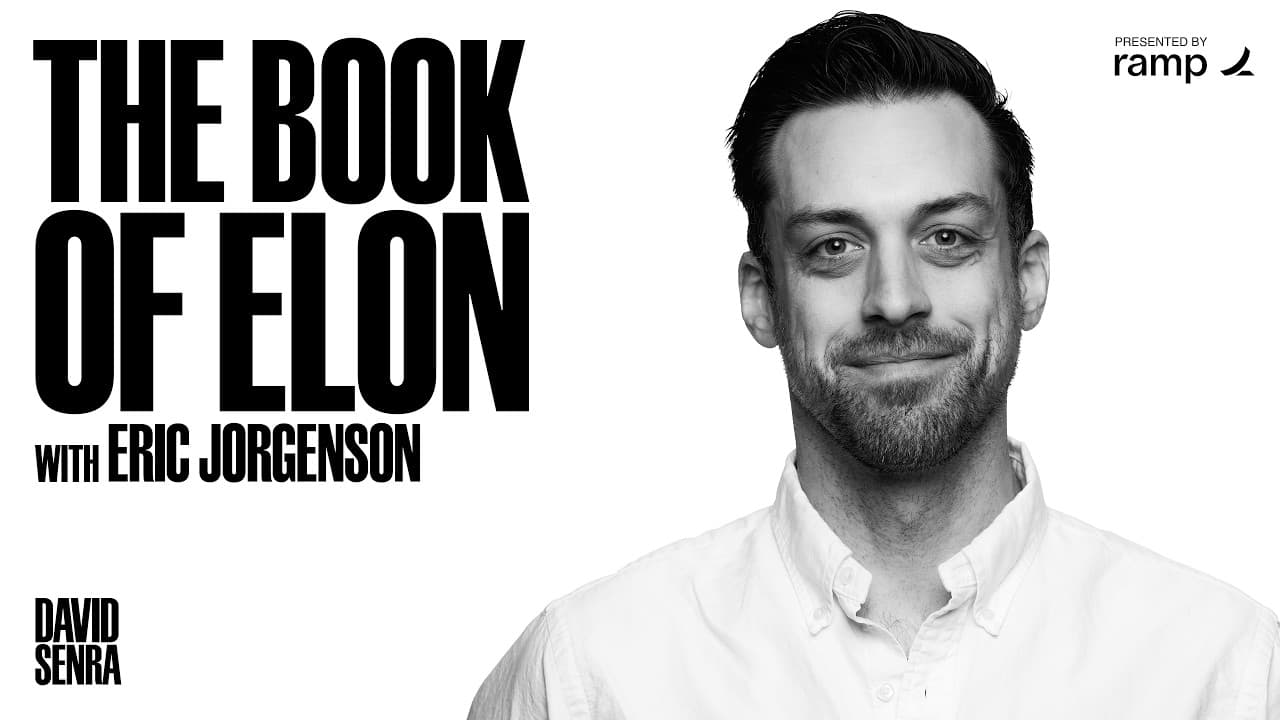
All right, so I have an advanced copy of your book, "The Book of Elon: Elon Musk's Most Useful Ideas in His Own Words." You just said something that there's only four of these copies in the world. - Who has them? - It's a pretty special list. It's like Naval Ravikant, MrBeast, Ivanka Trump, and you. - Okay, so the idea for this is you spent five y... Read More
Key Insights
- Useful company ideas begin with a needed outcome, not a desire to become an entrepreneur or maximize risk-adjusted returns. Musk reportedly asks what useful product should exist, especially when an important problem is being neglected and attempting it could improve humanity’s future.
- Neglected problems can create distinctive opportunities because solving something others avoid forces a company to develop unique capabilities. Space was attractive in this account partly because few people were willing to attempt it, making the mission both unusually difficult and potentially valuable.
- Excellent engineers are described as a fundamental constraint on company growth and civilization’s advancement. Musk reportedly believes capital is not the primary limitation when ambitious products require people who can understand difficult systems, solve technical problems, and turn previously impossible ideas into working reality.
- Technical hiring works by demanding detailed evidence of exceptional ability. Candidates are asked to describe a hard problem they personally solved, while a technically knowledgeable interviewer probes the details closely enough to distinguish direct experience and genuine competence from vague or exaggerated claims.
- Young, unproven engineers can advance quickly when organizations give them real accountability and evaluate their results. Musk’s companies reportedly identify capable people through rapid iteration, expand their responsibility quickly, and value candidates without entrenched habits that could interfere with a different operating culture.
- Cross-company knowledge transfer can expose weak industry assumptions. When Raptor engine production faced a constraint, a leader from Model 3 production examined the line and identified substantial room for improvement, helping aerospace production benefit from lessons developed under intense automotive manufacturing pressure.
- Tip-of-the-spear focus means identifying the single biggest limiter and attacking it before secondary issues. Each SpaceX site is described as having one dominating objective, allowing people to concentrate rapidly when a new problem appears and simplifying priorities across the organization.
- Mission-driven persistence increases the willingness to accept pain, financial risk, and reputational exposure. Musk’s stated approach is to care deeply about the objective, endure the difficulty, and refuse to give up unless dead or completely incapacitated, rather than depending on elaborate personal routines.
- More videos from this channel:
- More from this channel: David Senra
Install to Summarize YouTube Videos and Get Transcripts
Explore YouTube Video Summarizer or Get YouTube Transcript Extractor
Questions & Answers
Q: How does Elon Musk decide which problems to work on?
Elon Musk reportedly begins with problems that need to be solved and could positively affect the future, especially when few others are working on them. He does not frame company selection primarily around the safest business model or the best risk-adjusted return. His guiding question is what useful thing should exist, followed by an attempt to make it real even if the money could be lost.
Q: Why does Elon Musk pursue problems that other people avoid?
Problems that others avoid may offer a chance to create something genuinely useful and unique. The account says Musk pursued space because almost nobody else was willing to try it and because he believed he could. Working on an overlooked challenge also prevents a company from becoming another commodity business and can add a new capability that benefits humanity more broadly.
Q: How does Elon Musk identify excellent engineers?
Musk looks for evidence of exceptional ability by asking candidates to describe a difficult technical problem they personally solved. He then examines the details closely, using his own engineering knowledge to judge whether the candidate truly understands the work. The method depends not only on asking the right question, but also on having enough technical depth to recognize genuine competence and detect unsupported claims.
Q: Why does Elon Musk give young engineers major responsibilities?
Young, unproven engineers are favored because they may have fewer entrenched habits and can adapt to the company’s operating style. Musk’s organizations give them substantial accountability, observe their results through fast iteration, and rapidly increase responsibility for those who prove capable. The approach resembles wartime promotion, where demonstrated competence matters more than tenure and strong performers move upward quickly.
Q: What is tip-of-the-spear focus at SpaceX?
Tip-of-the-spear focus is the practice of finding the biggest current limiter and directing concentrated effort toward it. Instead of distributing attention evenly across secondary concerns, the organization attacks the constraint whose removal would unlock downstream progress. The transcript says each SpaceX site has one dominating objective, and teams can gather rapidly around a new problem when it becomes the highest priority.
Q: How does moving employees between companies improve problem solving?
Moving employees between companies allows methods developed in one industry to challenge assumptions in another. When Raptor engine production was constrained, the responsible engineer brought in the head of Model 3 production to inspect the line. Automotive production experience revealed extensive opportunities for improvement in aerospace practices, showing how transferred knowledge can raise manufacturing volume and accelerate operational learning.
Q: How does Elon Musk manage his time for urgent problems?
Musk reportedly seeks direct control over his schedule so he can work on the most important problem immediately. He removed the scheduling role described in the conversation because he wanted the freedom to move whenever and wherever a critical issue required attention. This flexibility supports an operating style built around shifting fronts, reallocating people, inspecting supply lines, and physically approaching the current constraint.
Q: Why is persistence central to Elon Musk’s operating philosophy?
Persistence matters because ambitious missions involve pain, uncertainty, financial exposure, and reputational risk. Musk’s stated method for handling mental difficulty is to care deeply about the work and accept the pain involved. The conversation argues that a mission someone refuses to abandon enables unusually large bets, including placing substantial personal wealth and reputation behind companies pursuing difficult objectives.
Summary & Key Takeaways
-
Elon Musk reportedly chooses companies by identifying important outcomes that need to happen, especially when few others are attempting them. Rather than optimizing for a safe business model or risk-adjusted return, he accepts potential financial loss when the underlying mission could add a meaningful new capability to humanity.
-
Engineering talent is presented as a greater constraint than capital. Musk searches for evidence of exceptional ability by asking candidates to explain difficult problems they personally solved. His companies favor capable young engineers, give them substantial accountability, and rapidly expand their responsibilities when their performance demonstrates that they can handle more.
-
Musk’s operating method centers on finding the largest immediate limiter and concentrating effort on removing it. He maintains control of his schedule, moves people between companies, transfers production knowledge across industries, and physically approaches urgent problems. Persistence matters because mission-driven commitment makes difficult, long-term bets psychologically possible despite pain and risk.
Read in Other Languages (beta)
Share This Summary 📚
Summarize YouTube Videos and Get Video Transcripts with 1-Click
Try YouTube Summary with ChatGPT & Claude or YouTube Transcript Generator
Explore More Summaries from David Senra 📚


Summarize YouTube Videos and Get Video Transcripts with 1-Click
Try YouTube Summary with ChatGPT & Claude or YouTube Transcript Generator