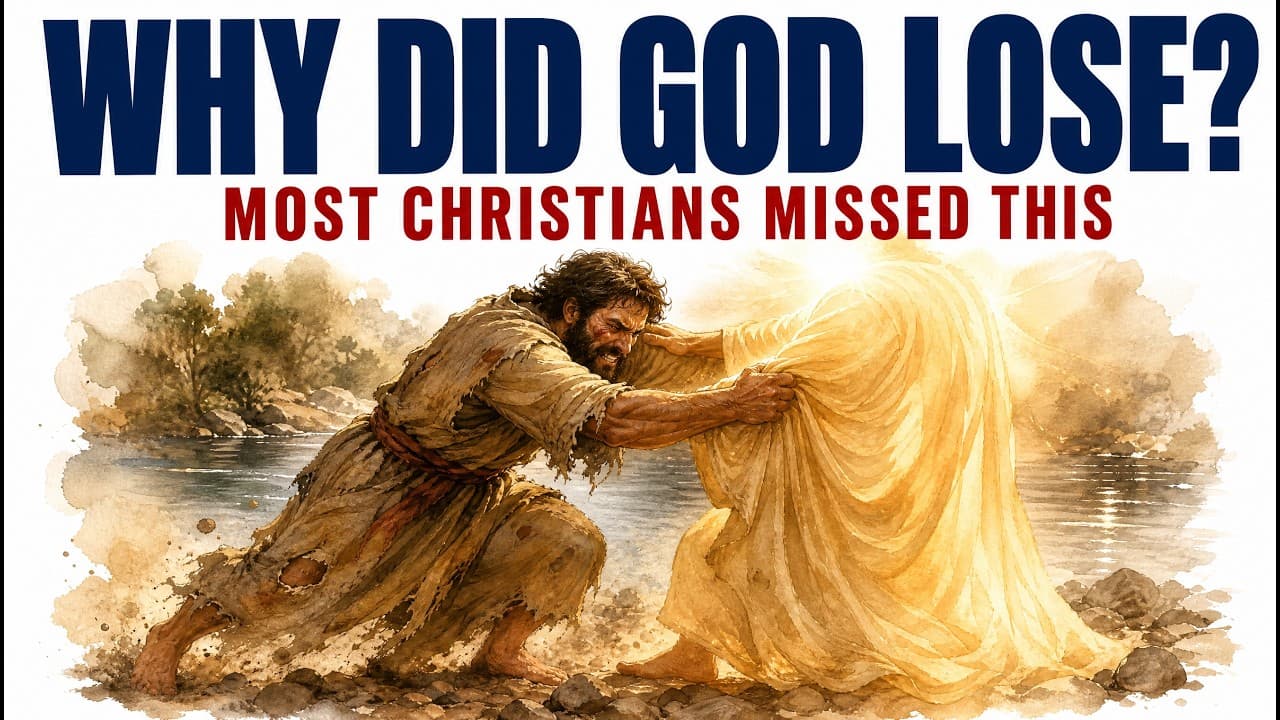
Why Did God Wrestle Jacob and Dislocate His Hip?
TL;DR
Jacob wrestled with a mysterious man, later identified as God, at the Jabbok River. This encounter left Jacob with a dislocated hip, symbolizing both a wound and a blessing. The struggle was a divine lesson, transforming Jacob into Israel, a name denoting his perseverance with God. This event has lasting religious significance, affecting Jewish dietary laws.
Transcript
Somewhere past midnight in a river valley east of the Jordan, a man sends his entire family across a shallow crossing in the dark and then walks back alone into the shadows on the far side. He has 400 armed men riding toward him at first light, led by the brother he cheated 20 years earlier. He has already prayed. He has already sent waves of gifts... Read More
Key Insights
- Jacob's wrestling match with God took place at the Jabbok River, now known as the Zarqa River in Jordan.
- The Hebrew wordplay involving Jacob, the river, and wrestling emphasizes the theme of identity transformation.
- The wrestler's identity is complex, with interpretations ranging from an angel to a pre-incarnate appearance of Christ.
- The injury to Jacob's hip symbolizes both his physical limitation and his spiritual transformation.
- Jacob's new name, Israel, signifies his struggle and perseverance with God, marking a turning point in his life.
- The encounter has a lasting impact on Jewish practice, specifically the prohibition against eating the sciatic nerve.
- The narrative highlights the theme of divine condescension, where God meets Jacob on his level for relational transformation.
- Jacob's confession of his name marks his acceptance of his flawed nature, leading to his transformation.
Install to Summarize YouTube Videos and Get Transcripts
Explore YouTube Video Summarizer or Get YouTube Transcript Extractor
Questions & Answers
Q: Why did Jacob wrestle with God?
Jacob's wrestling with God was a divine encounter at the Jabbok River, symbolizing his struggle with his identity and relationship with God. It served as a transformative experience, leading to his renaming as Israel, which means 'one who struggles with God.' This encounter highlighted his perseverance and marked a pivotal moment in his spiritual journey.
Q: What is the significance of Jacob's dislocated hip?
Jacob's dislocated hip, resulting from his wrestling match with God, symbolizes both a physical limitation and a spiritual blessing. It marked a transformation in Jacob's life, serving as a reminder of his encounter with God and his new identity as Israel. The injury also has lasting religious significance, influencing Jewish dietary laws.
Q: Who was the man Jacob wrestled with?
The man Jacob wrestled with is identified as God in the biblical narrative. Interpretations vary, with some viewing the wrestler as an angel or a pre-incarnate appearance of Christ. The encounter is significant for its theological implications, highlighting themes of divine condescension and relational transformation.
Q: How does the story of Jacob's wrestling affect Jewish practice?
The story of Jacob's wrestling with God impacts Jewish practice through the prohibition against eating the sciatic nerve, known as gid hannasheh. This dietary law, observed in kosher practice, commemorates Jacob's hip injury during the encounter. It represents a remembrance by subtraction, highlighting the enduring significance of the event.
Q: What does the name 'Israel' signify in Jacob's story?
The name 'Israel,' given to Jacob after his wrestling match with God, signifies his struggle and perseverance with God. It marks a turning point in his life, reflecting his transformation from a deceiver to one who contends with the divine. The name encapsulates the themes of identity and relational transformation central to the narrative.
Q: What role does the Hebrew wordplay play in the narrative?
The Hebrew wordplay in the narrative, involving Jacob, the river Jabbok, and the verb for wrestling, emphasizes the theme of identity transformation. It highlights the interconnectedness of the man, the place, and the event, underscoring the profound change Jacob undergoes during his encounter with God. This linguistic element adds depth to the story's theological meaning.
Q: Why is the hip injury significant in the context of wrestling?
In the context of wrestling, the hip is crucial for leverage, balance, and strength. Jacob's hip injury during his encounter with God symbolizes the loss of these physical attributes, marking a shift from self-reliance to dependence on God. It represents the breaking of Jacob's old identity and the beginning of his transformation into Israel.
Q: How does Jacob's confession of his name influence the narrative?
Jacob's confession of his name during the wrestling match is pivotal, marking his acceptance of his flawed nature. By admitting his identity as 'heel grabber' or 'supplanter,' he acknowledges his past deceit and opens the way for transformation. This confession leads to his renaming as Israel, signifying a new beginning and a deeper relationship with God.
Summary & Key Takeaways
-
Jacob's wrestling with a mysterious man at the Jabbok River is a pivotal biblical narrative. The encounter left Jacob with a dislocated hip, symbolizing both a wound and a blessing, and transformed him into Israel, a name signifying his perseverance with God. This event holds deep theological meaning and impacts Jewish dietary laws.
-
The Hebrew wordplay in the narrative underscores the theme of identity transformation. The wrestler's identity is debated, with interpretations ranging from an angel to a pre-incarnate appearance of Christ. The injury to Jacob's hip represents both a physical limitation and a spiritual transformation.
-
Jacob's new name, Israel, marks a turning point, signifying his struggle and perseverance with God. The encounter emphasizes divine condescension, where God meets Jacob on his level. Jacob's confession of his name reflects his acceptance of his flawed nature, leading to his transformation.
Read in Other Languages (beta)
Share This Summary 📚
Summarize YouTube Videos and Get Video Transcripts with 1-Click
Try YouTube Summary with ChatGPT & Claude or YouTube Transcript Generator
Explore More Summaries from Discernment Made Clear 📚

Summarize YouTube Videos and Get Video Transcripts with 1-Click
Try YouTube Summary with ChatGPT & Claude or YouTube Transcript Generator