What Is Kernel Convolution in Image Processing?
TL;DR
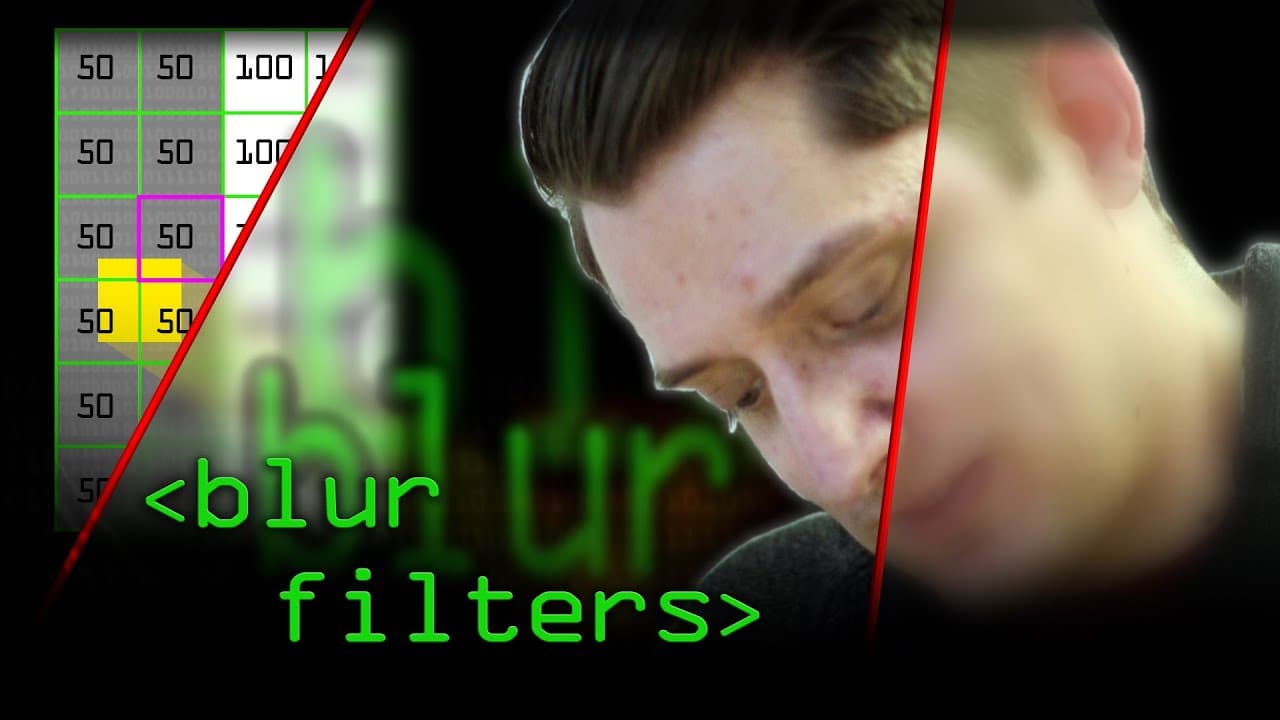
Kernel convolution is a key technique in image processing that uses a small grid of numbers to apply various effects such as blurs and edge detection. By adjusting the values in the kernel, different filters can be created, including mean blur and Gaussian blur, each having distinct effects on image quality and detail preservation.
Transcript
what i would understand to be a filter is perhaps slightly different from what people who use instagram would describe as a filter usually in an app or camera phone app or facebook or some other thing where you can apply some filter it's going to actually be a combination of lots of low-level processing of various types you know blurs contrast chan... Read More
Key Insights
- 😀 Image filters in apps like Instagram involve low-level image processing techniques like blurs and color changes.
- 🛩️ Kernel convolution is a fundamental technique used to apply filters by transforming images based on a small grid of numbers.
- #️⃣ Mean blur and Gaussian blur are two common types of blurs achieved by adjusting the numbers in the kernel.
- 🦔 Gaussian blur is preferred for its controlled and edge-preserving characteristics.
- ❓ Image filters are used for both practical purposes, like noise reduction, and artistic purposes, like creating vintage effects.
- 🦔 Edge pixels in kernel convolution can be handled differently, depending on the desired effect.
- 💯 Kernel convolution is a widely used technique in image processing and forms the core of many image filters.
Install to Summarize YouTube Videos and Get Transcripts
Explore YouTube Video Summarizer or Get YouTube Transcript Extractor
Questions & Answers
Q: What is kernel convolution and how does it work?
Kernel convolution is a process where a small grid of numbers is passed over an image, transforming it based on those numbers. Each pixel in the image is multiplied by the corresponding values in the kernel, summed up, and normalized to produce the output.
Q: What is the difference between a mean blur and a Gaussian blur?
A mean blur is a blur filter that takes the average value of the pixels in a neighborhood window. On the other hand, a Gaussian blur uses a normal distribution to prioritize the pixels closer to the center, resulting in a more controlled and edge-preserving blur.
Q: Why would someone use image filters like blurs?
Image filters like blurs can be used to remove noise from images, improve image quality, or create artistic effects. They are commonly used in image processing analysis and can be seen in various camera apps and social media filters.
Q: How does kernel convolution handle edge pixels?
When applying kernel convolution, edge pixels can be handled in various ways. They can be ignored, wrapped around to the other side of the image, duplicated, or special adjustments can be made to slightly reduce blurring around the edges.
Summary & Key Takeaways
-
Image filters, such as those used in apps like Instagram, involve low-level processing like blurs, contrast changes, and color changes.
-
Kernel convolution is a simple yet powerful technique that uses a small grid of numbers to transform an image, allowing for blurs, edge detection, and other effects.
-
By adjusting the numbers in the kernel, different filters can be achieved, such as mean blur and Gaussian blur.
Read in Other Languages (beta)
Share This Summary 📚
Summarize YouTube Videos and Get Video Transcripts with 1-Click
Try YouTube Summary with ChatGPT & Claude or YouTube Transcript Generator
Explore More Summaries from Computerphile 📚



Summarize YouTube Videos and Get Video Transcripts with 1-Click
Try YouTube Summary with ChatGPT & Claude or YouTube Transcript Generator