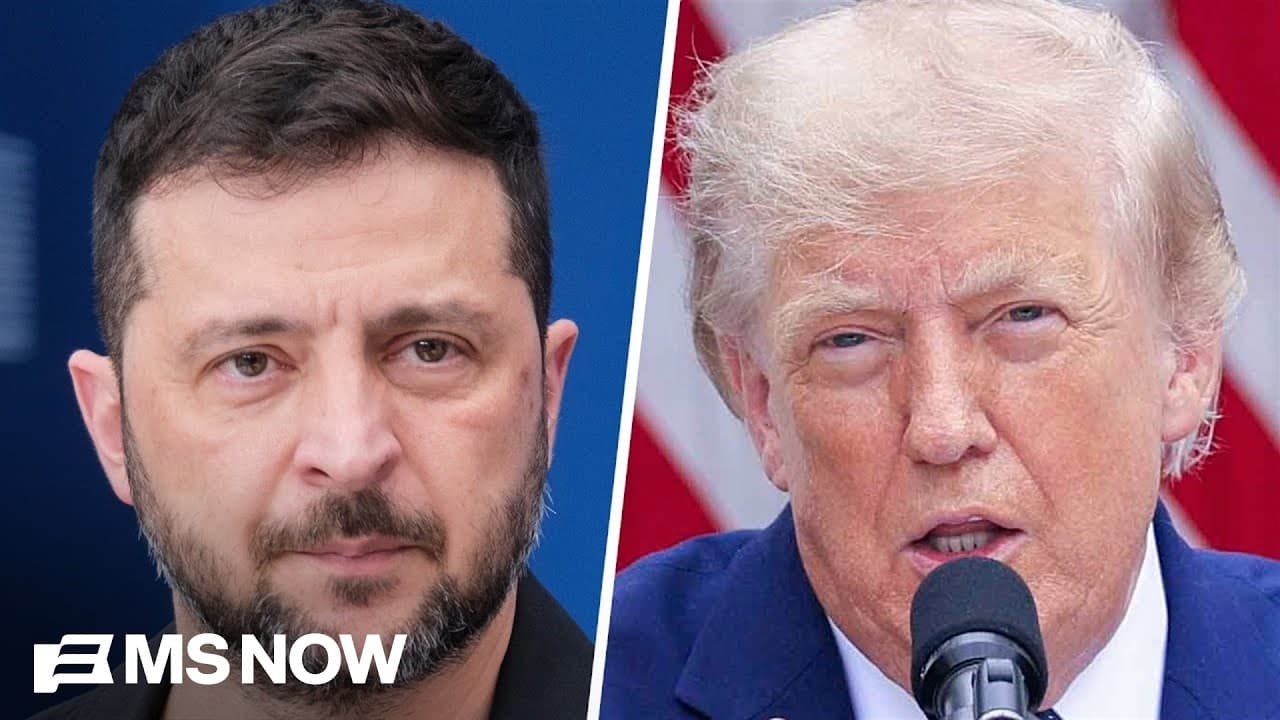
How Trump’s ego affects Ukraine aid and NATO at the summit
TL;DR
Ukraine aid hinges on US political will, not just strategy. The panel argues the real constraint is Trump and his ego, which shapes how hard the US presses for interceptors and aid, while Europe bears more of the burden. The NATO 3.0 concept and defense spending talk are framed around this dynamic, not purely policy gaps.
Transcript
LET'S BRING IN THE GROUP CHAT. LET'S BRINING IN THE GROUP CHAT. MICHAEL MCFAUL, FORMER U .S. AMBASSADOR TO RUSSIA AND MSNOW, INTERNATIONAL AFFAIRS ANALYST, JOINS US. AND HERE WITH ME, ALEX WAGNER, MSNOW, SENIOR POLITICAL ANALYST. SHE TOOK A 6 A .M. TRAIN FROM LONG ISLAND. SHE'S GETTING ALL THE QUESTIONS TODAY, ESPECIALLY ABOUT about SpaceX, ... Read More
Key Insights
- Trump’s ego is described as a central organizing principle behind US policy toward Europe and Ukraine.
- European allies carry a larger burden in defense spending and arms support, while the US is less burden-balanced than rhetoric suggests.
- NATO 3.0 represents a push for Europe to assume more responsibility for its own defense.
- Ukraine is described as on the offensive, but dependent on US interceptors and weapons stockpiles.
- Interceptors and defense equipment are flagged as a top priority for the NATO summit, highlighting urgent civilian protection needs.
- Iran tensions and naval security in the Strait of Hormuz are presented as broader regional contexts affecting US foreign policy decisions.
- The speakers argue the outcome of the summit will hinge on the US position rather than on new strategic frameworks alone.
- The discussion links internal US political dynamics to international negotiations, suggesting policy is constrained by Trump-related political considerations.
- More videos from this channel:
- More from this channel: MS NOW
Install to Summarize YouTube Videos and Get Transcripts
Explore YouTube Video Summarizer or Get YouTube Transcript Extractor
Questions & Answers
Q: What is the main factor the panel says determines US support for Ukraine at the NATO summit?
The panel argues that the main factor shaping US support for Ukraine is not just strategy or resources but the idiosyncrasies and political calculations of Donald Trump, whose ego and domestic political concerns influence whether the US will push hard for missile interceptors, additional aid, or a stronger stance against Russia. This dynamic can slow or accelerate concrete aid decisions depending on how it aligns with his interests and public narrative.
Q: How do the speakers describe Europe’s role in defense spending and burden sharing?
The speakers note that Europeans are currently bearing a larger share of the defense burden while the United States is perceived as not sharing as much as it might. They frame this as a tragic imbalance that undermines European security and American interests in maintaining peace in Europe, suggesting that true burden sharing would require more commitment from the US and more equitable investment by European allies.
Q: What is NATO 3.0 according to the discussion?
NATO 3.0, as discussed by the panel, is a concept aimed at making Europe more responsible for its own defense and ensuring a more self-reliant alliance. It represents a shift in emphasis toward greater European defense capabilities and autonomy within the transatlantic security framework, potentially reducing overdependency on the United States while still coordinating with Washington.
Q: What concrete military needs are highlighted for Ukraine?
The speakers highlight the need for more missile defense interceptors, specifically PAC-3 systems, noting that Ukraine has run low on these stockpiles. They argue that obtaining more interceptors should be a priority for NATO and the United States to better defend Ukrainian civilians and deter Russian strikes.
Q: How is the war in Ukraine characterized in terms of momentum on the battlefield?
The discussion characterizes Ukraine as being on the offensive with deep strikes into Russia and efforts to cut supply lines. However, it also notes that Ukraine has run into shortages in missile defenses and interceptors, which could limit sustained momentum without additional support from the United States and its allies.
Q: What broader regional context is tied to US policy decisions on Ukraine?
The conversation places US policy toward Ukraine within the broader context of Iran tensions and security in the Strait of Hormuz, noting ongoing naval dynamics and pressure from Iran. This broader regional backdrop is used to explain why US strategic calculations might prioritize certain actions over others, linking Middle East security to European and Ukrainian outcomes.
Q: Why do the speakers mention Greenland in relation to US strategy?
The discussion briefly mentions Greenland as part of a preview of US strategic options discussed by White House officials, reflecting the broader theme that the United States assesses and negotiates its strategic footprint globally. This serves to illustrate how policy considerations extend beyond Europe and Ukraine to other potential strategic moves.
Q: What is the overall takeaway about the influence of leadership on policy outcomes?
The overall takeaway is that leadership personality and domestic political dynamics have a decisive effect on policy outcomes, especially in high-stakes areas like Ukraine aid and NATO strategy. The panel argues that personal calculations, ego, and political risk shape whether concrete measures like interceptors and aid are pursued, ultimately guiding the direction of transatlantic security.
Summary & Key Takeaways
-
The discussion centers on how US leadership personality, especially Trump, influences Ukraine support and NATO strategy at the summit, beyond military or diplomatic abstractions. It highlights the tension between European burden sharing and Washingtons stance. The panel also critiques missile defenses and the urgency of civilian protection in Ukraine.
-
The speakers link Trump’s ego to stalled arms interceptors and stalled negotiations with Iran, while noting global defense realignments under NATO 3.0 as a response to these idiosyncrasies. They emphasize concrete needs like missile interceptors and civilian protection above broad policy talk.
-
The conversation concludes that US commitment to Ukraine and European security depends on personal political calculations, with leaders weighing ego, domestic politics, and international leverage more than technical capability alone.
Read in Other Languages (beta)
Share This Summary 📚
Summarize YouTube Videos and Get Video Transcripts with 1-Click
Try YouTube Summary with ChatGPT & Claude or YouTube Transcript Generator
Explore More Summaries from MS NOW 📚
Summarize YouTube Videos and Get Video Transcripts with 1-Click
Try YouTube Summary with ChatGPT & Claude or YouTube Transcript Generator