What Accident Led to the Discovery of Penicillin?
TL;DR
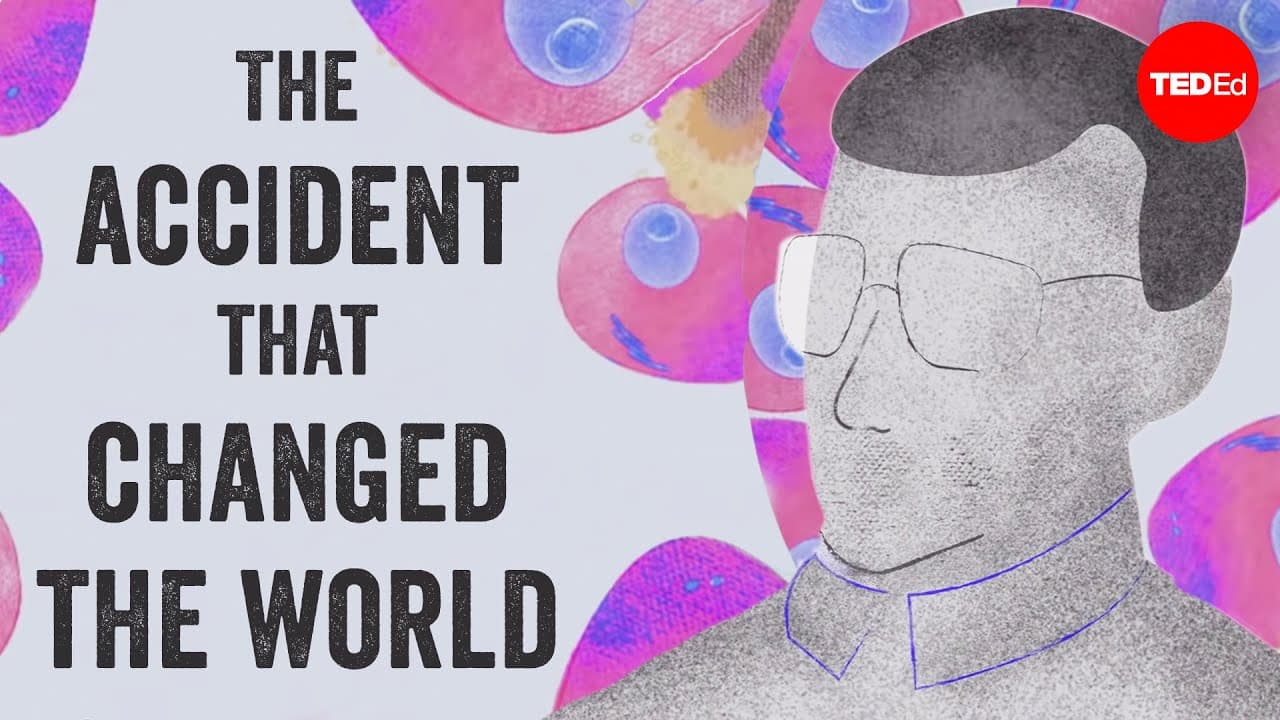
Alexander Fleming's discovery of penicillin occurred when he noticed a mold growing on an unattended petri dish, which produced a substance that eliminated bacteria. This accidental finding revolutionized medicine, allowing for the effective treatment of bacterial infections. While penicillin remains crucial, antibiotic overuse has led to resistance in some bacterial strains.
Transcript
London, 1928: a group of mold spores surf a breeze through a lab. They drift onto a petri dish, and when they land, they germinate a medical revolution. This lab belongs to Alexander Fleming, a Scottish scientist investigating the properties of infectious bacteria. At this time, Fleming is away on vacation. When he returns, he finds a colony ... Read More
Key Insights
- 😷 Alexander Fleming's accidental discovery of penicillin led to a medical revolution in the treatment of infections.
- 🇼🇫 Penicillin kills bacteria by disrupting the synthesis of their cell walls and causing structural breakdown.
- 💨 The development of penicillin during World War II and subsequent research transformed the way bacterial infections were treated.
- 🥺 Overuse of antibiotics, including penicillin, leads to bacteria evolving resistance, reducing their effectiveness.
- 👯 A significant percentage of people who identify as allergic to penicillin are not actually allergic.
- ❓ Genuine penicillin allergies are rare but can be dangerous, requiring evaluation by an allergist.
- ❓ Many individuals outgrow their penicillin allergy within ten years.
Install to Summarize YouTube Videos and Get Transcripts
Explore YouTube Video Summarizer or Get YouTube Transcript Extractor
Questions & Answers
Q: How did Alexander Fleming discover penicillin?
Fleming discovered penicillin by accident when he found mold growing on a petri dish that was killing surrounding bacteria. He realized that the mold was secreting a compound he named penicillin.
Q: How does penicillin kill bacteria?
Penicillin disrupts the synthesis of bacterial cell walls and prevents them from being reconstructed. It also stimulates the release of reactive molecules that cause further damage, leading to the breakdown of the bacteria's structure.
Q: How did the development of penicillin impact the treatment of infections?
The development of penicillin during World War II revolutionized the treatment of infections. It quickly became commercially available and was a life-saving antibiotic. It transformed the way bacterial infections were treated.
Q: Why is it important for doctors not to overprescribe penicillin?
Overuse of penicillin and other antibiotics leads to bacteria evolving resistance to these drugs. The more antibiotics are used, the more bacteria develop defenses against them, making them ineffective against certain infections.
Summary & Key Takeaways
-
Alexander Fleming discovers penicillin when he finds mold growing on a petri dish, which is secreting a compound that kills bacteria.
-
Penicillin destroys bacteria by disrupting the synthesis of their cell walls and stimulating the release of reactive molecules.
-
The development of penicillin during World War II transformed the treatment of infections and remains a crucial antibiotic, although bacteria are evolving resistance to it.
Read in Other Languages (beta)
Share This Summary 📚
Summarize YouTube Videos and Get Video Transcripts with 1-Click
Try YouTube Summary with ChatGPT & Claude or YouTube Transcript Generator
Explore More Summaries from TED-Ed 📚



Summarize YouTube Videos and Get Video Transcripts with 1-Click
Try YouTube Summary with ChatGPT & Claude or YouTube Transcript Generator