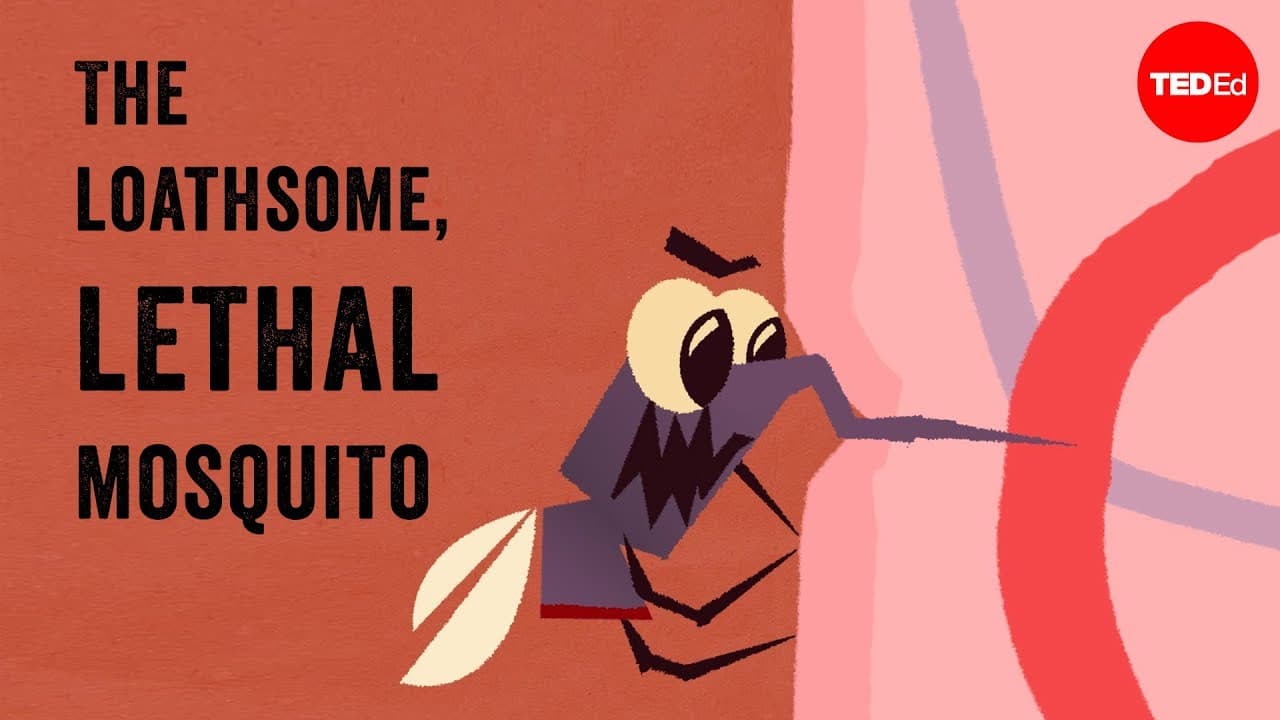
The loathsome, lethal mosquito - Rose Eveleth
Transcript
Read and summarize the transcript of this video on Glasp Reader (beta).
Install to Summarize YouTube Videos and Get Transcripts
Explore YouTube Video Summarizer or Get YouTube Transcript Extractor
Summary
Mosquitoes are considered to be one of the worst bugs on the planet due to their buzzing, biting, and ability to transmit deadly diseases. There are thousands of mosquito species worldwide, all of which share the ability to suck blood. Mosquitoes use their saliva to numb the skin, then carve a hole to suck blood from a vessel. They are responsible for transmitting diseases such as malaria, yellow fever, West Nile virus, and dengue. Mosquito control is a multi-billion-dollar global industry, but completely eliminating mosquitoes could have unforeseen consequences for ecosystems.
Questions & Answers
Q: What makes the mosquito one of the worst bugs on the planet?
The mosquito is hated by many people due to their buzzing, biting, and ability to transmit diseases. In Alaska, swarms of mosquitos can even suffocate caribou. Mosquito-borne diseases kill millions of people annually, making them extremely dangerous and detested pests.
Q: How long have mosquitoes been around?
Mosquitoes have been around for over a hundred million years and have coevolved with various species, including humans. They have adapted to their surroundings and developed efficient techniques for obtaining blood meals.
Q: How do mosquitoes suck blood?
After landing on the skin, mosquitoes apply saliva, which acts as an antiseptic and numbs the area to avoid detection. They then use their serrated mandibles to create a small hole through which they can insert their proboscis and search for a blood vessel. Once a vessel is found, they can consume two to three times their own weight in blood.
Q: Why do humans hate mosquitoes so much?
Humans spend billions of dollars worldwide to protect themselves from mosquitoes. Mosquitoes not only cause annoyance and discomfort but also transmit deadly diseases such as malaria, yellow fever, West Nile virus, and dengue. Over a million people die each year from mosquito-borne diseases globally.
Q: Can animals also get diseases from mosquitoes?
Yes, mosquitoes can transmit diseases to various animals, including horses, dogs, and cats. This expands the potential impact of mosquito-borne diseases beyond humans, making them a concern for both human and animal health.
Q: Why don't we just get rid of mosquitoes?
Eliminating mosquitoes is not a straightforward solution due to their ecological role. They serve as a food source for many organisms, including frogs, fish, and birds. Additionally, they act as pollinators for certain plants. However, some scientists argue that mosquitos may not be as important as we think and that another species could fill their ecological niche.
Q: How would eliminating mosquitoes affect the spread of malaria?
If mosquitoes were eradicated, some scientists believe that there would likely be a significant reduction in malaria cases. However, the potential consequences of completely removing mosquitoes, such as the emergence of other harmful species, remain unknown.
Q: What prevents us from getting rid of mosquitoes completely?
The main factor preventing the complete eradication of mosquitoes is the uncertain impact it would have on ecosystems. Mosquitoes play crucial roles in various food chains and contribute to the pollination process. Removing them could result in unforeseen disruptions and imbalances within ecosystems.
Q: Are mosquitoes truly essential to ecosystems?
While some scientists argue that mosquitoes have important ecological roles, others question their significance. They suggest that alternative species could potentially fill the ecological niche left by mosquitoes, potentially leading to fewer cases of mosquito-borne diseases such as malaria.
Q: Are we willing to take the risk of eliminating mosquitoes?
The decision to eliminate mosquitoes involves weighing the potential benefits of reducing disease transmission against the uncertain ecological consequences. It is a complex and debated issue that requires careful consideration and analysis to minimize the risks involved.
Takeaways
Mosquitoes are universally disliked due to their annoying behavior and ability to transmit deadly diseases. Their elimination could have both positive and negative effects on ecosystems. While it is essential to continue developing effective control measures for mosquito-borne diseases, careful consideration of the potential ecological impact is necessary to make informed decisions.
Read in Other Languages (beta)
Share This Summary 📚
Summarize YouTube Videos and Get Video Transcripts with 1-Click
Try YouTube Summary with ChatGPT & Claude or YouTube Transcript Generator
Explore More Summaries from TED-Ed 📚

Summarize YouTube Videos and Get Video Transcripts with 1-Click
Try YouTube Summary with ChatGPT & Claude or YouTube Transcript Generator