How to Lead a Company Through Its Hardest Times
TL;DR
A CEO should confront crises openly, involve employees in solving problems, and make painful personnel decisions quickly and respectfully. Strong leadership also requires practical training, capable HR support, solution-focused thinking, and hiring people whose strengths and experience match the company’s needs, even when those candidates have noticeable weaknesses.
Transcript
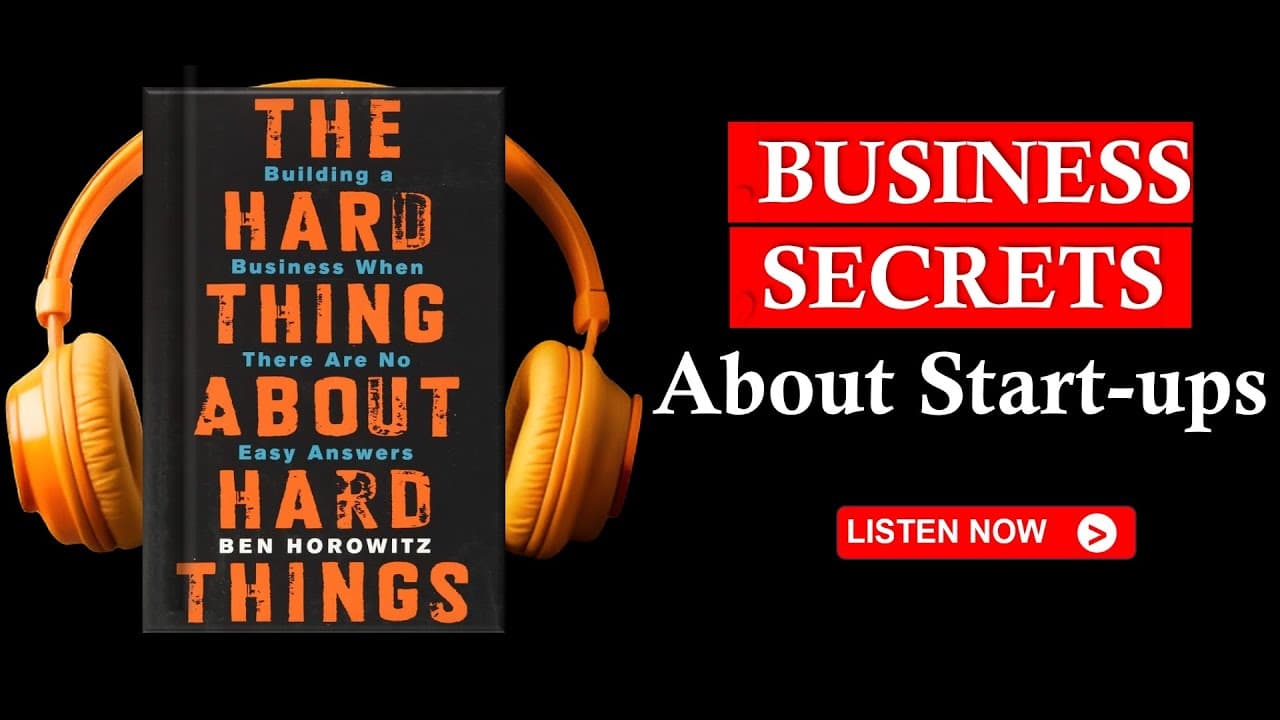
The Hard Thing About Hard Things by Ben Horowitz Building a Business When There Are No Easy Answers What's this book about?This book explains why being a CEO is one of the toughest and loneliest jobs in the world and how to handle the stress and challenges. About the author, Ben Horowitz is a founding partner at the venture capital firm Andreessen ... Read More
Key Insights
- The struggle is the intense pressure that arises when a CEO’s ambitions collide with crises, uncertainty, and painful decisions. It can affect mental health, physical health, relationships, and career choices, but it is also the environment in which leadership ability is developed and demonstrated.
- A CEO can handle a crisis more effectively by involving the organization instead of carrying every problem alone. Horowitz openly told Opsware employees that the product had to change or the company would fail, allowing committed employees to unite around the necessary transformation.
- Solution-focused leadership is the discipline of searching for the next viable move instead of dwelling on threats. The transcript compares it to race-car driving, where the driver must watch the road ahead rather than fixating on the walls that could cause a crash.
- Bad news should be shared quickly because secrecy creates rumors, surprises employees, and damages trust. Open disclosure lets engineers, accountants, and other specialists investigate different parts of the problem simultaneously, placing the issue in the hands of people capable of solving it.
- Layoffs should be executed promptly after the decision is made because delays increase anxiety and force managers into secrecy or dishonesty. Leaders should acknowledge the company’s failure, treat departing employees fairly, and provide appropriate severance and references to protect dignity and remaining morale.
- An executive firing should preserve the departing person’s respect while protecting business continuity. The CEO must accept responsibility for the original hiring decision, analyze its causes, prepare the termination conversation carefully, and temporarily cover the executive’s responsibilities when necessary.
- Employee care depends on strong HR support and practical training. HR can detect problems such as uncompetitive pay or declining organizational standards, while role-specific and management training gives employees the tools, experience, expectations, and feedback practices needed to perform successfully.
- Effective hiring prioritizes job-relevant strengths and matches executive experience to company size. Small-company executives must create and drive their own projects, while large-company executives often adjust and review work arriving from complex organizations, so mismatched experience can undermine performance.
- Related book: The Hard Thing About Hard Things
- Export your Kindle highlights to Glasp: How to Download Highlights and Notes from Kindle
- More videos about this book:
- More videos with Ben Horowitz:
Install to Summarize YouTube Videos and Get Transcripts
Explore YouTube Video Summarizer or Get YouTube Transcript Extractor
Questions & Answers
Q: How can a CEO cope with the struggle of leading a company?
A CEO can cope with the struggle by involving other people in crises, searching creatively for options, and concentrating on solutions rather than threats. Horowitz’s experience at Opsware shows the value of telling employees the truth and inviting committed people to help transform the business. The CEO remains responsible, but does not need to solve every operational problem alone.
Q: Why should CEOs share bad news with employees quickly?
CEOs should share bad news quickly because employees will often discover it through rumors anyway, and secrecy can damage trust and morale. Early disclosure allows specialists across the company to work on the issue at the same time. Engineers can investigate technical concerns, while accountants can evaluate costs, making the organization faster and more capable than an isolated CEO.
Q: How should a company handle layoffs responsibly?
A company should act promptly once layoffs become necessary, explain the real business reason, and treat departing employees fairly. Suitable severance and good references demonstrate respect and reassure the remaining workforce. The CEO should acknowledge that the company failed to meet its goals instead of presenting excellent employees as poor performers, then help the organization move forward.
Q: How should a CEO fire an executive without damaging the company?
The CEO should first accept responsibility for hiring the wrong executive and examine why the decision failed. The termination conversation should be carefully prepared, direct, and respectful, with clear language and an appropriate severance package. The CEO should avoid humiliating the departing person and ensure continuity by temporarily assuming the executive’s duties when needed.
Q: Why is HR important for taking care of employees?
HR acts like quality control for the organization by identifying problems that senior leaders may not see directly. For example, a candidate might reveal that the company’s compensation is not competitive. HR cannot build the organization alone, but it can detect slipping standards and provide information that enables leadership to correct workplace problems before they become more serious.
Q: What training should a company provide its employees and managers?
A company should provide practical training that teaches employees its particular tools, procedures, responsibilities, and performance expectations. New hires cannot be expected to discover everything without guidance. Leadership teams also need management training that explains how managers should train their staff and what feedback they should provide. These programs give people the skills and support needed to succeed.
Q: Should employers hire candidates who have noticeable weaknesses?
Employers should focus primarily on the strengths that enable a candidate to excel in the required role rather than rejecting every person who has weaknesses. Horowitz hired sales leader Mark Cranny because Cranny had the capabilities needed to manage sales exceptionally well, despite concerns that he made others uncomfortable. Valuable strengths can outweigh flaws that are not central to performance.
Q: How does company size affect executive hiring decisions?
Executive candidates should have experience compatible with the company’s size and operating rhythm. In a small company, leaders are expected to initiate projects and drive their own work. In a large company, executives often receive substantial existing work that they must review and adjust. Moving between these environments can create mismatches in pace, expectations, complexity, and required skills.
Summary & Key Takeaways
-
Ben Horowitz describes the struggle as the collision between a CEO’s ambitions and the harsh realities of running a company. Crises, hiring mistakes, customer failures, and economic downturns create intense pressure. CEOs remain responsible for finding a path forward while the consequences affect their health, relationships, careers, and organizations.
-
Leaders should disclose bad news quickly so employees can contribute their specialized knowledge before problems worsen. Necessary layoffs should happen promptly, with honest explanations, suitable severance, and good references. When firing an executive, the CEO should accept responsibility for the hiring mistake, preserve the person’s dignity, and maintain business continuity.
-
Taking care of employees requires a strong HR function, practical role-specific training, and management instruction about coaching and feedback. Hiring should prioritize the strengths that enable exceptional performance rather than demanding flawlessness. Executive candidates must also have experience suited to the company’s size, pace, complexity, and expectations for initiating work.
Read in Other Languages (beta)
Share This Summary 📚
Summarize YouTube Videos and Get Video Transcripts with 1-Click
Try YouTube Summary with ChatGPT & Claude or YouTube Transcript Generator