How Does the Cash Flow Quadrant Build Wealth?
TL;DR
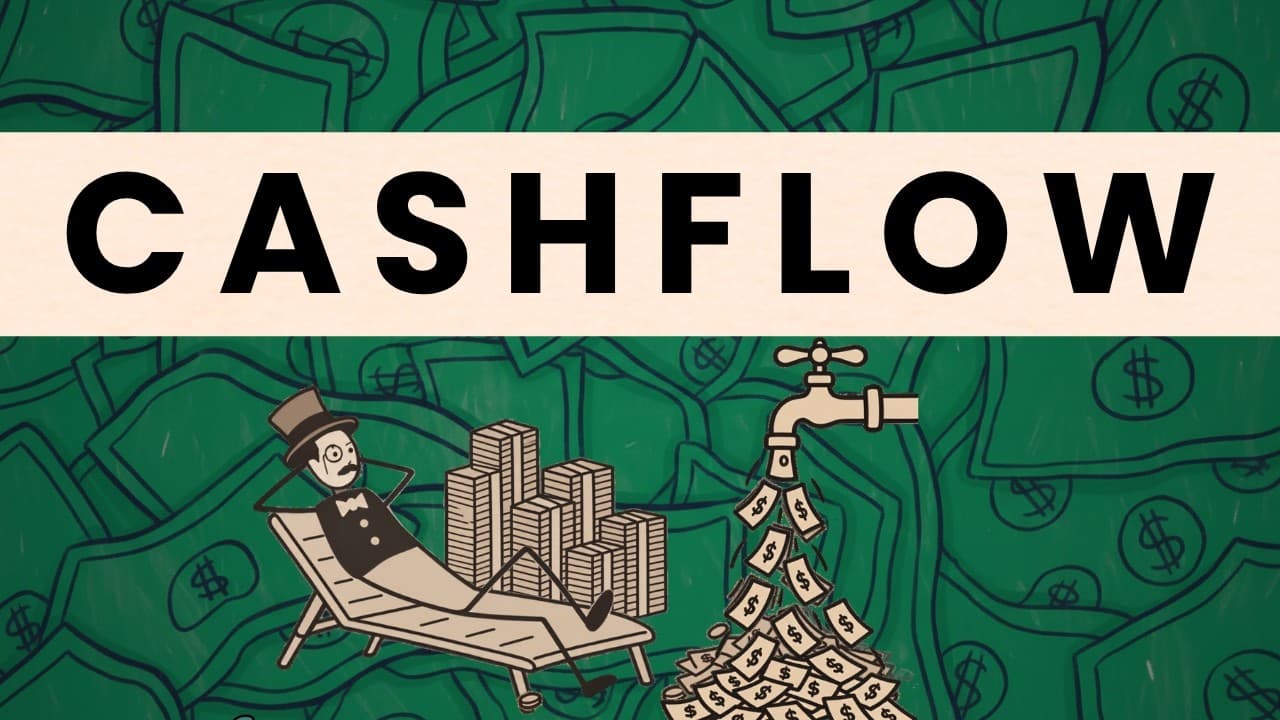
Wealth is measured by how long you can maintain your current lifestyle without working, not by salary or possessions. The cash flow quadrant argues that employees and self-employed people exchange time for income, while business owners and investors pursue scalable systems and asset ownership. A paycheck can provide stability while funding the gradual construction of those systems.
Transcript
There are only four ways to make money in this world. Employee, self-employed, business owner, investor. And the one you're in decides whether you build wealth or spend your life chasing it. Before we go further, let me ask you something. If you lost your job tomorrow, how many days would you last? If that paycheck stopped on Friday, how long befor... Read More
Key Insights
- Wealth is the number of days a person can maintain their existing lifestyle without working. Salary, a car, and a house do not demonstrate financial independence when income immediately stops after the person stops working.
- The cash flow quadrant consists of employees, self-employed workers, business owners, and investors. Employees and self-employed people occupy the labor-dependent side, while business owners and investors pursue income through systems, people, capital, and ownership.
- A paycheck is a useful financial tool while a person builds another income source. The speaker advises workers not to resent their jobs because salaries can cover rent and living costs while they develop a scalable business or investment pipeline.
- Self-employment is not automatically financial freedom because the owner may become responsible for invoicing, marketing, sales, accounting, operations, and service delivery. When everything depends on one person's expertise and presence, the business cannot scale beyond that individual.
- A true business owner owns a system rather than a demanding personal job. The transcript defines this system as one operated by other people and suggests that it should continue functioning, or even become more profitable, during the owner's extended absence.
- Other people's time allows a business system to exceed the output of one individual. By hiring people and delegating responsibilities, an owner can multiply the hours applied to operations instead of personally completing every essential task.
- An investor generates returns through ownership and uses money to acquire income-producing assets. The transcript calls borrowed capital other people's money and describes investors as evaluating opportunities through cash flow, return on investment, income, and capital gains.
- Tax treatment differs across the quadrants according to the transcript. It claims employees are taxed before spending, businesses deduct expenses before calculating taxable income, and investors may use borrowing, deductible interest, reinvestment, and loans against assets to reduce taxable income.
Install to Summarize YouTube Videos and Get Transcripts
Explore YouTube Video Summarizer or Get YouTube Transcript Extractor
Questions & Answers
Q: What are the four cash flow quadrants?
The four cash flow quadrants are employee, self-employed, business owner, and investor. Employees exchange time for a salary and value security. Self-employed people control their work but often remain essential to every operation. Business owners construct systems run by other people. Investors use money and ownership to acquire assets that can produce returns.
Q: How should personal wealth be measured?
Personal wealth should be measured by the number of days you can maintain your current lifestyle without working, according to the framework. The relevant question is how long your finances would remain intact if your paycheck stopped. A large salary, expensive car, or house does not provide independence when losing one job causes income to disappear immediately.
Q: What does the bucket and pipeline story mean?
The bucket represents income that requires repeated personal labor, while the pipeline represents a system built once to deliver value continuously. Ed carries water every day and loses income when he stops. Bill builds a lower-cost pipeline that operates continuously and expands into other markets, allowing him to earn from many deliveries without carrying each bucket himself.
Q: Should employees quit their jobs to build wealth?
The speaker does not recommend treating a job as the enemy or expecting immediate success after quitting. A salary can pay rent and other living costs while someone develops a business or investment system. The suggested approach is to carry the current bucket with gratitude while using available time and resources to construct a pipeline that may eventually produce independent income.
Q: Why can self-employment become another financial trap?
Self-employment can become a trap when the owner must personally handle service delivery, invoicing, marketing, sales, accounting, and operations. Believing that nobody else can perform the work properly prevents delegation and scaling. Although the person may earn well, income still stops during vacations or other absences because the individual has effectively become the entire business.
Q: How can you tell whether you own a business or a job?
Ask whether your income would stop if you stopped working tomorrow. If it would, the transcript classifies the arrangement as self-employment regardless of the title on your business card. A true business owner creates processes, hires capable people, and builds a system that can continue operating without the owner's daily labor, decisions, or constant physical presence.
Q: How do business owners use other people's time?
Business owners use other people's time by hiring employees and delegating the activities required to operate their systems. One individual has only 24 hours in a day, but a company with 20 employees can apply the time of 20 people. This structure allows production and operations to scale beyond what the owner could personally accomplish alone.
Q: How do investors use debt and assets to manage taxes?
The transcript says investors may borrow money to buy income-producing assets because borrowed funds are not treated as income. It also says loan interest may be deductible, profits may be reinvested in growth, and owners may borrow against appreciating assets instead of selling them. Under the described strategy, these actions can reduce taxable income and delay capital gains taxes.
Summary & Key Takeaways
-
The framework divides income generation into four quadrants: employee, self-employed, business owner, and investor. Employees and self-employed people generally depend on their continued labor, while business owners create systems operated by other people and investors use ownership and capital to generate returns without directly performing the underlying work.
-
The bucket and pipeline story illustrates the difference between labor-dependent income and scalable income. Ed repeatedly carries water and must keep working to get paid. Bill builds a pipeline that delivers water continuously and expands it into new markets. The lesson is to use current income while developing systems that can operate independently.
-
Moving from the left side of the quadrant to the right requires more than changing job titles. A genuine business owner must create a company that operates without constant personal involvement. An investor focuses on cash flow, return on investment, assets, borrowing, and ownership. This transition requires changes in habits, beliefs, language, and identity.
Read in Other Languages (beta)
Share This Summary 📚
Summarize YouTube Videos and Get Video Transcripts with 1-Click
Try YouTube Summary with ChatGPT & Claude or YouTube Transcript Generator
Explore More Summaries from LITTLE BIT BETTER 📚

Summarize YouTube Videos and Get Video Transcripts with 1-Click
Try YouTube Summary with ChatGPT & Claude or YouTube Transcript Generator