How to Talk to Anyone with Genuine Confidence
TL;DR
Confident communication starts by giving people focused, personal attention through deliberate smiles, steady eye contact, open posture, and full-body engagement. Treating strangers like old friends helps these behaviors feel natural, while staying still, reading reactions in real time, and visualizing successful interactions can make you appear calmer, warmer, and more responsive.
Transcript
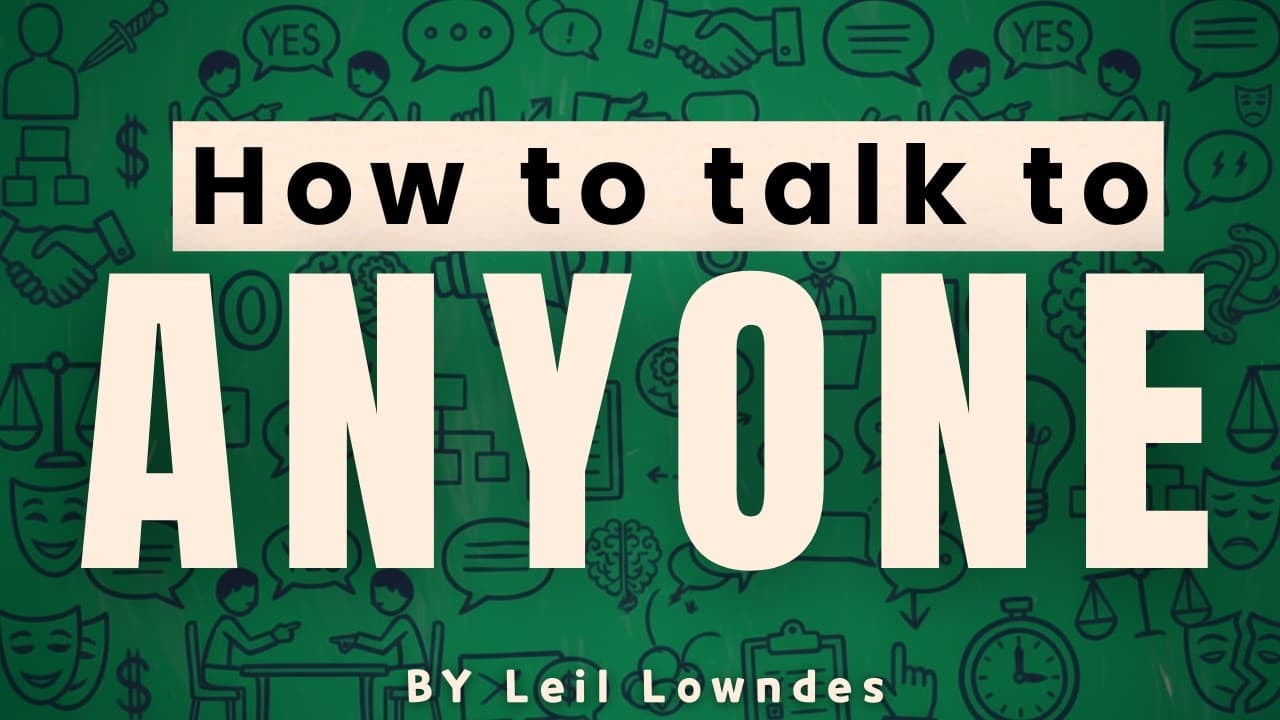
How to talk to anyone by Leo Louns is one of the most practical books for mastering human connection. The book shares 92 little techniques to build better relationships by making people feel seen, heard, and drawn to you without being fake. A quick note before we dive in. This video is created in cooperation with another book summary channel called... Read More
Key Insights
- First impressions are shaped largely by appearance, movement, posture, energy, and body language during the opening seconds of an encounter. These signals can make someone appear confident, nervous, impressive, or forgettable before their words have had much influence.
- A delayed smile feels more personal because it appears to respond to the specific person rather than operating as an automatic social reflex. Briefly looking at someone's face before smiling can communicate that you noticed them and that your warmth is genuinely directed toward them.
- Steady eye contact communicates attention, competence, trustworthiness, and confidence according to the research described in the transcript. Holding another person's gaze slightly after they finish speaking, then looking away gradually, can create connection without producing the abruptness of suddenly breaking eye contact.
- Focused attention can make someone feel distinctive even within a group. Sustained eye contact may create emotional intensity, but it can also seem awkward or arrogant when interest is not mutual, so the technique requires sensitivity to the other person's reactions and comfort.
- Posture both displays and influences confidence. Lifting the head, opening the chest, straightening the spine, and rolling the shoulders back can create a composed appearance, while repeatedly using a doorway visualization cue can help turn this alignment into a more automatic habit.
- Full-body orientation signals undivided attention. Turning the whole body toward a newly introduced person, rather than merely turning the head, combines with a warm smile to communicate that the person matters and is receiving focused, personal recognition.
- Treating a stranger like an old friend creates natural warmth without requiring conscious control of every gesture. Imagining genuine happiness at seeing the person can soften the eyebrows, open the posture, warm the voice, and encourage the whole body to lean toward the interaction.
- Responsive communication requires speaking and observing at the same time. Nodding, leaning forward, checking a phone, or looking confused provide feedback that can guide whether to slow down, speed up, add a story, or ask a question during the conversation.
Install to Summarize YouTube Videos and Get Transcripts
Explore YouTube Video Summarizer or Get YouTube Transcript Extractor
Questions & Answers
Q: How can I make a strong first impression quickly?
A strong first impression begins with visible behavior before much conversation occurs. Hold an upright, open posture, direct your full body toward the person, observe their face briefly, and then offer a warm smile. Maintain calm eye contact and avoid unnecessary fidgeting. Together, these behaviors communicate focused attention, composure, confidence, and genuine interest during the opening seconds of the encounter.
Q: How can I make my smile appear more genuine?
Do not smile automatically the instant you notice someone. Pause briefly, look at the person's face, and allow yourself to register their presence before the smile appears. The small delay makes the expression seem personal and responsive rather than routine. It silently suggests that you saw this particular person and that the warmth was meant specifically for them, which can strengthen the feeling of connection.
Q: How should I use eye contact during a conversation?
Maintain soft, steady eye contact while the other person speaks, and continue holding their gaze for a moment after they finish. When you look away, let your attention drift gradually instead of breaking contact suddenly. This approach can convey concentration, trustworthiness, confidence, and respect. It should remain comfortable and responsive, since overly intense attention can feel awkward when the other person does not show mutual interest.
Q: How can I use posture to appear more confident?
Lift your head, straighten your spine, open your chest, and allow your shoulders to roll back into a relaxed position. The transcript recommends using doorways as reminders: imagine a strap above your head that gently pulls your frame upward. Repeating this mental cue can create a full-body reset and gradually make confident alignment feel more automatic whenever you enter a meeting, event, or social space.
Q: How can I give someone my full attention when meeting them?
Turn your entire body toward the person instead of rotating only your head. Face them fully, settle your attention on them, and offer a warm, personal smile. This physical orientation communicates that they matter and temporarily feel like the only person in the room. Because strangers often receive divided or distracted attention, complete presence can make the introduction feel unusually respectful, welcoming, and memorable.
Q: How can I act naturally while practicing communication techniques?
Imagine that the new person is a close friend you have missed and are genuinely happy to see. This mindset allows your brain to coordinate many behaviors without forcing each one consciously. Your eyebrows may soften, your posture may open, your voice may become warmer, and your body may naturally turn toward them. The result can feel more relaxed than separately monitoring your smile, eye contact, posture, and gestures.
Q: Why should I reduce fidgeting during important conversations?
Fidgeting can create an impression of nervousness, insecurity, dishonesty, or poor preparation even when those interpretations are inaccurate. During interviews, negotiations, and presentations, repeatedly touching your face, adjusting clothes, shifting position, or breaking eye contact can weaken the confidence of your message. Remaining calm, still, and focused helps your physical behavior match your words and can make you appear more grounded and trustworthy.
Q: How can I adjust my communication by reading body language?
Speak while simultaneously watching how listeners respond. Nodding and leaning forward may suggest engagement, while checking a phone or appearing confused may signal that your approach needs adjustment. Use these reactions as real-time feedback. You can slow down, speed up, add a story, clarify a point, or ask a question. Effective communication therefore depends on tuning in to the audience, not merely delivering prepared words.
Summary & Key Takeaways
-
Strong first impressions depend heavily on visible behavior before conversation develops. A slightly delayed smile can feel personal, steady eye contact can communicate focused attention, and upright posture can project confidence. Turning your entire body toward someone reinforces the message that they matter and have your undivided attention.
-
Natural warmth becomes easier when you imagine a stranger as a close friend you are genuinely happy to see. This mindset can soften your expression, open your posture, warm your voice, and orient your body toward the other person. It also reduces the strain of consciously managing several communication techniques at once.
-
Effective communicators remain physically composed while monitoring other people's reactions. Reduced fidgeting can convey confidence during interviews, negotiations, and presentations. Watching for nodding, leaning, confusion, or distraction allows you to adjust your delivery. Mental rehearsal before an interaction can also prepare your posture, smile, eye contact, and speech.
Read in Other Languages (beta)
Share This Summary 📚
Summarize YouTube Videos and Get Video Transcripts with 1-Click
Try YouTube Summary with ChatGPT & Claude or YouTube Transcript Generator
Explore More Summaries from LITTLE BIT BETTER 📚




Summarize YouTube Videos and Get Video Transcripts with 1-Click
Try YouTube Summary with ChatGPT & Claude or YouTube Transcript Generator