What 5 Behaviors Push People Away Without You Realizing?
TL;DR
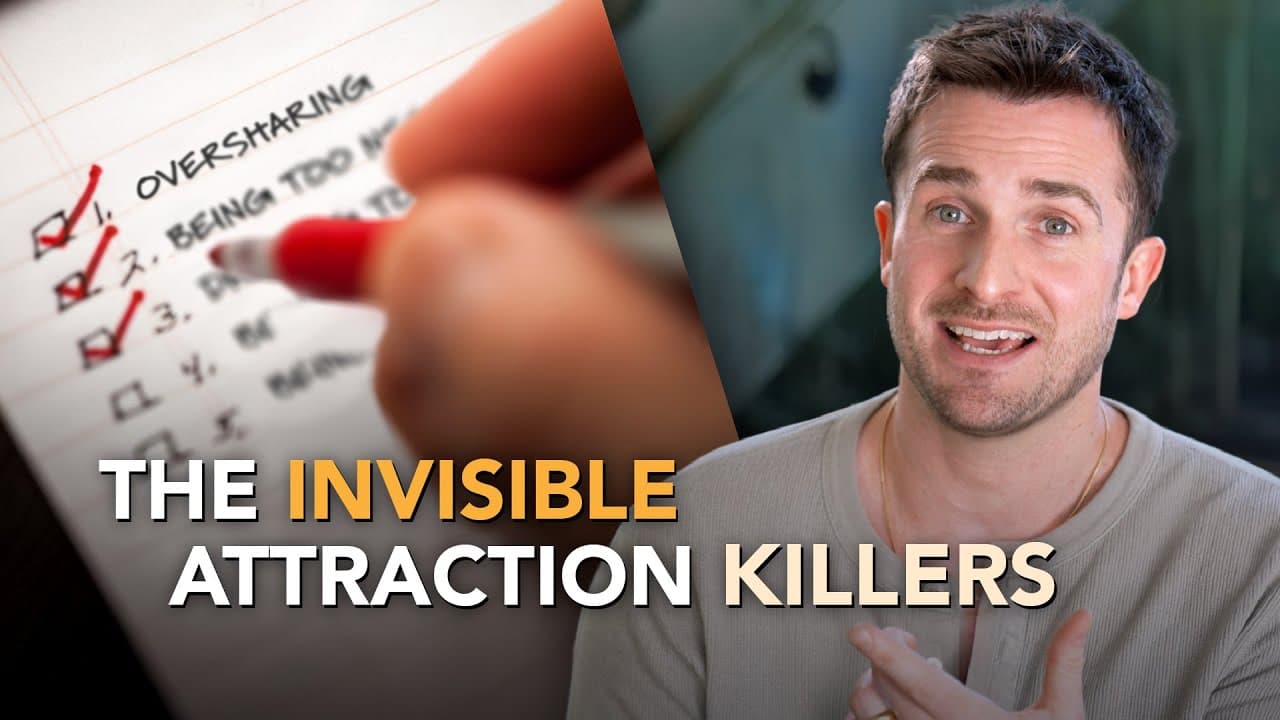
Oversharing and habitual negativity can unknowingly push people away by creating premature intimacy or leaving them emotionally burdened. Early disclosures about insecurities, trauma, and former partners may exceed the trust established on a new date, while repeated complaints can make life feel dimmer. Understanding how boundaries, timing, warmth, and playfulness shape a connection can help you recognize these subtle patterns, so read on for practical ways to avoid them.
Transcript
do you know one of the things that I value most in my life peace all of the little ways that I get to construct this world of calm and equinity that makes me feel relaxed but when people are dating it's really hard to maintain this because there are so many things that Rob us of our peace when we are looking for love one of those things is when we ... Read More
Key Insights
- Oversharing is the disclosure of information that is inorganic to the relationship’s current level of trust and intimacy. Sharing deep insecurities, trauma, or extensive details about a former partner with a near stranger can create discomfort because the listener has not earned or prepared for that intimacy.
- Early disclosure of insecurities can shape another person’s opinion before they have formed one independently. Telling a new date exactly what to notice or judge about appearance or self-worth may unintentionally direct attention toward concerns that otherwise might not have affected the developing connection.
- Detailed criticism of a former partner can damage a new date’s impression of the person telling the story. Even when the past hurt was severe, speaking harshly about someone the listener does not know may prompt concern about what could later be said about them.
- Oversharing can arise from anxiety, avoidance, excessive trust, or familiarity with therapeutic conversations. An anxious person may speak impulsively, while an avoidant person may reveal potential reasons for rejection early as a way to feel greater control over possible rejection.
- Personal information is a form of power that should be shared after trust develops. Giving a new acquaintance sensitive details too quickly can expose vulnerabilities before their character is known and can also suggest that the person disclosing lacks boundaries around private information.
- Authenticity is not the same as immediate, unrestricted disclosure. A person can be honest while choosing a suitable time, context, and level of detail, allowing closeness to develop organically instead of treating a date like a therapy session or a conversation with a trusted friend.
- Negativity is reflected in how people feel after an interaction. Repeatedly bringing overwhelmed, complaining, or emotionally heavy energy can leave others feeling that life is dimmer, even when each individual comment seems ordinary and does not sound intensely negative.
- Positive energy does not require denying pain or always identifying a bright side. Playfulness, wit, and warmth can leave people better than they were found while still acknowledging hardship, whereas forced optimism can invalidate someone who is experiencing a serious loss.
Install to Summarize YouTube Videos and Get Transcripts
Explore YouTube Video Summarizer or Get YouTube Transcript Extractor
Questions & Answers
Q: How can oversharing push someone away on a date?
Oversharing creates a level of intimacy that does not match the relationship’s current stage. A new date may feel uncomfortable hearing about deep trauma, insecurities, or painful former relationships before trust has developed. It can also make them question whether the speaker maintains appropriate boundaries around private information.
Q: What counts as oversharing early in dating?
Oversharing means disclosing information that is inorganic to the trust and intimacy established so far. Examples include highlighting personal insecurities, describing deep trauma and healing, or extensively recounting harm caused by a former partner. A challenging relationship can be acknowledged without immediately sharing every painful detail.
Q: Why do people overshare when they feel anxious?
Anxiety can cause someone to fill conversational space by revealing more than intended. Afterward, they may wonder why they shared something so personal or feel embarrassed about it. The disclosure can produce intimacy faster than the new relationship can naturally support.
Q: How can avoidance lead to oversharing in dating?
An avoidant person may disclose every perceived flaw or potential reason for rejection before the other person discovers those things naturally. This can create a sense of control over possible rejection. However, overwhelming a new connection with premature disclosures may help produce the rejection they fear.
Q: Is authenticity the same as sharing everything immediately?
No, authenticity does not require immediate and unrestricted disclosure. Someone can be honest while maintaining boundaries, choosing an appropriate context, and allowing trust to develop organically. A date does not need to be treated like a therapy session or a conversation with a best friend.
Q: Why can talking badly about an ex hurt a new connection?
Speaking harshly and extensively about a former partner can make a new date uncomfortable because they do not know the person being criticized. It may also make them wonder what could eventually be said about them to another stranger. Difficult history can be mentioned without delivering every detail or a prolonged attack.
Q: How can someone recognize negative energy in dating?
Consider how the other person is likely to feel after the interaction. Repeated complaining or emotionally heavy conversation may leave them feeling less hopeful or make life seem dimmer. The pattern matters even when no individual comment sounds intensely negative.
Q: How can someone bring positive energy without forced optimism?
Warmth, playfulness, and wit can leave another person feeling lighter without denying genuine pain. Positive energy does not require finding a bright side in every hardship or dismissing serious loss. It means acknowledging difficult circumstances while remaining aware of the emotional effect your presence has on others.
Summary & Key Takeaways
-
People sometimes lose interest for reasons that have nothing to do with their date, but self-reflection can still reveal behaviors that weaken a promising connection. The discussion identifies oversharing and habitual negativity as two subtle risks, emphasizing appropriate boundaries, organic intimacy, and awareness of the emotional effect one has on others.
-
Oversharing occurs when personal information exceeds the intimacy and trust established in the relationship. Early disclosures about insecurities, trauma, or painful former partners can make a new date uncomfortable, expose sensitive information before trust exists, and suggest weak boundaries. Anxiety, avoidance, excessive trust, and habits formed in therapy can contribute to it.
-
Negativity is best evaluated by its effect rather than by whether every statement sounds positive. Constant complaints can make another person’s view of life feel dimmer, while warmth, wit, and playfulness can create lightness even during painful circumstances. Genuine positive energy also avoids dismissing suffering with forced optimism or simplistic bright-side comments.
Read in Other Languages (beta)
Share This Summary 📚
Summarize YouTube Videos and Get Video Transcripts with 1-Click
Try YouTube Summary with ChatGPT & Claude or YouTube Transcript Generator
Explore More Summaries from Matthew Hussey 📚





Summarize YouTube Videos and Get Video Transcripts with 1-Click
Try YouTube Summary with ChatGPT & Claude or YouTube Transcript Generator