How Can Human Creators Compete With AI Content?
TL;DR
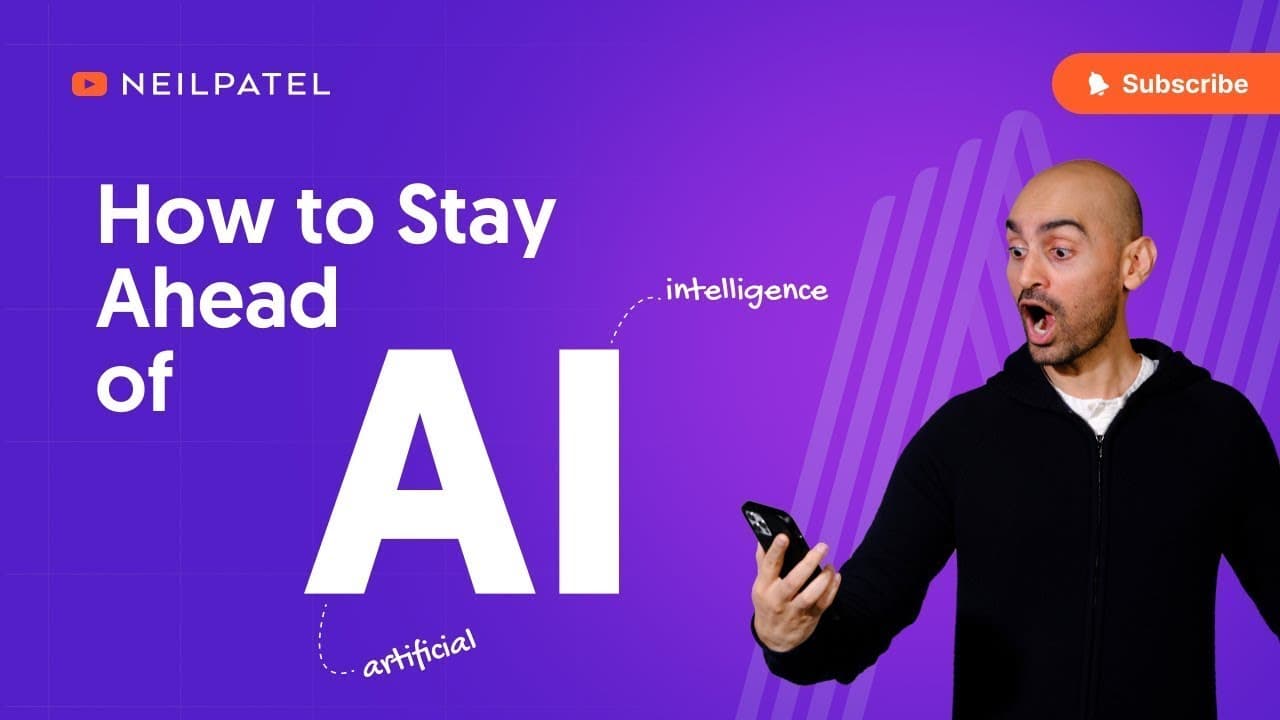
Human creators stand out by adding experience, expertise, authority, trust, emotion, and personality that AI-generated material often lacks. AI can improve marketing efficiency, analyze advertising waste in real time, adapt contextual messaging, and broaden access to analytics, but companies still need human judgment, creative specialists, privacy safeguards, ethical standards, and compliance controls.
Transcript
- The only way to really stand out, and you're going to see this more and more in the future, is people who create content, whether it's videos, images, podcasts, text-based content, showcasing their experience, their expertise, their authority, and trust, that little extra team that makes your content unique that you wouldn't get from AI. Because ... Read More
Key Insights
- Human-created content is differentiated by experience, expertise, authority, trust, emotion, and personality. AI produces material from existing online inputs, so creators can stand out by contributing qualities, stories, and perspectives that cannot be obtained merely by processing what is already available.
- AI is changing marketing through writing, image creation, surveillance, bot networks, analytics, and automation. The panel compares the scale of this transformation to the printing press because both can alter how knowledge, communication, and social narratives are created and distributed.
- Real-time analytics is one of AI's most important marketing applications. AI can continuously identify waste in advertising expenditure, alert a human decision-maker, and support decisions to stop ineffective spending, reallocate money, or increase investment in activities that are producing results.
- Privacy changes make marketing analysis more difficult. Apple iOS changes and movement toward a cookieless environment reduce marketers' ability to determine what works, increasing the value of AI systems that can examine available analytics quickly and flag inefficient advertising expenditure.
- AI-driven search may concentrate traffic among fewer winners. The described Project Magi concept would recommend a specific product and enable purchasing within Google, potentially shifting SEO toward one or two dominant results and paid advertising toward transaction-based performance models.
- Excessive personalization does not necessarily increase revenue. The panel says that Walmart's personalization efforts and work with businesses of different sizes show that highly specific recommendations can become overkill, producing little or no improvement and sometimes causing conversion rates to decline.
- Contextual relevance may be more useful than one-to-one targeting. AI can adapt messages to the feeling, time, place, neighborhood, street, and audience context, while location may function as a privacy-conscious signal without requiring an extremely detailed conversation tailored to one individual.
- Natural-language analytics can democratize access to data capabilities. Tools that let wider audiences analyze information without narrow specialization could move data skills beyond a small internal group, but creative professionals such as art directors still provide expertise that AI cannot replace.
Install to Summarize YouTube Videos and Get Transcripts
Explore YouTube Video Summarizer or Get YouTube Transcript Extractor
Questions & Answers
Q: How can human creators make content stand out from AI?
Human creators can differentiate their work by showing personal experience, expertise, authority, trust, emotion, and personality. They can also tell stories that connect with audiences more deeply than formulaic or predictable material. Because AI creates outputs from existing internet content and user inputs, the strongest human advantage is adding a distinctive perspective and emotional connection that cannot be reproduced through aggregation alone.
Q: How is AI changing the marketing landscape?
AI is changing marketing by writing copy, creating images, automating activities, analyzing information, tracking behavior, and enabling networks of bots. It can help companies work faster and improve efficiency, but it can also generate misinformation that reshapes corporate narratives. Organizations therefore need to use AI both for marketing execution and for understanding how automated systems are influencing public perceptions of their brands.
Q: How can AI improve advertising analytics?
AI can analyze marketing analytics in real time and identify advertising waste as it occurs. Instead of relying only on human reviews performed weekly or monthly, an AI system can prompt a person when spending appears ineffective. The human can then decide whether to stop that expenditure, move the money elsewhere, or invest more in a campaign that the available data indicates is working.
Q: Why will privacy changes increase the value of AI analytics?
Privacy changes, including Apple iOS changes and movement toward a cookieless environment, make it harder to analyze which marketing activities are effective. AI can help by examining the available analytics quickly and continuously, finding patterns or waste that humans may review less frequently. The panel still places the final spending decision with a person, preserving human judgment when budgets are stopped, reallocated, or expanded.
Q: How could AI-driven search change SEO and paid advertising?
The panel describes Google's Project Magi as a search experience that could recommend a particular product based on information such as preferred color and shoe size, then allow the purchase within Google. If search presents one recommendation instead of ten results, SEO traffic may become concentrated among one or two winners. Paid advertising could also shift from impression-based or click-based charges toward payment per transaction.
Q: Does greater AI personalization always improve conversions?
Greater personalization does not always improve conversions or revenue. The panel says consumers often do not know exactly what they want, which limits an AI system's ability to predict the perfect recommendation. It also cites Walmart's personalization work and similar observations across large, midsize, and smaller businesses, arguing that excessive targeting can become overkill, deliver little additional revenue, and sometimes reduce conversion rates.
Q: How can AI make marketing personal without excessive targeting?
AI can focus on context and emotion instead of attempting a highly detailed one-to-one conversation. The panel suggests adapting content to the right feeling, moment, place, neighborhood, street, atmosphere, and audience. Location may serve as a new contextual signal in a more privacy-conscious environment. This approach aims to make messages relevant while avoiding dependence on extremely granular personal data and overpersonalized recommendations.
Q: Why do marketers still need human creative specialists?
Marketers still need human specialists because faster access to content-generation tools does not replace professional creative judgment. AI may let more people produce wording, images, fonts, or advertising concepts, but the panel argues that being an art director remains a specific job. Human creators also contribute experience, expertise, authority, trust, emotion, personality, and storytelling, all of which help content become distinctive and memorable.
Summary & Key Takeaways
-
AI is transforming marketing by accelerating writing, image creation, analytics, automation, and content adaptation. The panel compares its potential impact to the printing press while emphasizing that its influence extends beyond production. AI can also create bot networks, spread misinformation, and reshape corporate narratives, requiring companies to monitor its effects.
-
The panel identifies real-time analytics as a particularly valuable marketing application. AI can detect waste in advertising expenditure and prompt humans to stop, reallocate, or increase spending. This capability becomes more important as privacy changes and a cookieless environment make it harder for marketers to determine which activities are producing results.
-
Human creativity remains essential because distinctive content communicates lived experience, expertise, authority, trust, emotion, personality, and compelling stories. Excessive personalization may not improve conversions or revenue. The suggested alternative is contextual relevance, using factors such as location and atmosphere to adapt messages while preserving human oversight, specialist skills, ethical standards, and compliance.
-
Key Insights bullet points?
Read in Other Languages (beta)
Share This Summary 📚
Summarize YouTube Videos and Get Video Transcripts with 1-Click
Try YouTube Summary with ChatGPT & Claude or YouTube Transcript Generator
Explore More Summaries from Neil Patel 📚



Summarize YouTube Videos and Get Video Transcripts with 1-Click
Try YouTube Summary with ChatGPT & Claude or YouTube Transcript Generator